Preeclampsia is a pregnancy complication with high blood pressure and signs of organ stress, usually after 20 weeks, and it can also appear in the weeks after birth.
Preeclampsia often has no symptoms at first, which is why your provider checks your blood pressure and sometimes your urine at every prenatal visit. When symptoms do show up, such as a headache that will not quit or blurry vision, they deserve a call right away.
This guide covers symptoms, causes, risk factors, aspirin, diagnosis, treatment and the weeks after birth, using Mayo Clinic, MedlinePlus, the USPSTF, the CDC and the Preeclampsia Foundation.
Key Takeaways
Preeclampsia is high blood pressure plus protein in the urine or other signs of organ damage, usually after 20 weeks of pregnancy.
Many people have no symptoms; warning signs include severe headache, vision changes, upper right belly pain and sudden swelling.
The exact cause is unknown; experts believe it starts in the placenta.
If you are at high risk, ask your provider about low-dose aspirin (81 mg) after 12 weeks, as the USPSTF recommends.
Postpartum preeclampsia usually starts within 48 hours of birth but can appear up to six weeks or later.
Table of Contents
Preeclampsia Symptoms: The Warning Signs to Know
Quick Answer
Preeclampsia is a pregnancy complication with high blood pressure plus protein in the urine or other signs of organ stress, usually starting after 20 weeks. Warning signs include a severe or lasting headache, vision changes, pain under the right ribs, nausea or vomiting, shortness of breath and sudden swelling of the face or hands. Mayo Clinic says to contact your provider right away or go to an emergency room for severe headaches, vision changes, severe belly pain or severe shortness of breath.
Mayo Clinic and the Preeclampsia Foundation both say many signs are silent, and high blood pressure is often the main measurable sign. When symptoms do appear, sources list:
Headache: A severe headache, or one that lasts or gets worse.
Vision changes: Blurriness, flashing lights, spots, light sensitivity or temporary vision loss (Mayo Clinic, Preeclampsia Foundation).
Upper belly or shoulder pain: Pain in the upper right abdomen under the ribs (Mayo Clinic). MedlinePlus notes it may be felt in the right shoulder.
Nausea or vomiting: Especially when it starts suddenly after mid-pregnancy (Preeclampsia Foundation).
Shortness of breath: Mayo Clinic links it to fluid in the lungs.
Sudden swelling or weight gain: Swelling of the face, hands or around the eyes (MedlinePlus).
Some foot and ankle swelling is normal in pregnancy (MedlinePlus); sudden swelling is the concern. Mayo Clinic says to contact your doctor about any symptom that worries you. For the general late-pregnancy picture, see our third trimester guide, which has a short warning-signs section.
What It Is and How Common It Is
Mayo Clinic defines preeclampsia as high blood pressure plus protein in the urine or other signs of organ damage, typically starting after 20 weeks of pregnancy in someone whose blood pressure had been normal. It can also appear after birth, as postpartum preeclampsia.
How common is it? Sources give different figures. MedlinePlus says it occurs in 3% to 7% of pregnancies, and the U.S. Preventive Services Task Force (USPSTF) says it complicates about 4% of U.S. pregnancies.
What Causes It? What Experts Know
Nobody knows the exact cause. MedlinePlus and Mayo Clinic say it is thought to begin in the placenta, the organ that nourishes the baby, and Mayo Clinic says several factors are likely involved.
Here is the explanation Mayo Clinic gives: in preeclampsia, the blood vessels that supply the placenta do not seem to develop or work properly, and this may disrupt how the mother’s blood pressure is regulated. MedlinePlus lists other possible contributors: autoimmune disorders such as lupus, blood vessel problems, diet and genes.
What it is not: something you caused. Many of the risk factors below, such as a first pregnancy, carrying twins or family history, are outside anyone’s control.
Risk Factors: Who Is More Likely to Get It
The USPSTF sorts risk factors into high and moderate groups.
High-risk factors (USPSTF)
Moderate-risk factors (USPSTF)
Preeclampsia in a past pregnancy, especially with an adverse outcome
First pregnancy (Mayo Clinic: first pregnancy with the current partner)
Twins, triplets or more
Obesity (prepregnancy body mass index over 30)
Chronic high blood pressure
Family history of preeclampsia (mother or sister)
Type 1 or type 2 diabetes before pregnancy
Age 35 or older
Kidney disease
Lower income, and being Black (due to social, rather than biological, factors)
Autoimmune disease, such as lupus or antiphospholipid syndrome
Low birth weight or small baby in a past pregnancy, a previous adverse outcome, or more than 10 years since the last pregnancy
A combination of several moderate-risk factors
In vitro conception (Mayo Clinic lists IVF as a higher-risk factor)
Preeclampsia risk factors as grouped by the USPSTF (2021), with Mayo Clinic notes.
Mayo Clinic says much of the difference in risk across groups reflects unequal access to care and social factors, not biology. MedlinePlus also lists thyroid disease.
If you had preeclampsia before, tell your provider early in the first trimester.
Baby on the way? Get ahead on sleep.
Our free two-minute quiz builds a gentle, personalized sleep plan you can use from the first weeks at home.
Low-dose aspirin is the best-supported way to lower the risk of preeclampsia, according to Mayo Clinic. In 2021 the USPSTF gave this a grade B recommendation: low-dose aspirin (81 mg a day) after 12 weeks of pregnancy for pregnant people at high risk who have no prior adverse effects or reasons they cannot take it.
Who the USPSTF means: Anyone with one or more high-risk factors from the table above. People with more than one moderate-risk factor may also benefit (USPSTF, Mayo Clinic).
When it starts: After 12 weeks of pregnancy.
The important part: Do not start aspirin on your own. Mayo Clinic says to talk to your provider before taking any medicine, vitamin or supplement, and MedlinePlus says to take it only after talking with your doctor.
MedlinePlus says there is no proven way to fully prevent preeclampsia, and your provider may suggest calcium if your diet is low in it. Aspirin lowers risk but does not remove it, so keep watching for symptoms.
How It Is Diagnosed: Blood Pressure, Urine and Blood Tests
There is no single test. Your provider combines blood pressure, urine and blood results:
Blood pressure: The Preeclampsia Foundation says a reading of 140/90 or higher on two occasions at least four hours apart is traditionally considered high. MedlinePlus says readings are often 140/90 mm Hg or higher.
A big jump from your baseline: The Foundation says a rise of 30 or more in the top number, or 15 or more in the bottom number, is also a concern.
Protein in the urine: Checked with a dipstick, a protein-to-creatinine ratio or a timed collection. The Foundation lists 300 mg or more in 24 hours, a ratio of about 0.3.
No protein? Still possible: The Foundation says some women never develop protein in the urine, and preeclampsia can be diagnosed without it when other severe features are present.
Checks on the baby: MedlinePlus lists ultrasound and non-stress tests to see how the baby is doing.
The Preeclampsia Foundation suggests asking for your actual numbers at each visit and knowing your pre-pregnancy blood pressure.
Severe Features, HELLP Syndrome and Eclampsia
Severe features. The Preeclampsia Foundation lists low platelets, high liver enzymes, fluid in the lungs, and a severe headache or vision changes that do not go away. MedlinePlus says delivery is needed for findings such as a bottom number over 110 (or consistently over 100 across 24 hours), abnormal liver tests, severe headache or belly pain, fluid in the lungs, low platelets, seizures, or problems with the baby’s growth.
HELLP syndrome. Mayo Clinic describes HELLP as a severe form of preeclampsia involving the destruction of red blood cells (hemolysis), elevated liver enzymes and a low platelet count. It is life threatening, can come on suddenly, and can sometimes develop before high blood pressure is noticed or without symptoms.
Eclampsia. Mayo Clinic defines eclampsia as seizures or coma with preeclampsia. It is hard to predict, can happen before, during or after delivery, and often comes without warning signs. A seizure in pregnancy or after birth is an emergency: call 911.
Mayo Clinic also lists slowed growth of the baby, preterm birth, placental abruption and organ damage, including stroke.
Treatment and Delivery Timing
Delivering the baby and placenta is what ends preeclampsia, and MedlinePlus says it usually goes away within 6 weeks after delivery.
At or near 37 weeks: MedlinePlus says the baby is usually mature enough around 37 weeks, so delivery is typically recommended, either by inducing labor or by C-section.
Before term, without severe features: MedlinePlus says mild cases may be managed at home with frequent visits and sometimes blood pressure medicine, but severity can change quickly.
Bed rest: “Complete bed rest is no longer recommended,” according to MedlinePlus.
In the hospital: MedlinePlus lists close monitoring of you and the baby, medicines to lower blood pressure and to prevent seizures, and steroid injections before 34 weeks to help the baby’s lungs mature faster.
Postpartum Preeclampsia: It Can Happen After Birth
Mayo Clinic says most cases of postpartum preeclampsia begin within 48 hours of childbirth, but some start later, up to six weeks or later after birth (called late postpartum preeclampsia). MedlinePlus also says risk continues for up to 6 weeks, and that blood pressure can get worse in the first few days after delivery.
Mayo Clinic lists these postpartum preeclampsia symptoms:
Blood pressure of 140/90 mm Hg or higher.
Protein in the urine.
Severe headaches.
Vision changes, such as temporary vision loss, blurred vision or light sensitivity.
Pain in the upper belly, usually under the right ribs.
Nausea and vomiting.
Shortness of breath (the Preeclampsia Foundation calls shortness of breath after delivery a particular concern).
Peeing less.
Mayo Clinic’s possible risk factors include high blood pressure in the recent pregnancy, obesity, multiples and diabetes. Complications can include postpartum eclampsia, fluid in the lungs, stroke, blood clots and HELLP syndrome, so Mayo Clinic says to contact your provider right away if symptoms appear after childbirth.
The CDC asks you to tell any provider or emergency staff that you were pregnant within the last year. Our fourth trimester guide and postpartum essentials list can help you plan your recovery.
How to Check Your Blood Pressure at Home
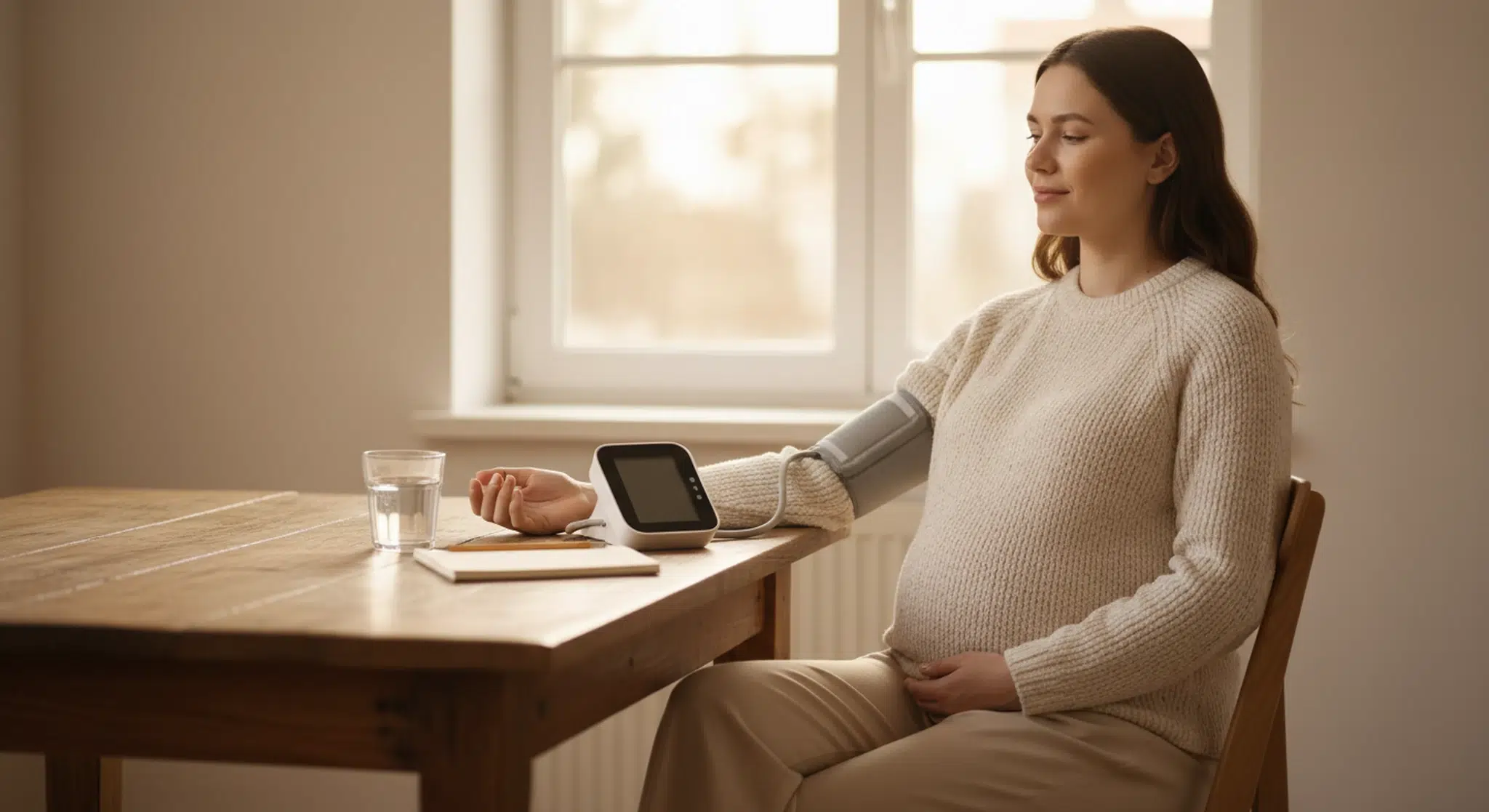
If your provider asks you to track readings, the CDC suggests:
Skip food, drinks, caffeine, smoking and exercise for 30 minutes before, and empty your bladder.
Sit with your back supported for at least 5 minutes, feet flat on the floor and legs uncrossed.
Rest your arm on a table at chest height, with the cuff snug against bare skin, not over clothing.
Do not talk during the reading.
Measure at the same time every day, take at least two readings 1 or 2 minutes apart, and write each one down.
The Preeclampsia Foundation suggests the left arm at heart level and warns that a normal home reading does not replace prenatal visits or mean you can ignore symptoms.
Ask your care team two things before you start: how often to measure, and which numbers mean you should call them (CDC).
Long-Term Heart Health Afterward
Mayo Clinic says having had it raises your risk of future heart and blood vessel disease, especially if you had it more than once or delivered early. MedlinePlus lists heart disease, diabetes, kidney disease and chronic high blood pressure as long-term risks.
MedlinePlus says it is more likely to return in a later pregnancy, but usually less severe. Before another pregnancy, Mayo Clinic suggests getting as healthy as you can and managing conditions that raise risk. Add preeclampsia to your health history so future providers can watch your blood pressure.
MedlinePlus says to call your provider if you have any symptoms of preeclampsia during pregnancy or after delivery. Call the same day for:
A blood pressure reading at or above the number your provider told you to report.
A headache that does not ease with medicine, or new swelling of your face, hands or around your eyes.
Nausea or vomiting that starts suddenly after mid-pregnancy, or upper belly or shoulder pain (Preeclampsia Foundation).
Sudden weight gain (MedlinePlus says more than 2 pounds a week; the Preeclampsia Foundation says more than 3 to 5).
Seek medical care immediately for any of the CDC’s urgent maternal warning signs, which apply during pregnancy and up to a year after birth. Call 911 if it feels like an emergency or you cannot get to care quickly:
A headache that will not go away or gets worse, or comes with blurred vision or dizziness.
Vision changes, such as flashes of light, blind spots or double vision.
Trouble breathing, chest pain, or a fast, irregular or pounding heartbeat.
Severe belly pain that does not go away, severe nausea and vomiting, or extreme swelling of your hands or face.
A seizure (eclampsia is an emergency: call 911).
During pregnancy: your baby moving less or not at all, vaginal bleeding or leaking fluid.
Tell staff you are pregnant or recently gave birth. If you are not sure whether a sign is serious, call: no provider will mind. For other late-pregnancy symptoms, see signs of leaking amniotic fluid and the mucus plug. This article is general education, not medical advice.
Frequently Asked Questions
What are the first signs of preeclampsia?
Often there are none you can feel. High blood pressure found at a prenatal visit is usually the first sign. When symptoms appear, Mayo Clinic lists severe headaches, vision changes, upper right belly pain, nausea or vomiting, shortness of breath and sudden swelling of the face or hands. Call your provider about any of these.
What causes preeclampsia?
The exact cause is not known. MedlinePlus and Mayo Clinic say it is thought to begin in the placenta, where the blood vessels that supply it may not develop or work properly. Autoimmune disorders, blood vessel problems, diet and genes may also play a role. It is not caused by anything you did.
How long after giving birth can you get preeclampsia?
Mayo Clinic says most postpartum preeclampsia starts within 48 hours of childbirth, but some cases begin up to six weeks or later after birth. MedlinePlus also says risk continues for up to 6 weeks. Call your provider right away for a severe headache, vision changes, shortness of breath or upper belly pain after delivery.
Does preeclampsia go away after delivery?
Usually, yes. MedlinePlus says preeclampsia usually goes away within 6 weeks after delivery, though blood pressure can get worse in the first few days after birth. Having had it raises your risk of high blood pressure and heart disease later in life, so keep up with checkups.
Can you prevent preeclampsia?
There is no proven way to fully prevent it. For people at high risk, the USPSTF recommends low-dose aspirin (81 mg a day) after 12 weeks of pregnancy. MedlinePlus says to take it only after talking with your doctor. Early, regular prenatal care helps catch it quickly.
Is preeclampsia dangerous for the baby?
It can be. Mayo Clinic says reduced blood flow to the placenta can slow the baby’s growth, and preeclampsia can lead to preterm birth or placental abruption. Close monitoring with ultrasounds and non-stress tests helps your care team decide the safest time for delivery, often around 37 weeks.
Calmer days, better nights.
Betteroo builds a personalized sleep plan for your baby. Take the free two-minute quiz and have it ready before the newborn weeks.