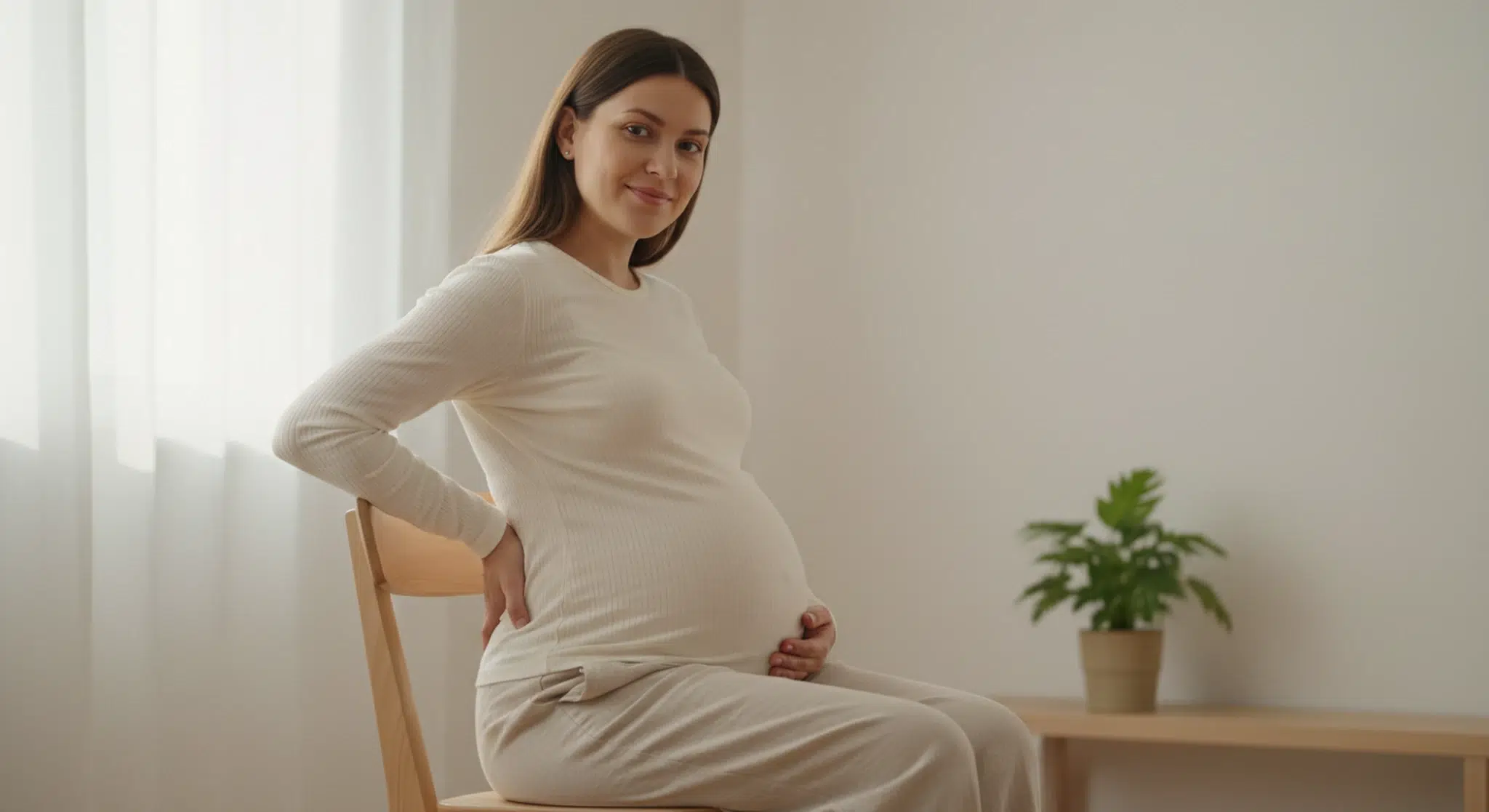


Back pain during pregnancy is common, usually caused by softening ligaments, a shifting center of gravity and stretched belly muscles, and it usually eases with posture changes, side sleeping, gentle heat and regular movement.
If your back aches more every week, you are in good company: Cleveland Clinic says back pain during pregnancy affects about 40% of pregnant women at some point. Most of it is ordinary strain that fades after birth.
Below: causes by trimester, how lower back pain, pelvic girdle pain and sciatica differ, safe relief, medicine cautions, and when to call your doctor or midwife.
Key Takeaways
- Cleveland Clinic says about 40% of pregnant women have back pain at some point, most often in the second and third trimesters.
- Softening ligaments, a shifting center of gravity, weight gain and stretched belly muscles all add strain.
- Posture, careful lifting, side sleeping with pillows, gentle heat and walking or swimming help most people.
- Ask before any medicine. The FDA recommends avoiding NSAIDs from 20 weeks unless your clinician advises them.
- Back pain with bleeding, fever, painful urination, cramping or contractions needs a call right away.
Table of Contents
Back Pain During Pregnancy: The Short Answer
Quick Answer
It can range from mildly annoying to, in Cleveland Clinic’s words, debilitating. Cleveland Clinic lists two risk factors: back pain before pregnancy and back pain in a previous pregnancy. If either applies to you, start the habits below early.
What Causes Back Pain During Pregnancy?
There is rarely one cause. Mayo Clinic and Cleveland Clinic describe several changes that add up:
- Pregnancy hormones: Cleveland Clinic explains that ligaments become softer and more flexible to prepare for labor and delivery, which can strain the joints of the lower back, pelvis and hips. Mayo Clinic says pregnancy hormones relax the ligaments in the pelvis.
- A shifting center of gravity: the extra weight carried in front pulls you forward and strains your back muscles (Cleveland Clinic).
- Weight gain: Mayo Clinic lists it among the main causes. Healthy gain is expected and good for your baby; our pregnancy weight gain guide covers typical ranges.
- Stretched, weaker belly muscles: Cleveland Clinic says the abdominal muscles stretch and weaken, which can lead to poor posture and make your back muscles work harder. Mayo Clinic notes these muscles help support the spine.
- Posture and your baby’s position: standing for long periods or bending over can trigger pain, and Cleveland Clinic says pain can increase if your baby’s head presses on your tailbone or lower back.
| Trimester | What tends to drive it | What helps most |
|---|---|---|
| First | Softening ligaments; the NHS calls backache very common early on | Posture, careful lifting, staying active |
| Second | Growing belly shifts your center of gravity; belly muscles stretch | Supportive shoes, side sleeping, walking or swimming |
| Third | More weight in front; baby’s head may press on the lower back | Rest with feet up, heat on low, a support belt if your provider agrees |
Lower Back Pain in Early Pregnancy
The NHS says backache is very common in pregnancy, especially early on, as ligaments soften and stretch. So a mild lower back ache at 5 or 6 weeks, with no bleeding, is usually one of the ordinary aches of the first trimester (see 5 weeks pregnant for other changes that week). Back pain alone is not a reliable sign of pregnancy, though; only a test or your provider can confirm one.
What matters most is what comes with the pain. Mayo Clinic lists the symptoms of miscarriage as vaginal bleeding with or without pain (including light spotting), pain or cramping in the pelvic area or lower back, fluid or tissue passing from the vagina, and a fast heartbeat. It also says light bleeding does not always mean a miscarriage, and many people who bleed in the first trimester carry to term.
- Mild ache, no other symptoms: common; use the relief steps below and mention it at your next visit.
- Back pain or cramping with any bleeding or spotting: call your provider the same day.
- Heavy bleeding, especially with a fast heartbeat, dizziness, or unusual tiredness or weakness: Mayo Clinic says to get medical care immediately.
Baby on the way? Get ahead on sleep.
Our free two-minute quiz builds a gentle, personalized sleep plan you can use from the first weeks at home.
Upper Back Pain While Pregnant
Upper back pain, between or around the shoulder blades, is less common and is usually muscle strain from posture: hunching over a phone or laptop, sitting without back support, or carrying a bag on one shoulder. Mayo Clinic’s posture advice applies here too, and the NHS suggests splitting heavy shopping between two bags. Change position often (Cleveland Clinic) and try gentle heat on low or a prenatal massage.
The NHS says to contact your GP or midwife urgently if back pain comes with pain under your ribs on one or both sides. Sudden severe pain, chest pain or trouble breathing is an emergency: call 911.
Lower Back Pain vs Pelvic Girdle Pain vs Sciatica
| Type | Where you feel it | Good to know |
|---|---|---|
| Lower back pain | Across the lower back, a dull ache or tight muscles; often worse at night | The most common type; usually eases after birth (Cleveland Clinic) |
| Pelvic girdle pain (PGP) | Over the pubic bone, one or both sides of the lower back, the perineum; may spread to the thighs | Up to 1 in 5 pregnant women are affected to some degree; not harmful to your baby (NHS) |
| Nerve pain down the leg (often called sciatica) | Pain, tingling or numbness traveling from the lower back or buttock down a leg | Mention lasting numbness; loss of feeling in the legs, bottom or genitals is an emergency (NHS) |
Pelvic girdle pain, also called symphysis pubis dysfunction (SPD), is often worse when walking, using stairs, standing on one leg, turning over in bed or moving your legs apart, and some women feel clicking in the pelvis (NHS). The NHS recommends physiotherapy, sitting down to dress, a pillow between your knees in bed, keeping your knees together getting in and out of a car, and avoiding long periods of sitting or standing and heavy lifting.
Pain on the side of the hip is covered in our guide to hip pain during pregnancy.
Safe Relief That Works in Pregnancy
- Posture: stand tall with knees slightly bent, not locked; rest one foot on a low stool if you stand a long time; support your lower back when sitting (Mayo Clinic). Cleveland Clinic suggests a lumbar pillow.
- Shoes: low heels with good arch support, such as walking shoes (Mayo Clinic).
- Lifting: bend at your knees, not your waist, and lift with your legs (Mayo Clinic). The NHS adds: avoid heavy lifting and move your feet when turning so you do not twist your spine.
- Rest: avoid staying in one position too long and prop your feet up (Cleveland Clinic).
- Heat or cold: Mayo Clinic suggests a heating pad, hot pack or ice pack, with heating pads on low and wrapped in a towel. Cleveland Clinic says to limit heating pad use to about 15 minutes and not let it raise your body temperature too high, which is why a warm bath or shower beats a hot tub.
- Massage: Cleveland Clinic and the NHS suggest it. Mayo Clinic notes its benefits for low back pain are not proven to last.
- Physical therapy: a physical therapist can teach exercises for your specific pain (Cleveland Clinic, Mayo Clinic).
- Support belts: Cleveland Clinic suggests a maternity belt; Mayo Clinic says research is mixed, so show one to your provider.
- Chiropractic care and acupuncture: Mayo Clinic says they may help, but check with your provider first and tell the practitioner you are pregnant.
Sleeping With Back Pain While Pregnant
Cleveland Clinic notes back pain often feels worse at night. Mayo Clinic suggests sleeping on your side with your knees bent, supported by a pregnancy or body pillow; Cleveland Clinic suggests your left side. A pillow between your knees (NHS) keeps hips and spine lined up, and our guide on how to use a pregnancy pillow shows common setups. If your mattress is too soft, the NHS and Cleveland Clinic suggest firmer support or a topper.
These pillow tips are for you. Once your baby arrives, your baby sleeps alone, on their back, on a firm, flat surface with no pillows or blankets.
Exercises and Stretches for Pregnancy Back Pain
Mayo Clinic suggests keeping up walking or water exercise, plus stretching, prenatal yoga and physical therapy. Cleveland Clinic recommends walking and swimming but cautions that belly changes can raise your risk of back injury, so move with care and check with your provider first.
| Exercise | How to do it | Source |
|---|---|---|
| All-fours back exercise | On hands and knees, pull in your belly and round your back toward the ceiling, head relaxed. Hold a few seconds, return slowly to a flat back. Repeat 10 times. | NHS |
| Cat-cow | A slow, gentle version of the same movement, between rounded and neutral | Cleveland Clinic |
| Walking | Regular walks in supportive shoes | Cleveland Clinic, Mayo Clinic |
| Swimming or water exercise | Laps or a pregnancy water class | Cleveland Clinic, Mayo Clinic, NHS |
| Prenatal yoga | A class with a qualified instructor who knows you are pregnant | Mayo Clinic, NHS |
Stop and call your provider if exercise brings on bleeding, cramping or contractions. After birth, our postpartum workout plan rebuilds core strength gradually.
Pain Medicine: Acetaminophen and NSAIDs
Cleveland Clinic says not to take any medication without talking to your provider first.
- Acetaminophen: Mayo Clinic says your provider might recommend it if back pain lasts more than two weeks, and the NHS says paracetamol (acetaminophen) can be taken unless your GP or midwife advises against it. The FDA names acetaminophen as an alternative to NSAIDs and says to ask your health care professional which is best for you.
- NSAIDs (ibuprofen, naproxen and similar): the FDA recommends avoiding them at 20 weeks of pregnancy or later unless your health care professional specifically advises it, because they can cause rare but serious kidney problems in the unborn baby that lead to low amniotic fluid. Many over-the-counter products contain NSAIDs, so read Drug Facts labels or ask a pharmacist.
- Low-dose aspirin: the FDA says its NSAID advice does not apply to 81 mg aspirin directed by a health care professional for certain pregnancy conditions. Do not stop or start it on your own.
Back Labor and Back Pain Near Your Due Date
Cleveland Clinic says back pain that starts suddenly and sharply, or cramping in the hips or abdomen, can be signs of labor, and the NHS says back pain in the second or third trimester can be a sign of early labor. Practice tightenings are explained in our Braxton Hicks guide.
Back labor is intense lower back pain during labor, usually strongest during contractions. Cleveland Clinic says about 1 in 4 people report it, that it is usually linked to the baby facing your belly (occiput posterior), with the head pressing on your lower spine and tailbone, and that it does not harm your baby. Its suggestions: change positions (lean over a couch, walk, squat, use a birthing ball), counterpressure on your hips, warm or cool compresses (never on bare skin), a warm shower on your back, and asking about TENS, sterile water injections, pain medicine or an epidural.
Related Betteroo Guides
- Hip Pain During Pregnancy
- Prenatal Massage
- How to Use a Pregnancy Pillow
- Pregnancy Weight Gain
- Braxton Hicks Contractions
- Discharge During Pregnancy
When to Call Your Doctor or Midwife
Cleveland Clinic says mild back pain is usually not a concern but is worth mentioning at your next prenatal visit. Some symptoms need a faster response.
Call 911 or go to the emergency room or labor and delivery now if you have:
- Loss of feeling in one or both legs, your bottom or your genitals (the NHS lists this as an emergency).
- Heavy vaginal bleeding, especially with a fast heartbeat, dizziness, or unusual tiredness or weakness (Mayo Clinic).
- Chest pain or trouble breathing.
Call your provider right away (same day) if back pain comes with:
- A recent fall or injury (Mayo Clinic).
- Vaginal bleeding or spotting, fever, cramping or contractions, or painful urination. Mayo Clinic says these can signal preterm labor or a urinary tract infection.
- Pain under your ribs on one or both sides (NHS).
- Being in your second or third trimester, if it could be early labor (NHS), or pain that comes in a regular pattern with tightening.
- Pain that is intense, sudden and sharp, or stops everyday activities (Cleveland Clinic).
- A gush or trickle of fluid from the vagina (Cleveland Clinic). Our discharge during pregnancy guide explains what is normal.
Call the office during regular hours if:
- Back pain lasts more than two weeks (Mayo Clinic).
- Pelvic pain makes it hard to get around, get out of a car, turn over in bed or climb stairs (NHS).
- You have numbness or tingling down a leg that does not go away.
This article is general education, not medical advice. When in doubt, call.
Frequently Asked Questions
When should I worry about back pain during pregnancy?
Call your provider right away if back pain comes with vaginal bleeding, fever, cramping or contractions, or painful urination, which Mayo Clinic says can signal preterm labor or a urinary tract infection. Also call for severe or sudden pain, pain under your ribs, or pain lasting more than two weeks. Loss of feeling in your legs or bottom is an emergency.
Is lower back pain normal in early pregnancy?
Often, yes. The NHS says backache is very common in pregnancy, especially early on, as ligaments soften and stretch. A mild ache on its own is usually not a worry. Lower back pain or cramping together with bleeding or spotting is different: Mayo Clinic lists these as possible miscarriage symptoms, so call your provider.
Can I use a heating pad on my back while pregnant?
Generally yes, with care. Mayo Clinic says to set the heating pad to low and wrap it in a towel. Cleveland Clinic suggests using it for about 15 minutes and not letting it raise your body temperature too high. A warm shower or bath is another option. Skip hot tubs.
What is the best sleeping position for back pain during pregnancy?
Sleep on your side with your knees bent, as Mayo Clinic suggests, using a pregnancy or body pillow or a pillow between your knees for support. Cleveland Clinic suggests the left side. If your mattress is too hard or too soft, a topper or firmer support may help.
Can back pain be a sign of labor?
Yes. Cleveland Clinic says sudden, sharp back pain or cramping in the hips or abdomen can be signs of labor, and the NHS says back pain in the second or third trimester can be a sign of early labor. If the pain comes and goes with tightening, time it and call your provider.
Can I take ibuprofen for back pain while pregnant?
Not without your clinician’s advice. The FDA recommends avoiding NSAIDs such as ibuprofen at 20 weeks of pregnancy or later unless your health care professional specifically advises it, because they can cause rare kidney problems in the baby and low amniotic fluid. The FDA names acetaminophen as an alternative to discuss with your provider.
Calmer days, better nights.
Betteroo builds a personalized sleep plan for your baby. Take the free two-minute quiz and have it ready before the newborn weeks.
7 Sources
- Cleveland Clinic. Back Pain During Pregnancy.
https://my.clevelandclinic.org/health/symptoms/back-pain-during-pregnancy - Mayo Clinic. Back pain during pregnancy: 7 tips for relief.
https://www.mayoclinic.org/healthy-lifestyle/pregnancy-week-by-week/in-depth/pregnancy/art-20046080 - NHS. Back pain in pregnancy.
https://www.nhs.uk/pregnancy/related-conditions/common-symptoms/back-pain/ - NHS. Pelvic pain in pregnancy (pelvic girdle pain).
https://www.nhs.uk/pregnancy/related-conditions/common-symptoms/pelvic-pain/ - U.S. Food and Drug Administration. FDA recommends avoiding use of NSAIDs in pregnancy at 20 weeks or later because they can result in low amniotic fluid.
https://www.fda.gov/drugs/drug-safety-and-availability/fda-recommends-avoiding-use-nsaids-pregnancy-20-weeks-or-later-because-they-can-result-low-amniotic - Cleveland Clinic. Back Labor.
https://my.clevelandclinic.org/health/symptoms/21767-back-labor - Mayo Clinic. Miscarriage: Symptoms and causes.
https://www.mayoclinic.org/diseases-conditions/pregnancy-loss-miscarriage/symptoms-causes/syc-20354298