
Home
»
Sleep
»
Best Sleep Training Apps for Babies: How to Choose the Right One

Best Sleep Training Apps for Babies: How to Choose the Right One

By Betteroo Team ·

Updated

Four parents in a nursery comparing baby sleep app approaches: Track and Predict (Huckleberry), AI Coaching (Pampers), Interpret and Adapt (Betteroo), and Step-by-Step Method (Taking Cara Babies)

The best sleep training apps for babies don’t all do the same thing. Some track sleep and predict timing, some hand you a structured plan to follow, and some help you interpret what’s actually happening so you can decide what to adjust. The right one depends on how you want that support to feel day to day – not which app has the most features.

If you’ve started looking into sleep training apps, it can feel like they’re all promising the same outcome: better sleep, fewer wake-ups, and a clearer routine. But once you look closer, the differences are meaningful. This guide breaks down what each app actually does, where each one tends to work well, and how to choose the best sleep training app for your family without overcomplicating the decision.

Key Takeaways

  • The best sleep training apps fall into four categories: tracking and prediction, AI coaching, method-based programs, and adaptive guidance — and they feel very different to use.
  • Betteroo is best for adaptive, personalized guidance that asks about you, not just your baby. Huckleberry is best for parents who want data and timing predictions. Pampers Sleep Coach is a smart schedule generator with a free trial. Taking Cara Babies is a pre-recorded video course ($119–$249), not an app.
  • There is no single best sleep training app for every family — the right choice depends on whether you want structure, data, or interpretation.
  • Most apps treat the parent as the operator. The best ones recognize that a plan ignoring parent capacity tends to fall apart.
Infographic comparing the best sleep training apps for babies by approach: Tracking and Patterns, Structured Plans, and Adaptive Guidance — helping parents find the approach that fits their family and reduces mental load
Best sleep training app infographic

Quick Picks: Best Sleep Training Apps by Type

  • Best for adaptive, personalized guidance: Betteroo
  • Best for age-based smart schedules: Pampers Sleep Coach
  • Best for tracking and timing predictions: Huckleberry
  • Best for monitor-based sleep insights: Nanit (Owlet as alternative)
  • Best for step-by-step sleep training method: Taking Cara Babies
  • Best for schedule-driven routines: Little Ones

What Is a Sleep Training App, and Do You Actually Need One?

A sleep training app is a tool designed to help you improve your baby’s sleep, but the way it does that varies widely. Some apps help you collect data and identify patterns. Others give you a structured plan to follow. Some combine elementshttps://betteroo.ai/guides/best-sleep-training-appss/ of both. And a newer category focuses on helping you understand what’s happening and decide what to do next without requiring constant tracking or strict adherence to a system. Healthy sleep needs vary significantly by age, which is why one-size-fits-all schedules often miss the mark. 3

Not every family requires nor wants a sleep training app. Many parents figure out sleep through observation, routine, and time. An app becomes useful when something feels unclear or you’re just too tired to figure it out. It’s for when you’re not sure if what you’re seeing is normal, whether things are improving, or what to adjust.

The Different Types of Sleep Training Apps, and Why They Feel So Different

In our review and determination of the best training apps, we recognized that it’s helpful to highlight how the tools fall into a few distinct approaches. Once you understand that, choosing what is right for you becomes a lot simpler. The following are the types of sleep training apps that are on the market today:

Tracking and prediction apps are built around data. You log sleep, and the app identifies patterns and suggests timing. This can be helpful when you’re trying to establish rhythm, especially in the early months, but it tends to focus more on when sleep should happen than why it’s changing. Large-scale data from sleep tracking apps has shown that infant sleep patterns vary widely between families and shift meaningfully across the first two years 2.

AI coaching apps take that a step further by offering recommendations based on your inputs. Instead of just showing patterns, they guide you toward certain adjustments. The guidance can feel helpful, but it often follows a more defined structure rather than adapting fluidly to every situation.

Method-based programs are less about the app itself and more about a philosophy. These tools guide you through a specific approach to sleep training, often step-by-step. This can reduce decision-making, but it also requires alignment with that method. Behavioral approaches like these have the strongest research base for improving infant sleep 1.

Adaptive guidance tools aim to sit somewhere in between. Instead of asking you to track everything or follow a fixed plan, they focus on helping you interpret what’s happening and make decisions based on your baby’s age, patterns, and context.

None of these approaches is inherently better. What matters is which one reduces your mental load rather than adding to it.

How to Choose the Best Sleep Training App for Your Family

Most parents aren’t deciding between the best sleep training apps, they’re deciding how they want help. If you tend to feel better with structure and clear direction, a method-based program can feel reassuring. If you like having data to refer back to, tracking apps tend to work well. If you’re feeling unsure and want help making sense of changing patterns, a more adaptive approach may feel easier to use over time.

It’s also worth considering how much effort you want to put in. Some tools become more useful the more you log or follow them closely. Others are designed to work with less input and more flexibility.

The right choice is usually the one that feels sustainable after the first few days, not just appealing at the start.

What Most Sleep Apps Miss: You

Most sleep apps are built around the baby – their schedule, their wake windows, their nap totals. The parent is treated as the operator: someone who logs the data, follows the plan, and executes the method. But the parent is also the person who’s exhausted, second-guessing themselves at 3 a.m., and trying to make decisions while running on broken sleep.

A plan that ignores the parent’s capacity, comfort level, and emotional bandwidth tends to fall apart fast — not because the plan was wrong, but because it asked too much of someone who didn’t have the reserves to follow it. This is why so many parents try one method, abandon it within days, and conclude that they failed. They didn’t. The approach failed them.

The best sleep training apps recognize that sleep doesn’t get fixed in a vacuum. It happens inside a family, with a parent whose wellbeing matters as much as the baby’s. As you read through the options below, it’s worth noticing which ones treat you as part of the equation – and which ones treat you as the means to an end.

Best Sleep Training Apps for Babies

Best Sleep Training Apps for Babies — Feature Comparison
AppBest ForPricingSleep TrackingPersonalizedAdapts Over TimeStep-by-Step PlanLow Input RequiredSchedule PredictionsReal-Time GuidanceWorks Without Daily LoggingFlexible (Not Rigid)Free Tier
BetterooAdaptive, personalized guidanceSubscription, starts with free quizYesYesYesYesYesYesYesYesYesFree quiz
Pampers Sleep CoachSmart schedule generatorFree trial, subscription required afterYesNoNoGeneric schedulePartialYesNoNoNoFree trial only
HuckleberryTracking and timing predictionsFree limited, Plus $9.99/mo, Premium $14.99/moYesPaid onlyNoPremium onlyNoYesNoNoPartialYes
NanitMonitor-based sleep insightsHardware required, monitor $200+, insights subscription extraYes (passive)NoNoNoYesNoNoYesPartialNo
Taking Cara BabiesPre-recorded video classes and PDFs (not an app)Course-based, $119–$249 one-time per age rangeNoNoNoYesYesNoNoYesNoNo
Little OnesSchedule-driven routinesSubscription, ~$10/mo or $60/yearYesBy age onlyNoYesYesYesNoYesNoNo

Betteroo (Adaptive Guidance and Decision Support)

Full transparency: Betteroo is our product, so we’ve included it here for comparison but encourage you to evaluate it alongside the other options. Betteroo is a different kind of tool. If you’re looking for the best sleep training app – not just a logger – this is where the category shifts.

Betteroo is built for parents who don’t just want to track sleep or follow a fixed plan, but want help understanding what’s happening and deciding what to do next.

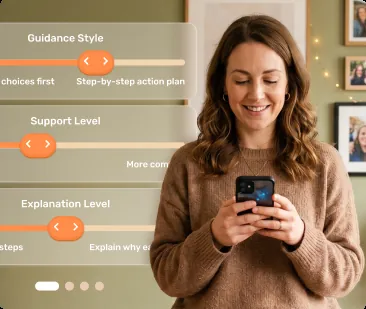
Instead of relying on constant logging, it uses your baby’s age, patterns, and context to guide you through common questions: whether something is developmental, whether timing needs adjustment, or whether a change is worth making. The goal is to reduce the mental loop many parents get stuck in, trying to figure out if what they’re seeing is normal and whether they’re making progress.

It’s also one of the few sleep tools that asks about YOU – how you’re doing, what your capacity is, what your comfort level is with different approaches – not just about your baby. Because a plan that assumes you’re operating at full bandwidth isn’t useful when you’re running on three hours of broken sleep.

It tends to work well for parents who want flexibility and don’t want to feel locked into a rigid approach, especially as sleep evolves over time.

Best for:
Parents who want ongoing, personalized guidance without heavy tracking or strict schedules.

What to know:
It’s less about exact prescriptions and more about interpretation. If you’re looking for a step-by-step plan to follow exactly, it may feel more open-ended than expected.

Tired of trying different sleep apps with no real results?

Betteroo creates a clear, personalized sleep plan that adapts to your baby—not the other way around.

Take the 3-Min Quiz →

Pampers Sleep Coach

Best for age-based smart schedules

Free trial · Subscription required after trial
  • Sleep tracking
  • Personalized to your baby
  • Adapts as baby changes
  • ! Step-by-step plan (generic schedule)
  • ! Low input required
  • Schedule predictions
  • Real-time guidance
  • Works without daily logging
  • Flexible (not rigid)
  • ! Free trial only

Pampers Sleep Coach (Structured AI Coaching)

Pampers Sleep Coach is primarily a smart schedule generator from Pampers Club, offered as a free trial before requiring a subscription. It produces age-based sleep schedules and timing recommendations rather than personalized plans that adapt to your individual baby.

For many parents, this feels helpful at first because it reduces the need to decide everything yourself. The app provides a sense of structure, especially in phases where sleep feels unpredictable. But the schedules are largely generic to your baby’s age, with limited personalization to your baby’s actual patterns or temperament.

Where it differs from more adaptive tools is that the guidance tends to follow a more defined framework rather than continuously refining based on evolving context in a nuanced way.

Best for:
Parents who want structured recommendations and a sense of direction without committing to a full course.

What to know:
It provides helpful guidance, but may not feel as deeply personalized or flexible in real time as some newer approaches.

Huckleberry

Best for tracking and timing predictions

Free (limited) · Plus $9.99/mo · Premium $14.99/mo
  • Sleep tracking
  • ! Personalized to your baby (paid only)
  • Adapts as baby changes
  • ! Step-by-step plan (Premium)
  • Low input required
  • Schedule predictions
  • Real-time guidance
  • Works without daily logging
  • ! Flexible (not rigid)
  • Free tier available

Huckleberry (Tracking and Sleep Predictions)

Huckleberry is a sleep tracking and prediction app for babies that uses logged sleep data to suggest optimal sleep windows. It is one of the most widely used baby sleep apps, with free, Plus ($9.99/mo), and Premium ($14.99/mo) tiers.

For many families, especially early on, this reduces guesswork and helps create a more predictable daily rhythm. Seeing patterns over time can also be reassuring when things feel inconsistent.

At the same time, its focus is primarily on timing. It’s less focused on explaining why sleep is changing or how to adjust beyond schedule shifts.

Best for:
Parents who like data and want help with sleep timing and pattern recognition.

What to know:
The app becomes more useful with consistent logging, which can feel like a commitment. It’s strongest as a timing tool rather than a broader sleep strategy.

Must Read: Huckleberry vs Betteroo: Full Comparison Guide

Nanit

Best for monitor-based sleep insights

Hardware required · Monitor $200+ · Insights subscription extra
  • Sleep tracking (passive)
  • Personalized to your baby
  • Adapts as baby changes
  • Step-by-step plan
  • Low input required
  • Schedule predictions
  • Real-time guidance
  • Works without daily logging
  • ! Flexible (not rigid)
  • Free tier available

Nanit (Monitor-Based Sleep Insights)

Nanit is a baby monitor and sleep tracking system that combines hardware ($200+) with an app-based insights subscription. It passively tracks movement, sleep duration, and patterns without requiring manual input, making it appealing for parents who want data without daily logging. Over time, this can help you see trends and changes more clearly.

A similar option is Owlet, which includes additional physiological monitoring. Both fall into a category where the “app” is really part of a larger hardware system.

Best for:
Parents who want passive data collection and already use (or are considering) a smart monitor.

What to know:
This is less about guidance and more about information. It doesn’t tell you what to do—it shows you what’s happening.

Taking Cara Babies

Best for step-by-step sleep training method

Course-based · $119–$249 one-time per age range
  • Sleep tracking (not an app)
  • Personalized to your baby
  • Adapts as baby changes
  • Step-by-step plan
  • Low input required
  • Schedule predictions
  • Real-time guidance
  • Works without daily logging (no logging exists)
  • Flexible (not rigid)
  • Free tier available

Taking Cara Babies (Structured Sleep Training Method)

Taking Cara Babies is not an app at all – it’s a collection of pre-recorded video classes and PDF guides organized by age range, priced from $119 (Newborn Sleep Bundle) to $249 (5–24 Month Collection). It teaches a defined step-by-step sleep training method through one-way video content, with no software, tracking, or personalization.

For many parents, this removes a lot of uncertainty. You’re not deciding what to try, you’re following a plan that has worked for others. That clarity can be helpful, especially if you feel overwhelmed. At the same time, it requires a willingness to follow a structured method rather than adapting as you go – and the price tag is steep for what is essentially a video library and PDFs, with no ongoing tools or support.

Best for:
Parents who want a clear, proven framework to follow.

What to know:
It’s more prescriptive than flexible, and you’re paying premium course-based prices ($119–$249) for content you watch once. It works best if the structured method aligns with your parenting style.

Little Ones

Best for schedule-driven routines

Subscription · ~$10/mo or $60/year
  • Sleep tracking
  • ! Personalized to your baby (by age only)
  • Adapts as baby changes
  • Step-by-step plan
  • Low input required
  • Schedule predictions
  • Real-time guidance
  • Works without daily logging
  • Flexible (not rigid)
  • Free tier available

Little Ones (Schedule-Based System)

Little Ones is a schedule-driven baby sleep app (~$10/month or $60/year) that offers detailed daily routines based on your baby’s age. (If you want a free overview of typical sleep needs by age first, our baby sleep schedule by age guide covers it.)

For some parents, this level of structure is reassuring. It removes guesswork and creates a clear plan for how the day should flow.

For others, it can feel rigid – especially if their baby doesn’t naturally align with the suggested timing.

Best for:
Parents who want a highly structured, schedule-driven approach.

What to know:
It works best when your baby fits reasonably well into the proposed structure. If not, it can feel harder to adapt.

You May Not Need a Sleep Training App If…

It’s easy to assume that even the best sleep training apps will make sleep easier, but that’s not always the case.

If your baby is generally sleeping well, or you feel comfortable adjusting routines based on what you’re seeing, an app may not add much value. The same is true if trying to follow external guidance tends to make you second-guess yourself more.

Sleep tends to improve through consistency and time as much as through any of the best sleep training apps on the market.

What Matters More Than the Best Sleep Training Apps Themselves

Sleep outcomes are rarely determined by the tool you use.

What tends to matter more is:

  • consistency in your routine
  • timing that aligns with your baby’s needs
  • your ability to respond as things change

Apps can support those things, but they don’t replace them.

If you want to understand how different approaches to sleep training actually compare, this is a helpful place to start: Common Sleep Training Methods.

And for a broader perspective on what’s typical across families: State of Baby Sleep

If You’re Deciding What to Try First

If you’re feeling stuck, it can help to start with something that gives you clarity rather than committing to a full system.

Still not sure which app fits your family?

Skip the comparison spreadsheet. Betteroo’s free 3-minute quiz builds a personalized sleep plan based on your baby’s age, temperament, and your real situation.

Take the Free Sleep Quiz →

FAQ: Best Sleep Training Apps for Babies

What is the best sleep training app for babies?

There isn’t a single best app for every family. The right choice depends on how you want support to feel. Some parents prefer structured plans, while others want help interpreting what’s happening in real time. The most effective app is the one you’ll actually use consistently.

Do sleep training apps actually help babies sleep better?

They can help by providing structure, clarity, or guidance, but they don’t directly change your baby’s sleep. Progress usually comes from consistent routines and responses over time. The app’s role is to make those decisions easier.

Is Pampers Sleep Coach better than Huckleberry?

They serve different purposes. Pampers Sleep Coach focuses on providing structured guidance, while Huckleberry focuses on tracking and predicting sleep timing. The better option depends on whether you want direction or data.

Can I use more than one sleep app at the same time?

You can, but it’s not always helpful. Using multiple apps can sometimes create conflicting guidance or increase decision fatigue. Most parents do better choosing one approach and sticking with it long enough to see patterns

Are sleep training apps worth paying for?

They can be, especially if they reduce uncertainty or help you feel more confident in your decisions. The value comes from clarity and support, not from the app itself “fixing” sleep.

Can I sleep train my baby without an app?

Yes. Many parents do. Apps are tools, not requirements. They can make things easier, but they’re not necessary for healthy sleep development.

Which sleep training app is best if my baby isn’t responding?

If your baby isn’t responding to one approach, it’s often less about the app and more about the fit between the approach and your baby. In those cases, shifting from a rigid system to a more flexible or interpretive one (or vice versa) can sometimes make a difference.

Final Take: The Right App Should Make Things Simpler, Not Heavier

The best sleep training app isn’t the one with the most features, it’s the one that helps you feel clearer and more confident. For some families, that comes from structure, while for others, from flexibility. And for many, from simply understanding what’s happening well enough to respond without second-guessing every step. Once that happens, the rest tends to follow.

3 Sources
  1. Mindell, J.A., et al. (2006). Behavioral Treatment of Bedtime Problems and Night Wakings in Infants and Young Children. Sleep, 29(10), 1263–1276. https://pubmed.ncbi.nlm.nih.gov/17068979/
  2. Mindell, J.A., et al. (2016). Development of Infant and Toddler Sleep Patterns: Real-World Data from a Mobile Application. Journal of Sleep Research, 25(5), 508–516. https://pubmed.ncbi.nlm.nih.gov/27070844/
  3. Hirshkowitz, M., et al. (2015). National Sleep Foundation’s Sleep Time Duration Recommendations. Sleep Health, 1(1), 40–43. https://pubmed.ncbi.nlm.nih.gov/29073412/
Table of Contents