
Do sleep training apps work? The short answer is: they can help, but often not in the way parents expect. Many sleep training apps are designed to provide structure, track patterns, and suggest schedules. For some families, that added clarity makes sleep feel more manageable, especially early on.
But sleep is not a fixed system. It shifts day to day based on development, feeding, environment, and how a baby is feeling. Many sleep training apps cannot fully account for that variability, or the emotional layer that shapes how sleep actually unfolds in real life.
Understanding what these apps can do, and where their limits are, tends to make them far more useful.
Key Takeaways
- Sleep training apps can help you see patterns and add structure, but they work best as guides — not instructions.
- Most apps struggle to account for daily changes in development, feeding, temperament, and environment.
- Apps tend to feel most useful when parents stay flexible and adjust based on what they’re seeing in real time.
- You don’t need an app to improve sleep — but the right one can make the process feel more manageable.

Table of Contents
What sleep training apps are designed to do
At their core, most sleep apps are built to bring some structure to a process that often feels unpredictable. They track sleep patterns over time, helping you see when your baby tends to fall asleep, wake, and nap. For a closer look at how tracking compares across popular options, see our guide to the best baby tracker apps. Many also offer suggested schedules or sleep windows based on age and previous data. Some go further and generate recommendations using algorithms that attempt to predict when your baby may be ready for sleep. These features can be genuinely helpful, especially in the early months when patterns are harder to recognize on your own. 1
At the same time, it helps to remember that many of these tools are built on trends and averages, and that they are not observing your baby in real time.
Where sleep training apps can actually help
For many parents, the biggest benefit of a sleep app is not that it fixes sleep, but that it makes patterns easier to see. Instead of trying to remember when your baby last slept or how long they were awake, you can begin to notice rhythms. You might start to see how long your baby tends to stay awake before becoming overtired, or how certain naps affect the rest of the day.
This kind of visibility can reduce guesswork and make decisions feel more manageable.
Apps can also provide a starting point. When everything feels inconsistent, having a general framework can bring a sense of direction, even if it needs to be adjusted.
Where sleep training apps fall short (and why they don’t always work)
Sleep is influenced by more than timing. It is shaped by development, feeding patterns, environment, temperament, and how a baby is feeling on any given day. An app might suggest that your baby is ready for sleep at a certain time, but it cannot fully account for a shorter nap earlier in the day, a growth spurt, a change in routine, or a shift in emotional needs. These kinds of disruptions are often tied to sleep regressions, which no app can fully predict.
Because of this, following app recommendations too rigidly can sometimes create more frustration instead of less. The issue is not that the app is wrong. It is that it is incomplete. 4
Why sleep apps work for some families and not others
When sleep apps feel effective, it is often because they are being used as guides rather than instructions. Parents who benefit most tend to use apps to notice patterns and create a starting point, while still adjusting based on what they are seeing in real time.
When apps feel frustrating, it is often because expectations are different. If a parent is hoping the app will provide exact answers or eliminate unpredictability, it is more likely to feel like it is not working. The difference is not just the app itself. It is how the app fits into the decision-making process. 2
Do sleep training apps work as standalone solutions?
It can help to think of sleep apps as tools for visibility, not solutions for sleep. They can help you see patterns, offer structure, and reduce some uncertainty. What they cannot do is interpret your baby in real time or adjust perfectly to daily changes. For many families, sleep apps feel most helpful when they are used as guides, not rules.
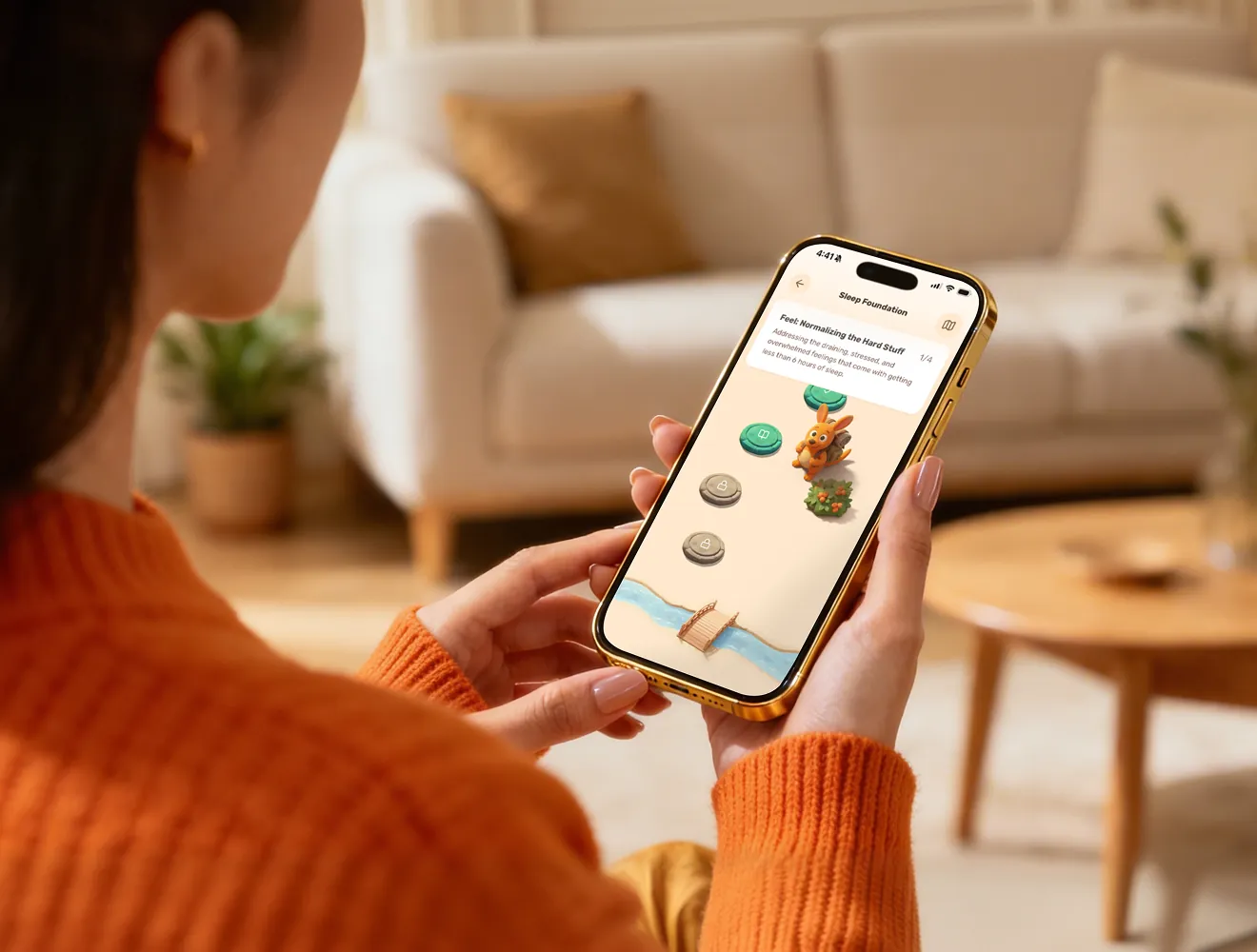
At Betteroo, this idea is built directly into the approach. Instead of assuming there is a single correct schedule, the goal is to help parents interpret what is happening and adapt, rather than follow a fixed plan.
Not sure what your baby’s sleep actually needs?
Get a personalized sleep plan built around your baby’s age, patterns, and your family’s routine.
Do baby tracker apps actually help with sleep?
Basic trackers can help you see patterns, which is a useful first step. But if you are expecting an app to fix night wakings on its own, tracking alone will not get you there. It shows you what happened, not what to do next.
Some apps go further by offering sleep guidance. These tools aim to turn patterns into recommendations, though the level of personalization can vary. In some cases, this comes as a one-time plan. In others, it is more adaptive and ongoing.
The distinction matters – and it’s central to the question of whether sleep training apps work. Seeing the pattern is one step. Knowing how to respond to it is another.
How Betteroo approaches sleep support differently
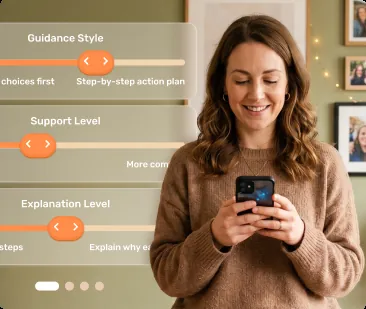
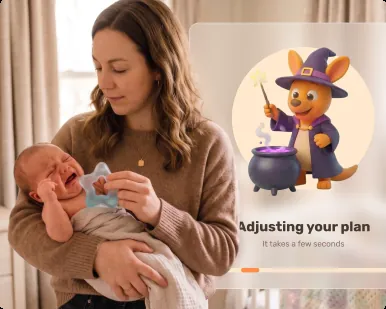
Some newer tools are designed to go beyond tracking or static schedules by adapting to a baby’s changing patterns over time. Betteroo focuses on helping parents interpret what is happening and adjust in real time, rather than follow a fixed plan. Instead of offering a single prescribed schedule, it builds guidance around the child, the parent, and the situation as it evolves.
The shift is subtle but important. Instead of asking what a baby should be doing, the question becomes what your baby needs right now.
Can you use more than one baby tracker app?
Yes. Many parents use one app for logging and another for guidance. For example, a general tracker may help capture daily patterns, while a more focused sleep tool helps interpret those patterns and suggest adjustments.
There is no requirement to choose just one. What matters is whether the tools you are using make things clearer, not more complicated.
Do you need a sleep training app to improve sleep?
You do not. Many families improve sleep without using an app at all. What tends to matter most is not the tool, but the ability to notice patterns, respond consistently, and adjust over time. Understanding common sleep training methods can help with that, whether or not you use an app. Apps can make that process easier for some parents, especially early on. But they are not required, and not using one does not put you at a disadvantage. 3
When a sleep app might be helpful and when it might not be
A sleep app may be helpful if you are looking for more structure, trying to understand patterns, or feeling unsure about timing. A good starting point is a baby sleep schedule by age to see what’s typical for your child. It may be less helpful if tracking feels stressful, if you find yourself second-guessing your instincts, or if you are looking for a single clear answer that removes uncertainty.
The goal is not to use the most advanced tool. It is to find what actually reduces friction in your day-to-day life.
Are sleep training apps safe to follow?
Most reputable sleep apps are built on established pediatric sleep research, including guidance from the American Academy of Pediatrics around safe sleep practices. 5
That said, no app can account for every individual situation. If your baby has specific health concerns that affect sleep, it is always best to check in with your pediatrician.
Apps can support decision-making, but they are not a replacement for medical care.
FAQ: sleep training apps
Do sleep training apps actually improve baby sleep?
Sleep apps can support better sleep by helping parents identify patterns and create more consistency. They do not directly improve sleep on their own.
Sleep is influenced by many factors, including development, feeding, environment, and routine. Apps can guide decisions around those factors, but they do not control them.
When apps are helpful, it is usually because they make it easier for parents to respond more consistently, not because the app itself is driving the outcome.
Why do sleep apps work for some people but not others?
The difference often comes down to expectations and flexibility. Parents who use apps as a reference point, rather than a strict schedule, tend to find them more helpful. They adjust based on their baby’s cues and treat recommendations as starting points.
When apps are expected to provide exact answers or eliminate unpredictability, they tend to feel less effective. Sleep is inherently variable, and no app can fully remove that variability.
Can sleep apps make things worse?
In some cases, yes, though usually not because of the app itself.
Following recommendations too rigidly without adjusting for your baby’s cues can lead to mistimed sleep or unnecessary frustration. Tracking can also increase anxiety for some parents. Used flexibly, apps tend to support. Used rigidly, they can create tension.
What is the best way to use a sleep training app?
The most effective approach is to use the app as a guide while continuing to observe your baby.
Let it help you notice patterns and provide a general structure, but stay flexible. If something feels off, your observation matters more than the data.
Over time, many parents find they rely less on the app as they become more familiar with their child’s patterns.
Do I need to choose the best sleep training app?
There is no single best app for every family.
What matters more is whether the app fits how you think and what you need. Some parents prefer simple tracking. Others want more guidance. Some prefer not to use an app at all.
The best choice is the one that helps you feel more clear and less overwhelmed. Ultimately, do sleep training apps work? They can – when they match your family’s needs.
Ready to find what actually works for your baby?
Get a personalized sleep plan that adapts to your baby’s needs — not a one-size-fits-all schedule.
5 Sources
- Mindell JA, Leichman ES, Composto J, et al. Effectiveness of an mHealth intervention for infant sleep disturbances. Sleep Med. 2020.
https://pmc.ncbi.nlm.nih.gov/articles/PMC7428151/ - Gradisar M, Jackson K, Spurrier NJ, et al. Behavioral interventions for infant sleep problems: a randomized controlled trial. Pediatrics. 2016.
https://pubmed.ncbi.nlm.nih.gov/27221288/ - Price AM, Wake M, Ukoumunne OC, Hiscock H. Five-year follow-up of harms and benefits of behavioral infant sleep intervention. Pediatrics. 2012.
https://pubmed.ncbi.nlm.nih.gov/22966034/ - Children’s Hospital Colorado. Most children’s sleep apps lack evidence.
https://www.childrenscolorado.org/advances-answers/recent-articles/sleep-apps-for-children/ - American Academy of Pediatrics. Safe sleep recommendations.
https://publications.aap.org/pediatrics/article/150/1/e2022057990/188304/