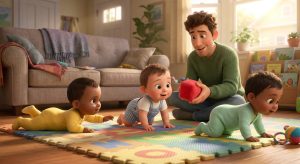
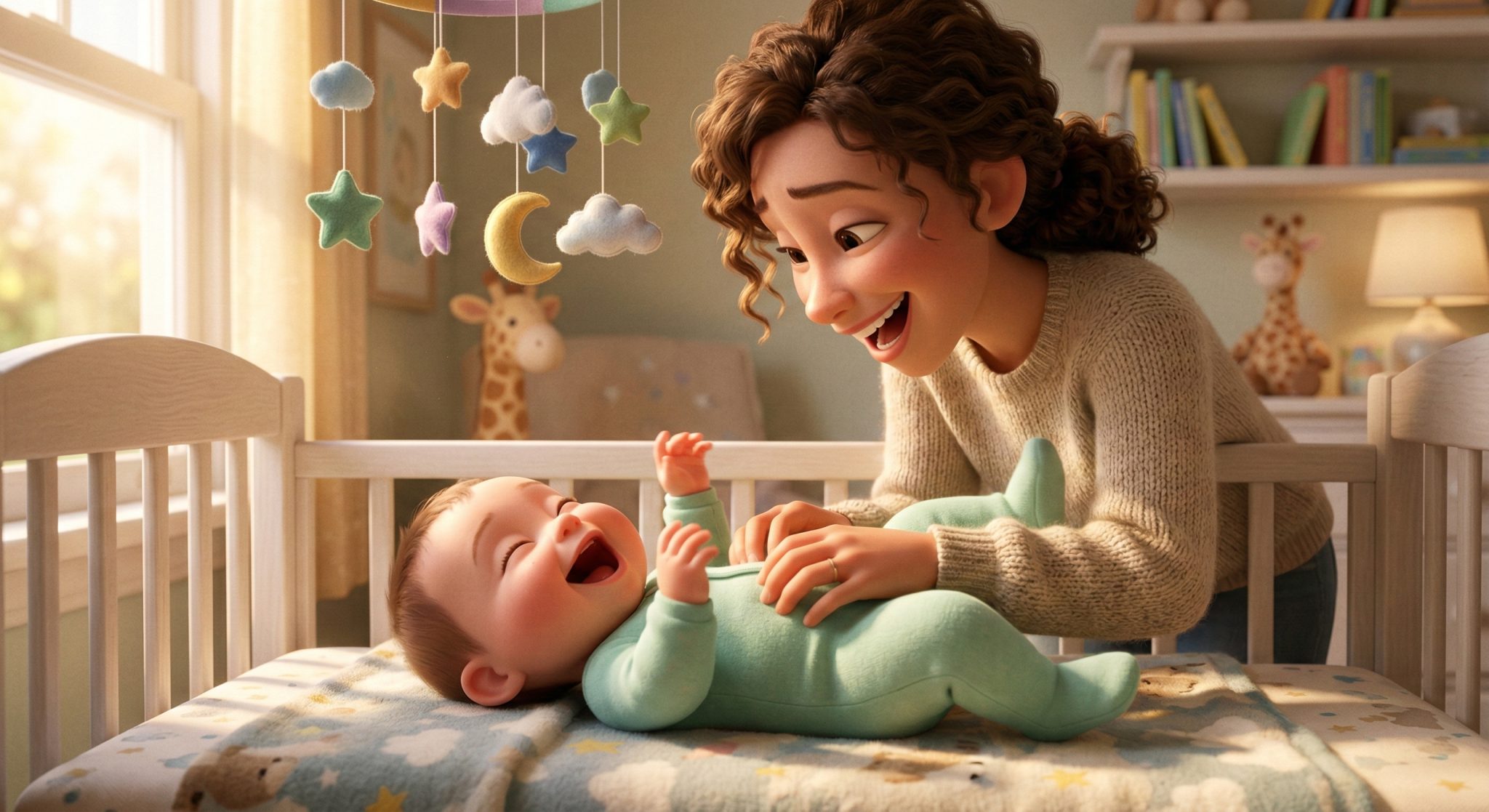


Baby laughter develops gradually. Here’s when babies typically laugh for the first time, what that first laugh really looks like, and how to support development without pressure.
If you’re wondering when do babies laugh for the first time, you might be coming to the question from a lot of different places. You may be feeling curious and excited about what’s ahead, noticing small changes in how your baby responds to you, or simply checking in on milestones as your baby grows.
Must Read: 3 Month Old Milestones
Laughter is one of those moments that can feel especially meaningful. It’s joyful, shared, and often unexpected, which can make it both exciting and, at times, a little confusing. You might hear different timelines from friends, see videos of other babies laughing early, or wonder how smiling, cooing, and laughing all fit together.
It also happens to be a milestone that’s widely misunderstood. Babies don’t all laugh early, loudly, or often. Some smile for weeks before laughing. Some laugh once and then not again for a while. Others are expressive in different ways long before laughter shows up. All of that can be normal.
What’s helpful to know from the start is this: babies develop expressiveness in different ways and on different timelines. Laughter doesn’t arrive all at once, and it doesn’t look the same for every baby.
This guide explains when babies typically laugh for the first time, how laughter develops from earlier social behaviors, what a “first laugh” often sounds like, and when it makes sense to ask questions, without turning a joyful milestone into something to measure or worry about.
Table of Contents
When Do Babies Usually Laugh for the First Time?
Most babies laugh for the first time sometime between 3 and 4 months, though for some it may happen a bit earlier or later. The CDC lists chuckling as a milestone most babies reach by 4 months, with full laughter typically appearing by around 6 months ¹. As with many early milestones, the range matters more than the exact age.
It’s also important to know that a baby’s first laugh is often brief and subtle. It may sound more like a soft exhale, a squeaky chuckle, or a surprised burst of sound than a full belly laugh. Many babies laugh once, then don’t repeat it for days or even weeks as the skill continues to develop.
Rather than arriving all at once, laughter tends to emerge gradually as babies gain social awareness, emotional connection, and control over their voices.
What Counts as a “First Laugh”?
Parents often ask whether something they heard “counts” as a real laugh — and that question alone can create unnecessary stress.
Early laughter doesn’t always sound the way we expect. It may be quiet, short, or inconsistent. Some babies laugh during play but not in response to faces or voices. Others laugh more easily when they’re relaxed than when they’re excited.
It also helps to distinguish laughter from earlier social behaviors:
- Reflex smiles happen in the early weeks and aren’t intentional
- Social smiles appear as babies begin responding to faces and voices
- Vocal play includes cooing, squealing, and experimenting with sound
- Laughter builds from all of the above and reflects growing social awareness
None of these replaces the others. Laughter is part of a continuum, not a sudden switch.
The AAP notes that social smiles typically emerge around 2 months, and that by 3–4 months babies become increasingly social and expressive, forming stronger attachments to caregivers ².
How Baby Laughter Develops
Laughter grows out of a baby’s increasing ability to connect what they see, hear, and feel with emotional meaning.
In the early months, babies begin recognizing familiar faces and voices. They learn that interactions go back and forth. Over time, their brains link those experiences with pleasure and anticipation. Laughter is one way that joy and connection can show up.
Check Out: Baby sleep schedule by age
This process depends on many factors, neurological development, temperament, sensory sensitivity, and experience, which is why timing varies so widely. Mayo Clinic’s developmental timeline for 4–6 month olds notes that babies at this age become more socially engaged, enjoy cuddling and laughing, and start using facial expressions that consistently reflect emotions like joy and surprise ³.
A baby who is observant and calm may take longer to laugh than a baby who is highly expressive, even though both are developing typically.
What Makes Babies Laugh
Babies don’t usually laugh because something is objectively “funny.” They laugh because something feels engaging, safe, and emotionally interesting.
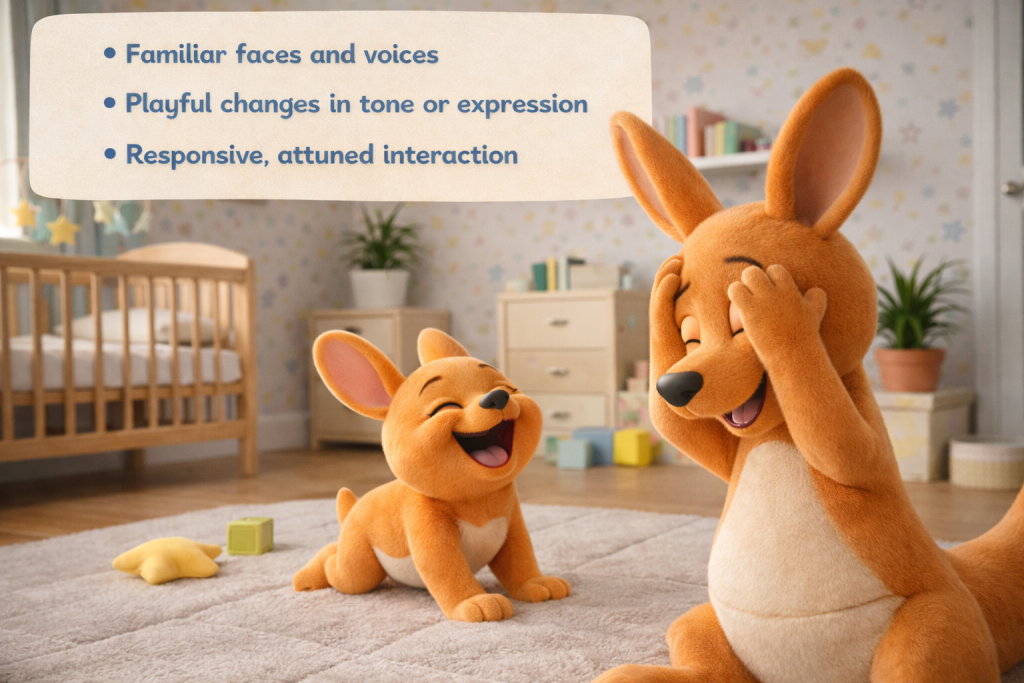
Common triggers include:
- Familiar faces and voices
- Playful changes in tone or expression
- Gentle anticipation (like peekaboo)
- Responsive, attuned interaction
What matters most isn’t the activity itself, but the connection behind it. Laughter tends to emerge from shared moments rather than from tricks or performances.
Is It Normal If My Baby Isn’t Laughing Yet?
Yes. Many babies smile, coo, or show excitement long before they laugh. Others laugh rarely at first, even when they seem happy and engaged.
A baby who isn’t laughing yet but is making eye contact, responding to voices, showing interest in people, and expressing themselves in other ways is often developing typically. Laughter timing on its own is not a measure of intelligence, happiness, or emotional health.
Babies also differ in temperament. Some are naturally more expressive; others are more reserved. Both patterns can be completely normal.
How Parents Can Encourage Laughter Naturally
It’s natural to wonder whether there’s something you should be doing to help your baby laugh. The most helpful approach is simple: focus on connection, not outcome.
Ways to support laughter include:
- Talking, singing, and playing face-to-face
- Responding to your baby’s sounds and expressions
- Following their cues rather than trying to elicit a reaction
- Keeping interactions relaxed and pressure-free
You don’t need to perform, entertain constantly, or “teach” laughter. Babies develop expressiveness through responsive, everyday interaction.
When to Talk to a Pediatrician
Laughter varies widely, and most differences in timing are not concerning. Still, it’s always appropriate to ask questions if something doesn’t feel right.
You might consider checking in with a pediatrician if, over time, your baby shows very limited social engagement, such as minimal eye contact, few smiles, little vocal interaction, or if you notice a loss of skills they previously had. Patterns over time matter more than a single milestone.
The CDC’s “Learn the Signs. Act Early.” program recommends talking with your child’s doctor if your baby is not meeting milestones, has lost skills they once had, or if you have any concerns — and emphasizes that early intervention can make a meaningful difference ⁴.
Trusting your instincts and seeking guidance is a form of support, not alarm.
FAQ about When Do Babies Laugh for the First Time
What age do babies usually laugh out loud?
Many babies laugh out loud between 3 and 4 months, but some do so earlier or later. Early laughs are often quiet or brief before becoming more consistent.
Is it normal for a baby not to laugh at 3 or 4 months?
Yes. Some babies smile and vocalize for weeks before laughter appears. Variation in timing is common.
Do all babies laugh?
Most babies eventually laugh, but they don’t all laugh often or loudly. Expressiveness varies by temperament.
Does laughter mean a baby is happy?
Laughter is one way babies express enjoyment, but it’s not the only sign of happiness or connection. Calm engagement and responsiveness also matter.
Can a baby laugh and still have developmental delays?
Yes — and the reverse can also be true. Laughter alone doesn’t determine developmental health. Pediatricians look at patterns across many areas of development.
The Takeaway
If you’re wondering when your baby will laugh for the first time, it helps to remember this: development isn’t a race, and joy doesn’t follow a schedule.
Babies express connection and pleasure in different ways and on different timelines. Laughter grows out of relationship, awareness, and comfort — not performance.
You’re not missing anything. You’re building connection, and the rest unfolds from there.
4 Sources
- Centers for Disease Control and Prevention. Milestones by 4 Months. Learn the Signs. Act Early. https://www.cdc.gov/act-early/milestones/4-months.html
- American Academy of Pediatrics. Emotional & Social Development in Babies: Birth to 3 Months. HealthyChildren.org. https://www.healthychildren.org/English/ages-stages/baby/Pages/Emotional-and-Social-Development-Birth-to-3-Months.aspx
- Mayo Clinic. Infant development: Milestones from 4 to 6 months. https://www.mayoclinic.org/healthy-lifestyle/infant-and-toddler-health/in-depth/infant-development/art-20048178
- Centers for Disease Control and Prevention. Concerned About Your Child’s Development? Learn the Signs. Act Early. https://www.cdc.gov/act-early/milestones/index.html