The SNOO is the most expensive thing most parents will consider buying for the first six months, and the arguments for and against it are both stronger than the marketing suggests.
It is a responsive bassinet that rocks, plays white noise, listens for crying, and responds to it automatically. It holds a genuine first-of-its-kind FDA authorization. It also costs $1,995, expires in under six months, and does nothing at all about night feeds.
This review covers what the SNOO actually does, what its FDA authorization does and does not mean, what it costs to buy and to rent as of September 2026, where it genuinely earns its price, where it stops, how it compares to spending the same money differently, and who should skip it.
Key Takeaways
- The SNOO is a responsive bassinet that escalates sound and motion in response to crying, made by Happiest Baby, founded by Dr. Harvey Karp.
- It holds FDA De Novo authorization specifically for keeping sleeping infants on their backs. That is not a finding that it prevents SIDS, and no product has shown that.
- As of 24 September 2026 it lists at $1,995 to buy, or $159 a month to rent with a six-month minimum commitment.
- It works from birth to about six months, or until your baby pushes up onto hands and knees, whichever comes first.
- It is strongest for twins, cesarean recovery, and parents without overnight help. It does not teach independent sleep and does not reduce night feeds.
- A standard bassinet, white noise, and a good swaddle covers a lot of the same ground for under $250, and a plan is what carries past six months.
Table of Contents
What the SNOO Actually Is
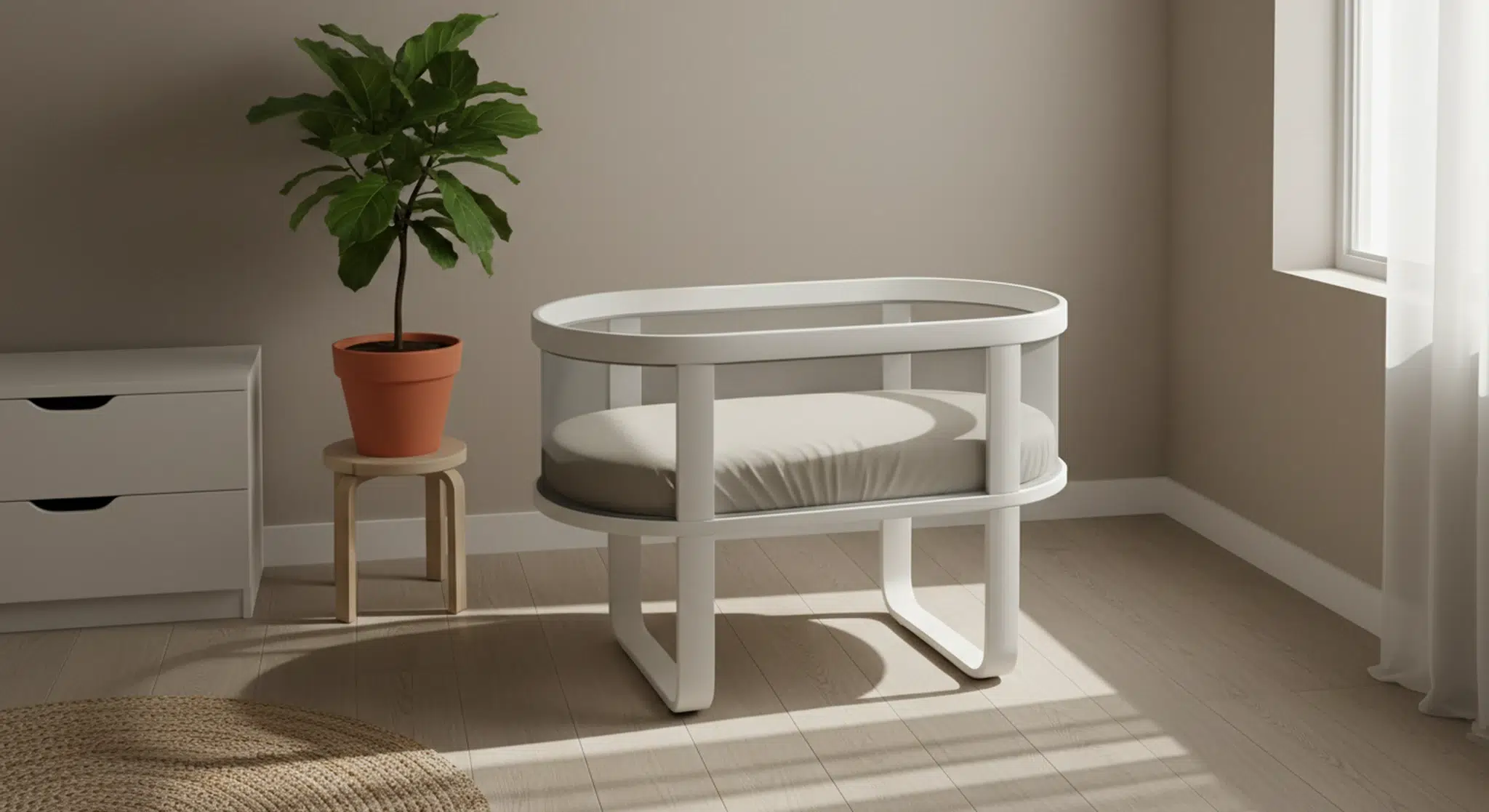
The SNOO Smart Sleeper is a responsive bassinet made by Happiest Baby, the company founded by pediatrician Dr. Harvey Karp, whose book The Happiest Baby on the Block popularized the five S’s approach to calming newborns. The SNOO is essentially that method built into a piece of furniture.
It rocks side to side and plays white noise continuously. Built-in microphones listen for crying, and when they detect it the bassinet responds by increasing the level of sound and motion, stepping up through five levels and then stepping back down when the baby settles. The manufacturer describes the response as often quieting upsets in under a minute. A baby sleeps in a proprietary swaddle sack that clips to the sides of the bassinet, which is what keeps them on their back.
- Five levels of sound and motion, escalating automatically in response to crying.
- Breathable mesh sides for airflow and visibility.
- The SNOO Sack, a swaddle with wings that clip into the bassinet. It is required, not optional.
- An app for controlling levels, viewing sleep logs, and enabling modes such as weaning.
- Weaning mode, which turns the motion off while keeping sound, to prepare for a crib.
- A recommended use window of birth to six months, or until your baby can push up onto hands and knees, whichever comes first.
What the FDA Authorization Means, and What It Does Not
This is the claim most worth understanding precisely, because it is both genuinely significant and widely over-read.
The SNOO holds De Novo authorization from the U.S. Food and Drug Administration. De Novo is a pathway for novel devices of low to moderate risk that have no existing equivalent on the market, and the SNOO is the first bassinet to go through it. The authorization is specifically for the device’s ability to keep sleeping infants on their backs, using the sack that secures them in position.
What that does not mean is that the FDA has determined the SNOO prevents sudden infant death syndrome. It has not, and Happiest Baby does not claim that it has. Back sleeping is strongly associated with reduced risk, and the device is authorized for maintaining back sleeping. Those are not the same statement as reducing deaths, and the difference matters when you are deciding whether to spend two thousand dollars. No bassinet, monitor, or mattress currently on the market has been shown in research to reduce SIDS.
It is also worth knowing that the American Academy of Pediatrics does not recommend any specific commercial product for safe sleep, and its guidance is consistent regardless of what the baby sleeps in: firm flat surface, on the back, nothing else in the space, in the parents’ room for at least the first six months.
What It Costs
Checked directly on the Happiest Baby site on 24 September 2026. Prices change, so confirm before you buy.
| Option | Price | Notes |
|---|---|---|
| Buy new | $1,995 | Listed price on the manufacturer’s site |
| Rent monthly | $159 per month | Six-month minimum commitment, then month to month |
| Prepaid six-month rental | Around $499 on a listed special | Compared against a higher list price; promotional and subject to change |
| SNOO Sacks | Sold separately in sizes | Required for use, and you will want more than one |
| Resale | Strong secondhand market | Units hold value comparatively well, which materially changes the true cost |
The rental terms deserve a close read. The site’s own terms state a six-month minimum: if you return the SNOO before six months, you are not refunded for the unused months, and at the end of the sixth month the card is charged on a recurring monthly basis until you return it. That is a reasonable structure, but it is not a month-to-month trial, and people are sometimes surprised by it.
The honest way to think about the cost is net rather than sticker. A used SNOO resells well, and rental exists precisely because the useful life is under six months. For many families the real outlay is several hundred dollars rather than two thousand. For others it is still more than the entire rest of the nursery combined.
Apps can show you the data. A plan tells you what to do with it.
Our free two-minute quiz builds a gentle, personalized sleep plan for your child’s age and temperament.
Where It Genuinely Helps
A fair review has to say where a product earns its price, and there are real cases here.
- The first eight to twelve weeks. The motion and sound directly counteract the startle reflex and the loss of containment that make newborns so hard to put down. This is where users are most consistently positive.
- Recovery from a cesarean or difficult birth. Not having to get up and physically lift a baby to resettle them is a material difference when standing up hurts.
- Parents with no night help. Single parents, partners who travel, families far from relatives. The SNOO is effectively taking one category of overnight task.
- Twins. Two bassinets is a serious investment, but two newborns who both need resettling at 3am is the scenario the device is best at.
- Babies who resettle with motion. Some do, strikingly. Others do not care at all, and there is no way to know which yours is in advance.
- Keeping a baby on their back. The sack does this reliably, which is the authorized claim and a real benefit for anxious parents.
Where It Stops
And the limits, which are equally real.
- It expires. Six months at most, often five, and sooner if your baby pushes up onto hands and knees early. You are buying a short window.
- It does not teach independent sleep. The SNOO does the settling. That is the point, and it is also why the crib transition is the part people find hardest. Weaning mode helps, but the transition is still a transition. Our guide on the bassinet to crib transition covers how to handle it.
- It does not reduce night feeds. A hungry baby is not soothed by motion, and should not be. The SNOO’s own guidance is that it will not settle a baby who needs feeding.
- Some babies dislike it. A meaningful minority of babies simply do not settle in it, and there is no predicting this. The return window and the rental option exist for a reason.
- Cost. Two thousand dollars for under six months is the objection, and it is a fair one. Rental softens it substantially.
- Size and portability. It is large, heavy, needs a power outlet, and does not travel.
- The proprietary sack. You cannot use your own swaddle, and you will need multiple sacks in each size.
- App dependence. Core rocking works without the app, but several features live in it, and the app’s ratings have been middling: 4.05 stars across about 5,467 ratings on the App Store as of 24 September 2026, with version 3.0.3 released in August 2026.
How It Compares to the Alternatives
The comparison people actually need is not SNOO versus another smart bassinet. It is SNOO versus everything else you could do with the money.
| Option | Rough cost | Best for |
|---|---|---|
| SNOO, bought | $1,995 | Twins, no night help, cesarean recovery, high resale expectation |
| SNOO, rented | $159 per month, six-month minimum | Most families who want it. Matches the cost to the useful life |
| Another responsive or smart bassinet | $400 to $1,700 | Similar concept at lower cost, without the FDA authorization |
| Standard bassinet plus white noise plus a good swaddle | $100 to $250 | Most babies, honestly. Covers a large share of what the SNOO does |
| Postpartum doula or night nurse | $250 to $500 per night | Targeted help for the hardest weeks, but not a nightly option for most |
| A structured sleep plan | Low cost | Works past six months, which no bassinet does |
The honest framing is that a standard bassinet, continuous white noise, a well-fitted swaddle, and attention to wake windows gets a lot of families a long way for under two hundred dollars. The SNOO automates the resettling part, which is genuinely valuable at 3am and genuinely optional. Our guide to the best swaddles for newborns covers the cheaper half of that setup.
Is the SNOO Worth It?
A few clear cases, rather than a verdict that applies to everyone.
- Rent it if you are having twins, recovering from a cesarean, parenting without overnight help, or returning to work early. The monthly cost against the useful window is the sensible way to buy this product.
- Buy it if you expect more than one child, you plan to resell, or the outlay is comfortable and the potential return on sleep in the first three months is worth it to you.
- Skip it if the money is tight, if you would be stretching for it, or if your main concern is sleep beyond six months. It does not address that, and the transition out of it lands exactly when many families hit the four month sleep regression.
- Do not buy it expecting a SIDS-prevention device, a replacement for night feeds, or a baby who will sleep through the night. None of those are what it does.
One structural point that no review from the manufacturer will make: the SNOO’s window ends at almost exactly the age where infant sleep gets complicated for most families. The four month regression, the crib transition, and the end of SNOO eligibility frequently arrive within weeks of each other. Whatever you decide about the bassinet, having a plan for what comes after it is the part that carries further.
Related Betteroo Guides
Where Betteroo Fits
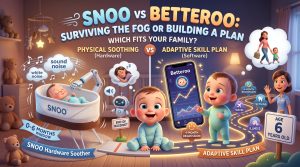
We should be upfront that we are not neutral here, so here is the honest comparison. The SNOO is hardware that settles your baby for you, for up to six months. Betteroo is a personalized sleep plan that teaches your baby to settle, and it works from newborn through the toddler years. They are not really competitors, and plenty of families use both, in sequence.
The case for the SNOO is strongest in the first twelve weeks, when the goal is survival rather than skills. The case for a plan is strongest from around three or four months, when sleep associations start to matter and hardware stops being an option. If you want the direct feature-by-feature version, our SNOO vs Betteroo comparison lays it out.
If you are working out what comes after the bassinet, our free two-minute quiz builds a gentle plan around your child’s age and temperament, at a fraction of the cost of any device.
Frequently Asked Questions
How much does the SNOO cost in 2026?
Checked on the Happiest Baby site on 24 September 2026, the SNOO Smart Sleeper lists at $1,995 to buy new, or $159 per month to rent with a six-month minimum commitment, with a prepaid six-month rental special listed at around $499. SNOO Sacks are sold separately and are required. Prices change, so confirm on the manufacturer’s site before buying.
Is the SNOO FDA approved?
It holds FDA De Novo authorization, which is a pathway for novel low to moderate risk devices with no existing equivalent, rather than the approval pathway used for high-risk devices. The authorization is specifically for the SNOO’s ability to keep sleeping infants on their backs. It is not a determination that the device prevents SIDS, and no bassinet or monitor has been shown to do that.
How long can a baby use the SNOO?
Up to six months of age, or until your baby can push up onto their hands and knees, whichever comes first. For some babies that is closer to five months. The SNOO Sack is required throughout, and weaning mode turns off the motion while keeping the sound, to prepare for the move to a crib.
Is the SNOO worth it, or should I rent?
For most families who want one, renting matches the cost to the short useful life and is the more sensible option. Buying makes more sense if you expect more than one child, plan to resell, or the outlay is comfortable. Note the rental has a six-month minimum with no refund for unused months if you return it early.
Does the SNOO help babies sleep through the night?
Not by itself, and it is not designed to. It settles a baby who is fussing, but it does not and should not soothe a hungry baby, so night feeds continue as normal. It also does the settling for your baby rather than teaching them to settle, which is why the transition to a crib at around six months is the part families find hardest.
Calmer bedtimes, better nights.
Betteroo builds a personalized sleep plan for your child. Take the free two-minute quiz to get started tonight.
5 Sources
- Happiest Baby. SNOO Smart Sleeper product page and pricing, accessed 24 September 2026.
https://www.happiestbaby.com/products/snoo-smart-bassinet - Happiest Baby. SNOO rental terms, accessed 24 September 2026.
https://www.happiestbaby.com/products/snoo-rental - U.S. Food and Drug Administration. De Novo classification requests.
https://www.fda.gov/medical-devices/premarket-submissions-selecting-and-preparing-correct-submission/de-novo-classification-request - American Academy of Pediatrics, HealthyChildren.org. A parent’s guide to safe sleep.
https://www.healthychildren.org/English/ages-stages/baby/sleep/Pages/A-Parents-Guide-to-Safe-Sleep.aspx - Apple App Store. Happiest Baby, makers of SNOO, listing data via the iTunes Lookup API, accessed 24 September 2026.
https://apps.apple.com/us/app/happiest-baby-makers-of-snoo/id1562132169