Around four months, many parents notice a shift. 4 month old milestones can feel exciting and overwhelming at the same time — your baby seems more alert, more expressive, and more determined, but also sometimes fussier, harder to settle, or more frustrated than before.
If this stage feels different, you’re not imagining it.
Here’s the most grounding thing to know upfront: understanding 4 month old milestones starts with knowing that four months is a transition period, not a deadline. Development is accelerating, but skills don’t arrive all at once or in neat order. What you’re seeing is a baby whose awareness and intentions are growing faster than their ability to act on them — and that mismatch can feel bumpy for everyone.
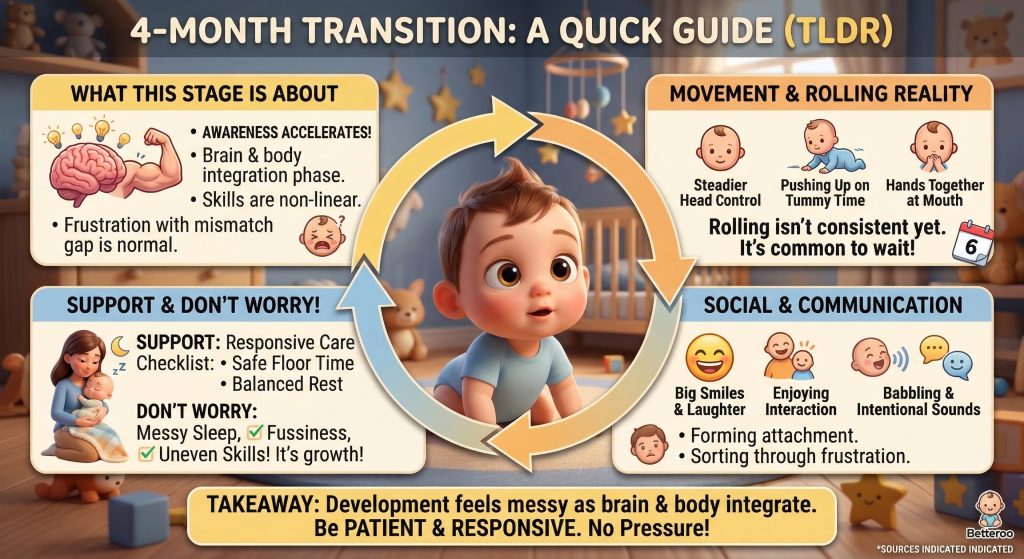
Infographic about 4 month old baby milestones
This guide walks through what typically develops around four months, what’s still emerging, how these changes show up day to day, and what truly doesn’t need worrying yet.
Table of Contents
What 4 Month Old Milestones Really Look Like
Four months is less about mastering new skills and more about integration.
Your baby’s brain and body are learning to work together more intentionally. Awareness increases. Curiosity grows. Movement becomes purposeful rather than reflexive. But coordination is still catching up.
That gap — wanting to do more than the body can manage — often shows up as:
frustration
increased vocalizing
more frequent waking or lighter sleep
less tolerance for being still
This stage often feels harder before it feels easier, and that’s a normal part of development.
Movement & Physical Development at 4 Months
What You Might Notice
Many four-month-olds show growing strength and coordination, such as:
steadier head and neck control
pushing up on arms during tummy time
bringing hands together or to their mouth
reaching for objects with intention
kicking and twisting with more control
These are signs that foundational strength and coordination are building. The CDC’s updated 4-month milestone checklist identifies pushing up on elbows during tummy time, holding the head steady without support, and bringing hands to mouth as skills most babies (75% or more) achieve by this age ¹.
Rolling: What’s Emerging vs. What’s Expected
Rolling is the milestone that creates the most pressure at this age — and it deserves careful framing.
Some babies roll from belly to back around four months. Many do not. Others experiment briefly, then stop, then try again weeks later. In the 2022 CDC milestone revision, rolling was moved from the 4-month checklist to the 6-month checklist, reflecting that 75% of babies don’t consistently roll until closer to 6 months ². These are among the most commonly tracked 4 month old milestones, but they develop on a spectrum, not a checklist.
That’s because rolling depends on a combination of:
head control
core strength
coordination
timing
Those pieces don’t come together at the same moment for every baby. Consistent rolling often develops later, and not rolling yet at four months is very common.
Social & Emotional Development
At four months, babies often become more socially expressive. You might notice:
bigger smiles and laughter
clear enjoyment of interaction
excitement when seeing familiar people
frustration when they can’t reach or move the way they want
That frustration can be confusing. It’s not a sign of a “difficult” temperament — it’s often a sign that awareness is growing faster than motor ability. The AAP notes that by 3–4 months, babies form stronger attachments to caregivers, begin sorting familiar faces from strangers, and use smiling as an intentional way to engage others ³. This is also the age when many babies have their first real laugh — one of the most rewarding milestones of the early months.
Communication & Language Development
Communication at this age is playful and experimental.
Many babies:
make a wider range of sounds
babble or vocalize during interaction
respond to voices with sounds of their own
enjoy “conversations,” even if they’re one-sided
Some babies are louder, others quieter. Both can be developing typically.
Cognitive & Sensory Development
Four-month-olds are becoming more interested in how the world works. This can look like:
closely watching objects and movement
tracking toys or faces across a room
reacting more strongly to sound, light, or activity
staying alert for longer stretches
With that increased awareness can come sensory overload. Your baby may need more breaks, calmer transitions, or extra support settling. Some babies also start showing early interest in food around this time, though most aren’t ready for solids until closer to six months. When the time comes, our guide to baby purees can help you get started.
How Development Can Affect Sleep and Mood
Developmental growth doesn’t stay neatly in one lane.
As awareness and coordination increase, sleep can feel lighter or more disrupted. Some babies wake more often. Naps may shorten. Settling may take more effort.
This isn’t something you caused, and it isn’t a failure of routines. It’s a nervous system learning how to regulate in a more complex world.
Supporting Development Without Pressure
Supporting a four-month-old’s development doesn’t mean teaching skills or speeding things up.
What helps most:
offering floor time and tummy time without forcing positions
allowing exploration, even when it includes frustration
responding to cues rather than pushing progress
balancing stimulation with rest
You don’t need to practice rolling or prop sitting. Development unfolds through everyday movement and interaction. Even bath time becomes a chance for sensory exploration at this age – a supportive baby bathtub can make it safer and more enjoyable as your baby gets more active.
What You Don’t Need to Worry About Yet
This is an age where worry can creep in quietly.
You don’t need to worry if:
your baby isn’t rolling yet
skills appear uneven
your baby seems fussier than before
sleep feels less predictable
All of these are common at four months and usually reflect growth, not problems.
When to Check In With Your Pediatrician
It’s always okay to ask questions or seek reassurance.
You might consider checking in if you notice:
very limited movement over time
little responsiveness to sound or interaction
concerns about feeding, growth, or comfort
a persistent gut feeling that something isn’t right
These conversations are about patterns and support, not jumping to conclusions. The CDC encourages parents to act early if their baby is not meeting milestones or has lost skills they once had, and recommends developmental screening at 9, 18, and 30 months ⁴.
4 Month Old Milestones: Frequently Asked Questions
Should my 4 month old be rolling?
Rolling may begin around this age, but many babies don’t roll consistently until closer to 5–6 months. The CDC moved rolling from the 4-month checklist to the 6-month checklist in their 2022 revision, reflecting how wide the normal range is. If your baby is showing growing head control and pushing up during tummy time, those are the building blocks — rolling will follow when the pieces come together.
Is fussiness normal at 4 months?
Yes. Increased fussiness at this age usually reflects growing awareness and frustration — your baby wants to do more than their body can manage yet. They may get irritated during tummy time, fuss when they can’t reach a toy, or seem harder to settle. This gap between intention and ability is temporary and a normal part of development, not a sign of a difficult temperament.
Do babies sit at 4 months?
Babies may briefly enjoy supported sitting at this age, but independent sitting typically develops between 5–7 months. At four months, your baby is still building the core strength and balance needed for sitting. Propping a baby into a seated position isn’t necessary — floor time and tummy time build the same muscles more naturally.
Are sleep changes related to development?
They often are. Around four months, sleep architecture undergoes a permanent shift — cycles become more organized and transitions between them become more noticeable. This is commonly called the 4 month sleep regression, though it’s more accurately a progression. Lighter sleep, shorter naps, and more frequent night waking are all common during this transition.
How much tummy time should a 4 month old have?
There’s no strict daily target, but many babies benefit from working up to 30–60 minutes spread across the day in short sessions. What matters more than the total is that your baby has regular opportunities for floor time in a comfortable setting. If your baby resists tummy time, try shorter bursts, different surfaces, or lying chest-to-chest — our tummy time by age guide has more tips. If you’d like guidance tailored to where your baby is right now, Betteroo’s free quiz can help.
A Grounding Takeaway
4 month old milestones can feel messy – because development at this stage is.
Your baby is learning how to coordinate intention, movement, and awareness all at once. That learning takes time, patience, and support – not pressure.
If you’re noticing change, responding with care, and giving your baby space to grow, you’re meeting this stage exactly as it’s meant to be met.