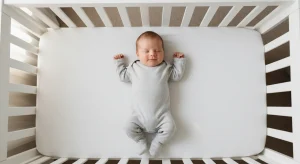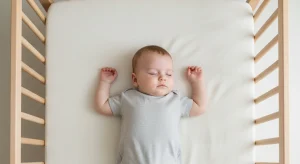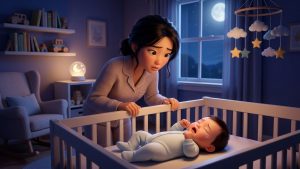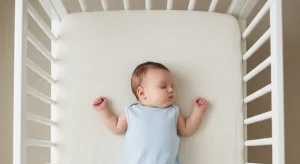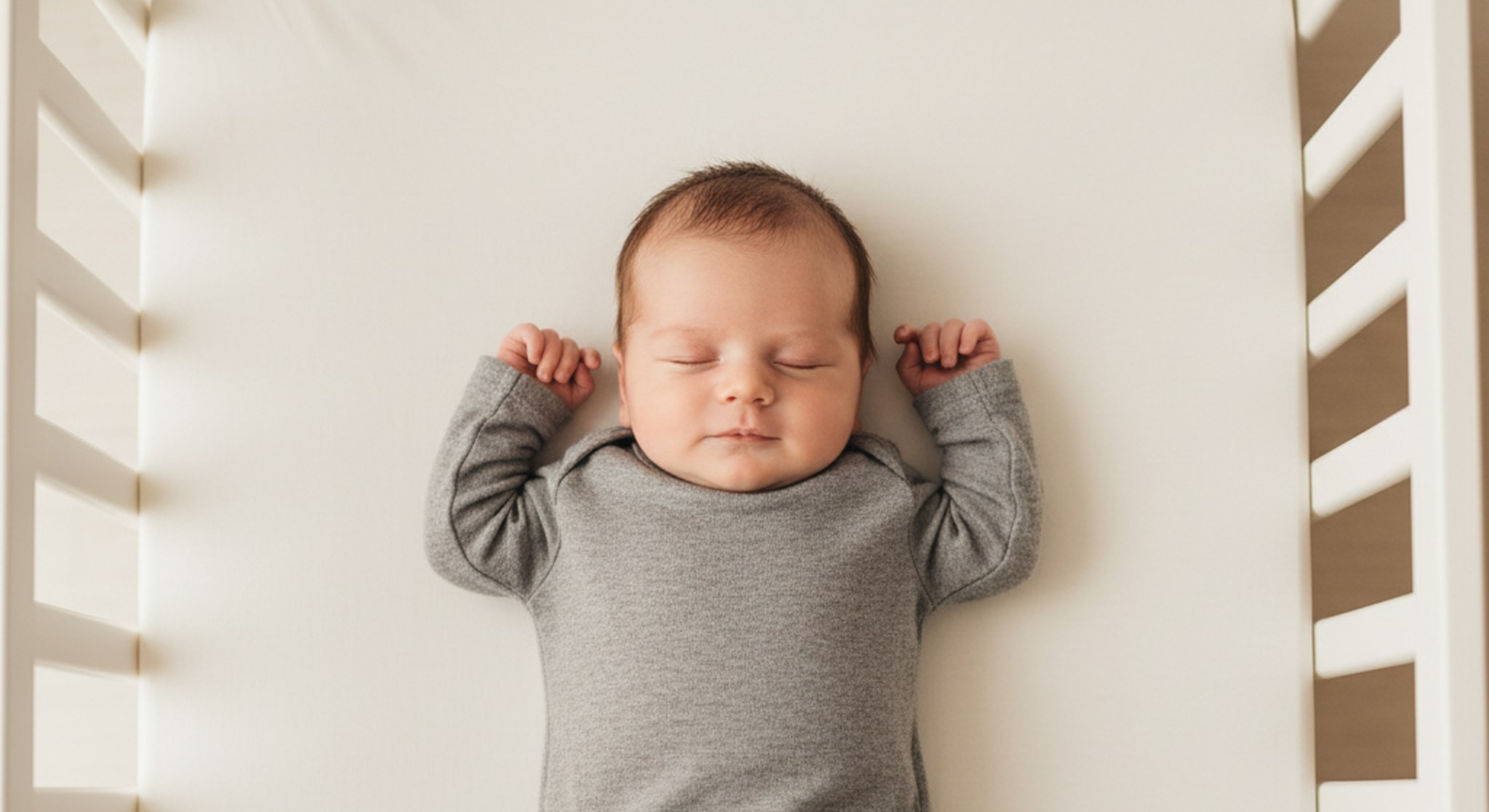


Most babies laugh, smile, or giggle in their sleep because their brains are highly active during sleep, especially in the light, dreamlike stage called active sleep, and this is almost always a normal, harmless part of development.
If you have ever leaned over the crib and caught your baby grinning or letting out a little chuckle with their eyes closed, you are not imagining it. Sleep laughing is common, and for the vast majority of babies it is a sweet, completely normal quirk of how young brains sleep.
This guide explains what is happening in your baby’s brain when they laugh in their sleep, why it happens so often in the early months, and the rare situations where it is worth a quick chat with your pediatrician.
Key Takeaways
- Sleep laughing usually happens during active sleep, the light, dreamlike stage that makes up about half of a newborn’s sleep.
- Newborn smiles and laughs in sleep are often reflexive, not a response to a dream, and they are harmless.
- Twitching, grunting, and fleeting facial expressions during sleep are all part of the same normal pattern.
- It becomes less frequent as your baby matures and spends less of their night in active sleep.
- Very rarely, repeated, clustered, or stiff laughing spells can signal something to check, so mention anything that looks unusual to your doctor.
Table of Contents
What Is Happening When Your Baby Laughs in Their Sleep
Babies do not sleep the way adults do. A newborn cycles through sleep in roughly 50 to 60 minute stretches, and close to half of that time is spent in active sleep, the immature version of REM. In active sleep the brain is busy, breathing is irregular, the eyes may flutter under the lids, and the body often moves. Little smiles, twitches, and even a soft laugh can bubble up as the nervous system fires away.
Because active sleep takes up such a large share of a baby’s night, these expressions can show up several times before morning. As your baby grows, the proportion of active sleep drops, from about half at birth to closer to 30 percent by their first birthday, so the sleep laughing tends to fade on its own.
Are Babies Dreaming When They Laugh?
It is a lovely thought, but in the newborn weeks a sleep smile or laugh is usually a reflex rather than a reaction to a dream. Reflex smiles happen spontaneously and are not yet tied to emotion or memory. Sometime around 6 to 8 weeks, babies begin to show true social smiles while awake, and by a few months old their sleep expressions may start to reflect a more developed inner world.
Researchers still do not fully understand whether or what babies dream. What we do know is that the active sleep stage where laughing happens is thought to help the developing brain process and build connections, so those night time giggles are a sign of a busy, growing mind.
Struggling with your baby’s sleep?
A personalized plan meets your baby where they are, at every age and stage.
Other Normal Sleep Movements You Might Notice
Sleep laughing rarely travels alone. During active sleep you may also see any of the following, all of which are typical:
- Fleeting smiles, frowns, or grimaces that come and go in seconds.
- Twitching or jerking of the arms, legs, or fingers, sometimes called sleep myoclonus.
- Grunting, sighing, or soft vocal sounds without full waking.
- Irregular or fast breathing that settles again on its own.
- Sucking motions or brief fluttering of the eyelids.
These usually mean your baby is simply moving through the lighter parts of a sleep cycle. If you want to understand the bigger picture of how these stages work, our active sleep in newborns guide walks through each phase.
When Sleep Laughing Is Worth a Closer Look
The overwhelming majority of sleep laughing is harmless. Still, it is worth knowing the rare patterns that pediatricians like to hear about, mostly so they can reassure you:
- Laughing that comes in repeated, tight clusters, especially paired with stiffening of the body or unusual eye movements.
- Episodes that seem to wake your baby into distress every time, rather than passing quietly.
- Any laughing spells alongside other changes such as poor feeding, unusual stillness when awake, or missed developmental steps.
These situations are uncommon, but a short video on your phone can help your doctor tell ordinary active sleep apart from anything that needs a second look. When in doubt, trust your instincts and ask. You are not overreacting by wanting reassurance.
How to Support Healthy, Restful Sleep
You do not need to do anything about the laughing itself. The best thing you can do is protect the safe, steady sleep that lets your baby move through those cycles comfortably. Keep bedtime calm and predictable, follow age appropriate wake windows so your baby is not overtired, and always place your baby on their back in a bare crib.
If your baby often stirs or fully wakes after these active sleep moments, an age appropriate rhythm can help. Our wake windows by age and baby sleep schedule by age guides can help you find a pattern that keeps your baby settled through the night.
Could It Be a Seizure? What Gelastic Seizures Look Like
Because sleep laughing is so common and harmless, it helps to know the one rare thing parents sometimes ask about: a gelastic seizure, an uncommon type that causes brief, repeated bursts of laughter. It affects only a tiny fraction of children, and it looks noticeably different from ordinary sleep laughing.
- The laughter is short and stereotyped, often 10 to 20 seconds, and repeats in the same way each time.
- It tends to happen as your baby is falling asleep or waking rather than during peaceful, dreamlike sleep.
- It often wakes your baby or seems to interrupt them, instead of passing quietly.
- It can come with stiffening, unusual eye movements, or a blank stare, and similar spells may appear while your baby is awake too.
- The laughter feels forced or not quite right, and it does not stop on its own the way a normal giggle does.
If what you see matches ordinary active sleep, brief smiles and giggles that come and go while your baby rests peacefully, there is nothing to treat. If it matches the pattern above, record a short phone video and share it with your pediatrician. And here is a reassuring note to end on: most babies smile in their sleep before they ever smile while awake, so those early grins are usually a normal preview of the social smiles to come.
Related reading:
Frequently Asked Questions
Is it normal for my baby to laugh in their sleep?
Yes. Sleep laughing is very common and almost always normal. It usually happens during active sleep, the light, dreamlike stage that makes up about half of a young baby’s sleep, and it fades as your baby matures.
Are babies dreaming when they laugh in their sleep?
In the newborn weeks, sleep smiles and laughs are usually reflexes rather than reactions to dreams. As babies grow and begin true social smiling around 6 to 8 weeks, their sleep expressions may start to reflect a more developed inner world.
Why does my baby smile and twitch while sleeping?
Smiling, twitching, grunting, and irregular breathing are all typical parts of active sleep, when the brain and nervous system are highly active. These movements are harmless and become less frequent as your baby gets older.
When should I worry about my baby laughing in their sleep?
Rarely, laughing that comes in repeated tight clusters, is paired with body stiffening or unusual eye movements, or occurs alongside feeding or developmental changes is worth mentioning to your pediatrician. A short phone video can help them tell normal sleep apart from anything that needs a look.
Does sleep laughing mean my baby is happy?
It can feel that way, and it is certainly a good sign of a healthy, active brain. In the early weeks, though, it is more a reflex of the sleeping nervous system than a sign of a specific emotion.
Sweeter nights, from the very first weeks
Get a personalized plan built around your baby’s age, sleep cycles, and temperament.
4 Sources
- Nemours KidsHealth. Sleep and Your Newborn.
https://kidshealth.org/en/parents/sleepnewborn.html - Paruthi S, et al. Recommended Amount of Sleep for Pediatric Populations: A Consensus Statement of the American Academy of Sleep Medicine. Journal of Clinical Sleep Medicine, 2016.
https://jcsm.aasm.org/doi/10.5664/jcsm.5866 - Iglowstein I, et al. Sleep Duration From Infancy to Adolescence: Reference Values and Generational Trends. Pediatrics, 2003.
https://publications.aap.org/pediatrics/article/111/2/302/28577 - American Academy of Pediatrics. Sleep-Related Infant Deaths: Updated 2022 Recommendations for Reducing Infant Deaths in the Sleep Environment. Pediatrics, 2022.
https://publications.aap.org/pediatrics/article/150/1/e2022057990/188304