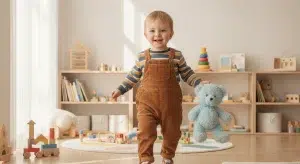
At thirteen months, many toddlers are walking or cruising, saying a word or two beyond mama and dada, pointing to share interest, and following simple one step directions, though the range of normal is genuinely wide.
Thirteen months sits just past the first birthday, between the twelve and fifteen month checkpoints pediatricians often use. Your toddler is becoming a little person with opinions, favorite people, and new skills arriving almost weekly.
This guide walks through the movement, language, thinking, and social milestones typical around thirteen months, how sleep tends to shift, and the signs worth mentioning to your pediatrician.
Key Takeaways
Many 13 month olds walk or are close, with first steps common between 12 and 15 months.
Expect a word or two plus lots of pointing, gestures, and babble that sounds like talking.
Toddlers this age imitate you, follow simple directions, and show strong preferences.
Most 13 month olds need about 11 to 14 hours of sleep across a night and one or two naps.
Ranges are wide, so focus on steady progress and raise any concerns with your pediatrician.
Table of Contents
Movement and Physical Milestones
Walking is the headline skill of this age. First independent steps commonly appear between about twelve and fifteen months, so at thirteen months a lot of toddlers are cruising along furniture, taking wobbly steps, or already toddling across the room. If your child is not walking yet, that alone is usually not a concern, especially if they are pulling to stand and cruising confidently.
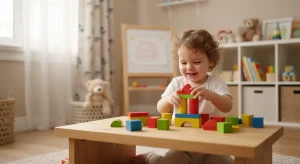
Beyond walking, your toddler may stoop to pick up a toy and stand back up, climb onto low furniture, and use their hands with more control, stacking a couple of blocks or self feeding finger foods and drinking from a cup with help.
Walking or cruising, with first steps common between 12 and 15 months.
Standing up from the floor without holding on, for some toddlers.
Picking up small objects with a neat finger and thumb grasp.
Self feeding finger foods and beginning to use a cup.
Language and Communication
Around thirteen months, many toddlers use a word or two beyond mama and dada, though it is completely normal to have none yet and rely heavily on pointing and gestures. Understanding runs ahead of speaking at this age, so your toddler likely grasps far more than they can say.
Pointing is a milestone in its own right. When your toddler points to show you something, not just to ask for it, they are sharing attention, an important sign of healthy communication. You will also hear expressive jargon, that run of babble with the melody of real sentences. Our when babies start babbling guide covers how these sounds build.
Says a word or two and tries to imitate sounds and words.
Points at objects and people to share interest or ask for things.
Follows simple one step directions, such as give me the ball.
Recognizes the names of familiar people and objects.
Struggling with your baby’s sleep?
A personalized plan meets your baby where they are, at every age and stage.
Thirteen month olds are little scientists and copycats. They explore how things work, put objects in and out of containers, and imitate what they see you do, like pretending to talk on the phone or sweep the floor. This imitation is how they learn.
Emotionally, expect big feelings and strong attachment. Separation anxiety and clinginess are common and normal at this age. Your toddler may show affection, hand you a toy, and look to your face to gauge how to react to something new, a behavior called social referencing.
Sleep at 13 Months
Most thirteen month olds need roughly eleven to fourteen hours of sleep in a full day, including night sleep and naps. Many are still taking two naps, while some are beginning the transition toward a single afternoon nap, which more typically settles between about fifteen and eighteen months, so twelve to thirteen months is usually too early to force the change.
This age also sits near a common period of sleep disruption around twelve months. A wave of new skills, walking, words, and growing independence, along with separation anxiety, can temporarily unsettle sleep. It usually passes as the new skills become familiar. Our sleep regression ages guide maps the windows, and our baby sleep schedule by age guide shows realistic nap timing.
Milestones and sleep move together in toddlerhood. Keeping a consistent, calming bedtime routine helps your toddler through the bumpy stretches. Our 14 month milestones guide shows what comes next.
When to Talk to Your Pediatrician
Most thirteen month olds who lag on a skill are simply on their own timeline. Still, mention these to your pediatrician:
Not pulling to stand, cruising, or bearing weight on the legs.
No pointing or gestures, and not responding to their name.
Not trying to say any words or copy sounds.
A loss of skills your toddler previously had.
Early checks are always worthwhile. Often the reassurance is all you need, and if support would help, an early conversation makes it easier to arrange.
Frequently Asked Questions
What milestones should a 13 month old have?
Many 13 month olds walk or cruise, point to share interest, say a word or two, follow simple one step directions, imitate everyday actions, and self feed finger foods. Ranges are wide, so some skills may arrive a little earlier or later and still be normal.
Should a 13 month old be walking?
Many are, but not all. First independent steps commonly appear between about 12 and 15 months, so a 13 month old who is cruising and pulling to stand but not yet walking is usually still within the normal range. Mention it to your pediatrician if you are unsure.
How many words should a 13 month old say?
Often just one or two, sometimes none yet, supported by lots of pointing and gestures. Understanding is ahead of speaking at this age. If your toddler is not using any words or gestures by 15 to 18 months, check in with your pediatrician.
How much sleep does a 13 month old need?
Most need about 11 to 14 hours of total sleep across a night and one or two naps. Many still take two naps at 13 months, with the shift to a single nap usually happening between 15 and 18 months.
Is 13 months too early to drop to one nap?
Usually, yes. Most toddlers are not ready to move to a single nap until 15 to 18 months. Dropping the second nap too early often leads to overtiredness. Watch for consistent signs of readiness rather than the calendar.
Milestones and sleep in one plan
Get a personalized plan built around your toddler’s stage, naps, and temperament.
Paruthi S, et al. Recommended Amount of Sleep for Pediatric Populations: A Consensus Statement of the American Academy of Sleep Medicine. Journal of Clinical Sleep Medicine, 2016. https://jcsm.aasm.org/doi/10.5664/jcsm.5866