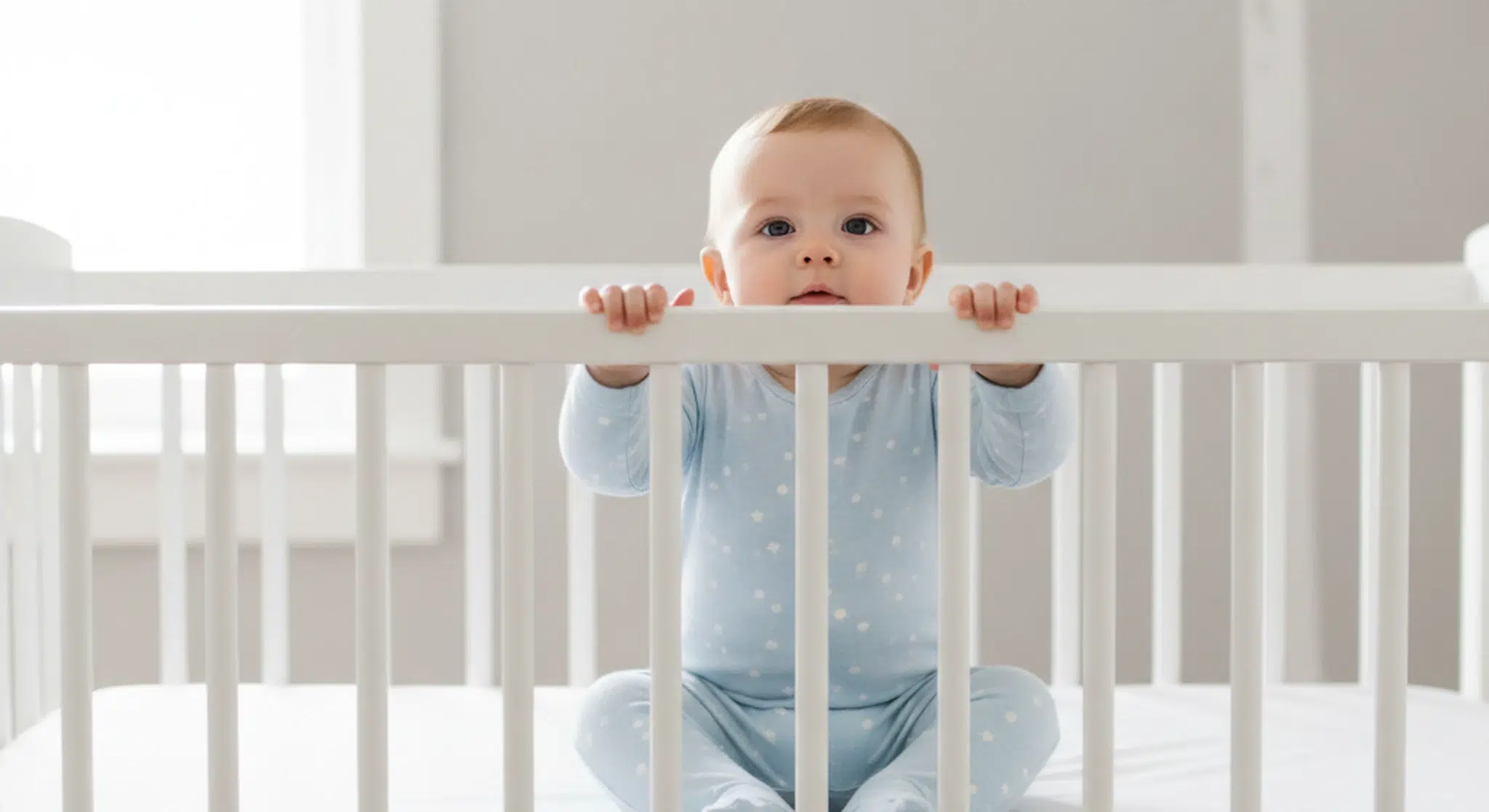
A baby rhythmically banging their head on the crib is far more common than most parents expect, and in the vast majority of cases it is a harmless, self soothing habit rather than a sign of pain or a problem. It falls under what doctors call rhythmic movement, the same family as body rocking and head rolling, and most children simply grow out of it.
It is still unnerving to hear a thud from the nursery. But these rhythmic movements usually happen as a baby winds down to sleep or stirs between sleep cycles, and they rarely cause injury because babies naturally regulate the force.
This guide explains why babies bang their heads, how common it is, when it resolves, what you can do, and the specific signs that are worth a conversation with your pediatrician.
Key Takeaways
Head banging and body rocking are common rhythmic self soothing behaviors, seen in a large share of babies around 9 months.
They usually appear in the second half of the first year, peak in the toddler years, and typically resolve by around age 3 to 4.
Most babies do it to self soothe and drift to sleep, and they instinctively limit the force, so injury is rare.
You can reduce it by adding calming rhythm to the bedtime routine and making sure the crib is safe and the mattress is low.
Seek advice if it causes injury, seriously disrupts sleep, or comes with developmental concerns or continues while fully awake and engaged.
Table of Contents
Why Babies Bang Their Heads
The leading reason is self soothing. The steady, repetitive motion is calming to the developing nervous system, a bit like rocking, and many babies use it to transition from awake to asleep or to resettle when they surface between sleep cycles. Some babies also do it when overtired, frustrated, or, occasionally, during teething or an ear infection when they are seeking comfort.
It looks alarming, but babies generally control the intensity and are not trying to hurt themselves. For most, it is simply the rhythm they have found to relax.
How Common It Is, and When It Stops
Rhythmic movements are widespread in infancy. Studies find that around 9 months, a majority of babies show some rhythmic behavior, with body rocking most common, followed by head banging and head rolling. On average, body rocking appears around 6 months and head banging around 9 months.
The reassuring trajectory: these behaviors decline steadily with age. They are much less common by 18 months, and by around age 3 to 4 most children have stopped. In other words, this is usually a phase your child outgrows on their own.
What You Can Do
Since the motion is soothing, giving your baby other rhythmic, calming input often reduces the need to bang. A few practical steps:
Build rhythm into the wind down. Rocking, gentle patting, a slow song, or a short stroller or swing wind down before bed can meet the same need.
Add steady white noise. A consistent sound can provide the rhythm some babies are seeking.
Do not make it a big reaction. A calm, low key response avoids accidentally reinforcing the behavior with lots of attention.
Rule out overtiredness. A well timed schedule reduces the frustration that can fuel it. See our wake windows by age guide.
Check for discomfort. If it is new and paired with fussiness, consider teething or an ear infection.
Keeping the Crib Safe
You do not need to pad the crib. Crib bumpers are not safe and should not be used, in line with AAP safe sleep guidance, and they will not stop a determined rhythmic mover anyway. Instead, make sure all crib hardware is tight so it does not rattle, lower the mattress to its lowest safe setting, and keep the crib away from walls and furniture so there is nothing hard to knock against. The crib itself should stay bare: no pillows, bumpers, or padding.
Rhythmic habits at bedtime worrying you?
Get a personalized plan built around your baby’s age, patterns, and temperament.
Most head banging needs no medical attention, but check in if it causes actual injury, if it seriously and regularly disrupts your child’s sleep or daytime functioning, if it continues intensely while your child is fully awake and engaged rather than winding down, or if it comes alongside delays in speech, social interaction, or other milestones. In those cases your pediatrician can look at the fuller picture. For most families, though, this is a benign habit that fades with time.
Most often to self soothe. The steady, repetitive motion is calming and helps many babies drift to sleep or resettle between sleep cycles. Some also do it when overtired or, occasionally, when uncomfortable from teething or an ear infection.
Is head banging on the crib dangerous?
Usually not. Babies instinctively limit the force, and rhythmic head banging rarely causes injury. Keep the crib hardware tight, the mattress low, and the crib away from hard surfaces, and skip bumpers, which are not safe.
When do babies stop banging their heads?
These rhythmic behaviors usually start in the second half of the first year, are much less common by 18 months, and typically stop by around age 3 to 4. For most children it is a phase they outgrow on their own.
How do I stop my baby from head banging at night?
Meet the same soothing need in other ways: build rhythm into the bedtime routine with rocking or a slow song, add steady white noise, keep your reaction calm and low key, and make sure your baby is not overtired.
When should I worry about head banging?
Talk to your pediatrician if it causes injury, seriously disrupts sleep or daytime functioning, continues intensely while your child is fully awake and engaged, or comes with delays in speech, social skills, or other milestones.
Understand your baby’s sleep
Get a personalized plan built around your baby’s age, patterns, and temperament.
Paruthi S, et al. Recommended Amount of Sleep for Pediatric Populations: A Consensus Statement of the American Academy of Sleep Medicine. Journal of Clinical Sleep Medicine, 2016. https://jcsm.aasm.org/doi/10.5664/jcsm.5866