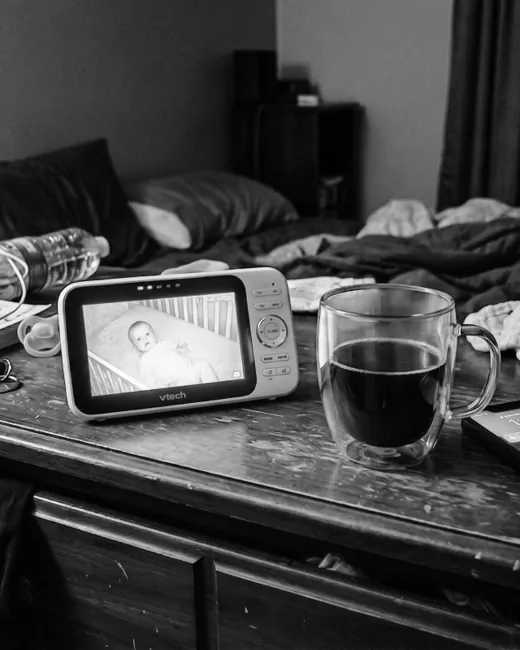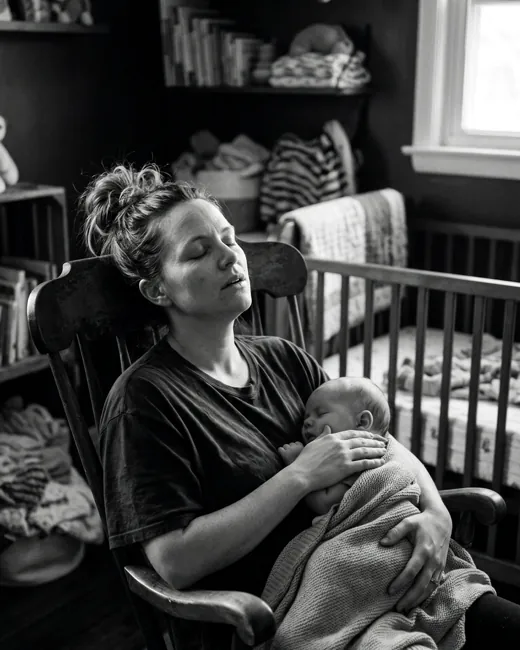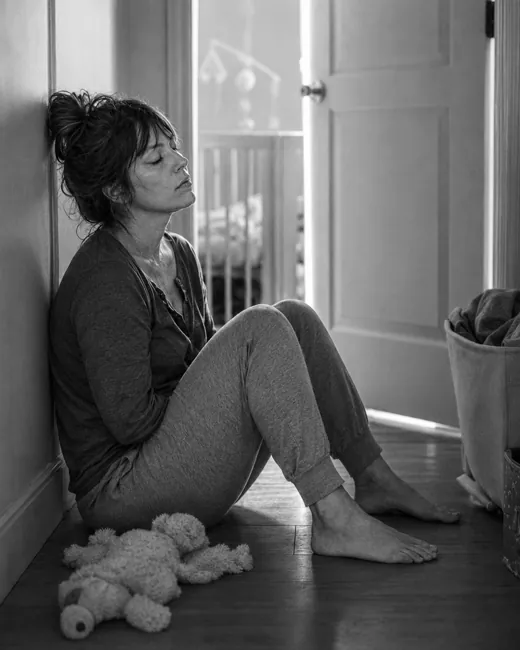

If you searched for a 1 month old sleep schedule at 3 a.m. with a baby on your chest, here is the most honest thing anyone can tell you: at one month, there is no real schedule yet, and that is completely normal. Your newborn does not have a body clock. They do not know day from night. They are running on hunger, comfort, and reflex, not on a clock, and no amount of doing it right will change that this month.
So instead of a schedule, think in loose patterns and full feeds. Your job right now is not to train sleep or hit a bedtime. It is to feed your baby well, keep sleep safe, and survive the fog. This guide walks through how much a one month old sleeps, why the days and nights feel scrambled, what a loose newborn rhythm can look like, and where safe sleep has to come first.
A quick reassurance before we start: the scattered, feed-heavy, unpredictable newborn phase is short. A genuine 1 month sleep schedule is not something you build in month one. It emerges on its own over the next couple of months as your baby’s brain matures.
Table of Contents
At a Glance: 1 Month Sleep Expectations
At one month, most babies sleep 14 to 17 total hours per day, spread almost evenly around the clock. That usually breaks down to roughly 8 to 10 hours at night, broken into short stretches by feeds, plus 6 to 8 hours of daytime sleep across 4 to 6 naps. Wake windows are tiny, about 45 to 60 minutes, and there is no fixed bedtime yet.
For perspective from Betteroo’s State of Baby Sleep survey: parents of babies under four months consistently report the most fragmented, unpredictable nights of the entire first two years. If your newborn’s sleep feels chaotic compared to what you see online, that is the norm for this age, not a sign anything is wrong.
How Much Should a 1 Month Old Sleep?
The American Academy of Sleep Medicine notes that healthy sleep needs vary widely in the first months of life, and reference studies of infant sleep show broad, healthy variation at this age 1,2. Most one month olds land somewhere in the 14 to 17 hour range across a full day, but they take it in short bursts rather than long blocks.
| Sleep Type | Typical Range at 1 Month |
|---|---|
| Total Sleep | 14–17 hours |
| Night Sleep | 8–10 hours (broken by feeds) |
| Naps | 4–6 per day (6–8 hours total) |
| Wake Windows | 45–60 minutes |
Notice there is no bedtime row. That is on purpose. A newborn sleep schedule at one month is really just a feed-sleep-feed-sleep cycle that repeats around the clock. Your baby will likely eat every two to three hours, day and night, and that feeding rhythm drives everything else. Chasing a fixed bedtime now can actually work against the frequent feeds a one month old still needs.
A Loose 1 Month Old Rhythm (A Pattern, Not a Schedule)
Rather than a timed schedule, aim for a repeating loop. Watch the clock loosely and your baby closely:
- Feed – a full feed on waking, not a quick snack, so your baby takes in enough to sleep well.
- Brief awake time – roughly 45 to 60 minutes total, including the feed and a diaper change. Newborns tire fast.
- Back to sleep – watch for early tired cues (yawning, glazed stare, turning away) and help your baby back down before they get overtired.
This loop repeats day and night. During the day, a nap might run 30 minutes or two full hours, and both are fine. At night, aim to keep feeds calm, dim, and boring, so your baby slowly learns that nighttime is different. That is the seed of a real rhythm, not sleep training, just gentle contrast between day and night.
Why 1 Month Old Sleep Feels So Scrambled
If the nights feel relentless, it is because of how new your baby is, not anything you are doing wrong:
- No circadian rhythm yet. The internal body clock that tells us to sleep at night is not developed at one month. It typically starts to mature closer to two to three months, which is why sleep is spread evenly around the clock right now.
- Day/night confusion. Many newborns are more wakeful at night and sleepier by day at first. Bright, active mornings and dim, quiet nights slowly help this sort itself out.
- Cluster feeding. Especially in the evening, your baby may want to feed again and again in a short window. This is normal, it helps establish milk supply, and it often clumps around the fussy evening hours.
- The witching hour. A stretch of hard-to-soothe fussiness in the late afternoon or evening is extremely common at this age and usually eases over the coming weeks.
None of this means your baby has a sleep problem. A one month old cannot be spoiled, cannot form bad habits yet, and cannot be sleep trained. Holding, feeding, and rocking your newborn to sleep is exactly right for this age.
From Betteroo’s State of Baby Sleep
Across our survey, the under-four-month stage is where parents report the most broken, unpredictable nights of the entire baby and toddler period. Frequent night waking at one month is not a red flag; it is the developmental baseline. The consolidation you are hoping for genuinely does come, just not this month. Explore the full data →
Safe Sleep Comes First at 1 Month
Before anything about better sleep, the non-negotiable at this age is safe sleep. The AAP’s guidance is clear, and the risk of sleep-related infant death peaks in the early months, so this matters most now 3:
- Always place your baby on their back for every sleep, night and nap.
- Use a firm, flat sleep surface in a crib, bassinet, or play yard, with a fitted sheet and nothing else.
- Keep the space bare. No pillows, blankets, bumpers, or stuffed animals. Use a sleep sack instead of loose bedding.
- Room-share without bed-sharing. The AAP recommends your baby sleep in your room, on their own separate surface, ideally for the first six months.
- Avoid sleep in swings, loungers, and car seats for routine sleep. If your baby falls asleep in one, move them to a flat surface when you can.
Exhausted parents sometimes fall asleep feeding on a couch or armchair, which is riskier than a prepared adult bed. If you think you might drift off, feed in a safe spot and follow AAP guidance so an unplanned nap does not happen somewhere unsafe.
Gentle Ways to Help (Without Sleep Training)
You cannot and should not sleep train a one month old, but a few low-pressure habits make the fog easier and lay groundwork for later:
- Prioritize full feeds. A well-fed baby sleeps better. Keep daytime feeds active and unhurried.
- Build day/night contrast. Daylight, noise, and interaction by day; dim, calm, and quiet for night feeds.
- Try drowsy-but-awake sometimes, without pressure. If it does not work, rock or feed to sleep guilt-free. It is just practice.
- Watch wake windows, not the clock. Keeping awake time near 45 to 60 minutes helps head off the overtired spiral. Our wake windows guide shows how these stretch as your baby grows.
- Tag-team the nights. Trade shifts, nap when the baby naps, and accept help. Your rest is part of the plan.
When to Talk to a Pediatrician
Reach out if your baby is very hard to wake for feeds, is not producing enough wet diapers, is not gaining weight, or seems to sleep far more or far less than the ranges here. Also call for any breathing pauses, unusual color changes, or if your own exhaustion is tipping into something that worries you. Trust your gut and check in early.
1 Month Old Sleep Schedule FAQ
Does a 1 month old have a sleep schedule?
Not really. At one month a baby has no developed circadian rhythm, so sleep is spread around the clock in short stretches driven by feeding. Aim for a loose feed-and-sleep pattern rather than a timed schedule; a true schedule tends to emerge closer to three to four months.
How long should a 1 month old sleep at night?
Most one month olds get about 8 to 10 hours of night sleep, but broken into short stretches by feeds every two to three hours. Long, uninterrupted nights are not expected yet and frequent night feeds are normal and healthy at this age.
What are wake windows for a 1 month old?
Roughly 45 to 60 minutes, including the feed and a diaper change. Newborns tire quickly, so watching for early tired cues and helping your baby back to sleep within that window helps prevent overtiredness.
Why is my 1 month old awake all night?
Day/night confusion is very common at one month because the body clock is not developed. Keep days bright and active and nights dim, quiet, and boring. This gentle contrast, along with full daytime feeds, helps your baby gradually shift more sleep to nighttime.
Can you sleep train a 1 month old?
No. A one month old is far too young for any form of sleep training, and they cannot form bad habits yet. Feeding, holding, and rocking your newborn to sleep is exactly right. Focus on full feeds, safe sleep, and surviving the early weeks.
The newborn fog is real, and it does lift
Get a personalized, age-appropriate sleep plan built around your baby’s temperament and your family’s needs.
Take the 3-Min Quiz →A Grounding Takeaway
One month old sleep is not a schedule you can build; it is a season you get through. Your newborn has no body clock, no sense of day and night, and no ability to be spoiled or trained yet. So let go of the clock. Feed fully, keep every sleep safe, dim the nights, and rest whenever you can. The predictable rhythm you are longing for is coming, it just arrives on your baby’s timeline, not this month’s.
Next up: the 2 month old sleep schedule, where the first hints of a real rhythm start to appear, or zoom out with the full baby sleep schedule by age guide.
4 Sources
- Paruthi, S., et al. (2016). Recommended Amount of Sleep for Pediatric Populations: A Consensus Statement of the American Academy of Sleep Medicine. Journal of Clinical Sleep Medicine, 12(6), 785–786. https://pmc.ncbi.nlm.nih.gov/articles/PMC4877308/
- Iglowstein, I., Jenni, O.G., Molinari, L., & Largo, R.H. (2003). Sleep duration from infancy to adolescence: Reference values and generational trends. Pediatrics, 111(2), 302–307. https://pubmed.ncbi.nlm.nih.gov/12563055/
- American Academy of Pediatrics. (2022). Sleep-Related Infant Deaths: Updated 2022 Recommendations for Reducing Infant Deaths in the Sleep Environment. https://pubmed.ncbi.nlm.nih.gov/35726558/
- Mindell, J.A., Telofski, L.S., Wiegand, B., & Kurtz, E.S. (2009). A Nightly Bedtime Routine: Impact on Sleep in Young Children and Maternal Mood. Sleep, 32(5), 599–606. https://pubmed.ncbi.nlm.nih.gov/19480226/