
A typical 8 month old sleeps about 12 to 16 hours across a full day, usually as 11 to 12 hours overnight plus two naps. That is the honest headline. The exact clock times you see in sample schedules are a useful starting point, not a medical standard, and no baby reads the chart.
Eight months is also a stage where a lot changes at once: crawling and pulling up, separation anxiety, and a well-known burst of night waking. So a schedule that worked at 6 months may suddenly stop working, and that is normal rather than a sign you have done something wrong.
Here is what the sleep totals actually are, a realistic sample schedule, and why this age is so often bumpy.
Table of Contents
Related Betteroo Guides
Key Takeaways- An 8 month old needs roughly 12 to 16 hours of sleep a day, including naps, per the AASM and AAP.
- Most 8 month olds are on two naps, with wake windows of roughly 2.5 to 3.5 hours between sleeps.
- Sample clock schedules are practitioner heuristics, not clinical rules. Use them as a flexible frame.
- Separation anxiety and new mobility make 8 months a common time for sleep to get harder.
- Bedtime tends to be the biggest lever on morning wake-up time, more than nap timing.
How Much Sleep an 8 Month Old Needs
Quick Answer
The 12 to 16 hour figure is not a blog estimate. It is the consensus recommendation of the American Academy of Sleep Medicine for infants 4 to 12 months, endorsed by the AAP, and reproduced on the CDC’s sleep pages.12 It is a wide band on purpose. Sleep needs vary a lot between healthy babies.
Within that total, most 8 month olds have consolidated into a long night plus two daytime naps. The split between night and day matters more than hitting an exact number.
A Sample 8 Month Old Sleep Schedule
This is one common two-nap pattern. Read the times as illustrative. Your baby’s wake-up time, nap lengths, and temperament all shift the whole thing earlier or later.
| Time | What is happening | Awake window |
|---|---|---|
| 7:00 AM | Wake and morning feed | Start of the day |
| 9:30 to 11:00 AM | Nap 1 | After about 2.5 hrs awake |
| 1:30 to 3:00 PM | Nap 2 | After about 2.5 to 3 hrs awake |
| 6:30 to 7:00 PM | Bedtime routine and bed | After about 3.5 hrs awake |
| Overnight | 11 to 12 hrs, night feeds vary by baby | Longest stretch |
For how wake windows change across the first year, see our pillar guide to wake windows by age. And if night waking has spiked, our sleep regression ages guide explains the pattern.
What Real Schedules Look Like
Sample schedules describe an ideal. Our State of Baby Sleep 2026 report, based on 74,379 parents across 112 countries, describes what families actually run.
The most useful finding for a schedule: bedtime is the strongest predictor of wake-up time. 55 percent of babies put down after 9pm sleep past 7am, against 9 percent of those down before 6pm, and 1 in 4 babies are up before 6am. If early rising is your problem, look at bedtime before you touch the naps.
Why 8 Months Is Often Bumpy
A lot lands at once around this age. Your baby is likely crawling or pulling to stand, and new motor skills famously disrupt sleep as babies practice them at 2am. Object permanence is developing, so your baby now knows you still exist when you leave the room, and can protest it.
Separation anxiety is part of this. The AAP notes that stranger and separation anxiety emerge in the 8 to 12 month window and usually peak between 10 and 18 months, not, as is often repeated, at exactly 8 to 10 months.3 Either way, a baby who was fine being put down may suddenly cry when you leave.
All of this is often labeled the “8 month sleep regression.” Worth knowing: sleep regression is not a clinical diagnosis and does not appear as a named condition in the International Classification of Sleep Disorders.5 It is a useful shorthand for a real, temporary rough patch driven by normal development, not a disorder.
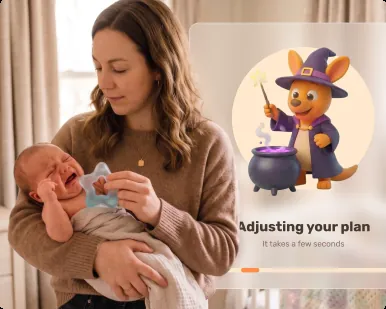
Schedule fell apart at 8 months?
New skills and separation anxiety wreck a lot of routines around now. Get a plan built for your baby.
Making the Schedule Work
One practical point that shows up across large datasets: bedtime is usually the strongest lever on when your baby wakes in the morning, more than nap timing. If early waking is your problem, look at bedtime first.
When to Talk to Your Pediatrician
Rough patches at 8 months are usually developmental and pass. Check in with your pediatrician if you see signs that go beyond a normal bumpy stretch:
- Loud, regular snoring or pauses in breathing during sleep.6
- Sleep totals well outside the 12 to 16 hour range, day after day.
- Extreme daytime sleepiness or difficulty feeding.
- Your own exhaustion reaching a point where it is affecting your wellbeing.
Persistent, loud snoring is worth mentioning specifically, since it can be an early sign of a breathing issue rather than ordinary noisy sleep.6
Frequently Asked Questions
How much should an 8 month old sleep?
About 12 to 16 hours across a full day, including naps, according to the American Academy of Sleep Medicine consensus that the AAP endorses. That usually breaks down to 11 to 12 hours overnight plus two naps totaling 2 to 3 hours. It is a wide range because healthy babies genuinely vary.
How many naps does an 8 month old need?
Most 8 month olds are on two naps a day, typically a mid-morning and an early-afternoon nap, totaling around 2 to 3 hours. The drop to one nap usually does not happen until sometime after the first birthday, so pushing an 8 month old to a single nap often backfires into overtiredness.
What are the wake windows for an 8 month old?
Roughly 2.5 to 3.5 hours of awake time between sleeps, often a little shorter before the first nap and a little longer before bed. These numbers are practitioner heuristics rather than clinical standards, and reputable sources vary, so watch your baby’s tired cues as much as the clock.
Is there an 8 month sleep regression?
Many families hit a rough patch around this age, usually driven by new mobility like crawling and pulling up plus developing separation anxiety. It is commonly called the 8 month sleep regression, though sleep regression is not a formal medical diagnosis. It is real and temporary, and it tends to settle as the new skills become routine.
Why is my 8 month old suddenly waking at night?
The usual culprits are developmental: practicing crawling or standing in the crib, separation anxiety as object permanence develops, and sometimes teething. An overtired or too-late bedtime can make it worse. It typically passes. If it comes with loud snoring, breathing pauses, or extreme daytime sleepiness, talk to your pediatrician.
What time should an 8 month old go to bed?
A bedtime somewhere between about 6:30 and 8:00 PM suits most 8 month olds, timed so they are not overtired after roughly 3 to 3.5 hours awake since the last nap. Bedtime tends to be the biggest influence on morning wake-up time, so if your baby wakes very early, adjusting bedtime is usually the first thing to try.
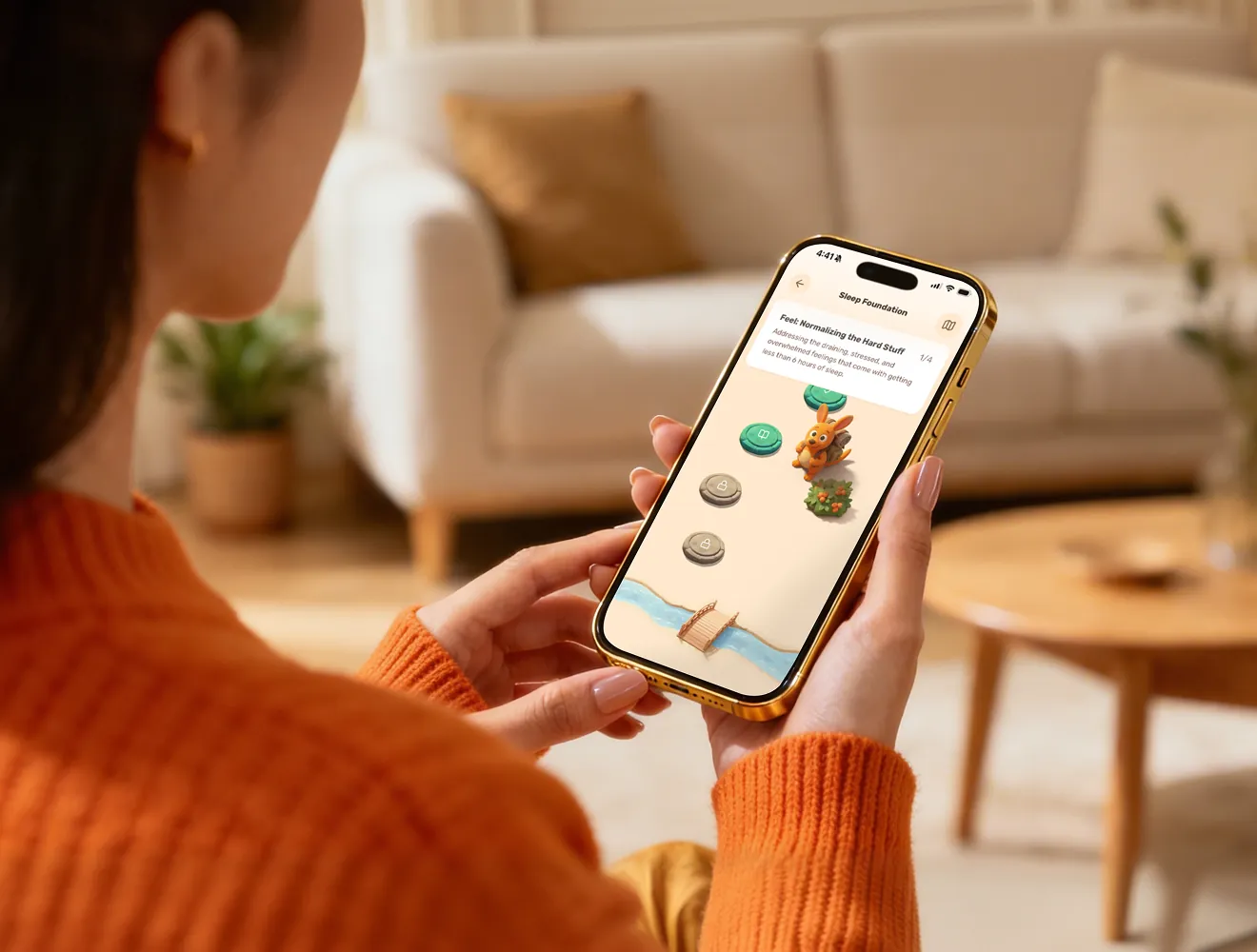
Want a schedule that fits your baby?
Get a personalized, adaptive plan instead of a one-size chart.
6 Sources
-
Paruthi S, Brooks LJ, D’Ambrosio C, et al. Recommended Amount of Sleep for Pediatric Populations: A Consensus Statement of the American Academy of Sleep Medicine. J Clin Sleep Med. 2016;12(6):785-786.
https://pubmed.ncbi.nlm.nih.gov/27250809/ -
Centers for Disease Control and Prevention. About Sleep.
https://www.cdc.gov/sleep/about/index.html -
American Academy of Pediatrics, HealthyChildren.org. Emotional and Social Development: 8 to 12 Months.
https://www.healthychildren.org/English/ages-stages/baby/Pages/Emotional-and-Social-Development-8-12-Months.aspx -
Cleveland Clinic. Infant Sleep Regression: What Parents Need To Know.
https://health.clevelandclinic.org/the-4-month-sleep-regression-what-parents-need-to-know -
American Academy of Sleep Medicine. International Classification of Sleep Disorders (ICSD-3-TR).
https://aasm.org/clinical-resources/international-classification-sleep-disorders/ -
American Academy of Pediatrics, HealthyChildren.org. Sleep Apnea in Children: Detection & Treatment.
https://www.healthychildren.org/English/ages-stages/baby/sleep/Pages/Sleep-Apnea-Detection.aspx