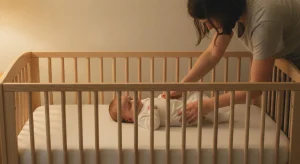
If you’ve ever watched your toddler suddenly sit up in bed, screaming or crying, eyes open but not really seeing you and nothing you do seems to help, it can be deeply unsettling. Episodes like this are often described as night terrors in toddlers, a type of sleep disturbance that can feel alarming for parents to witness.
Many parents describe night terrors as one of the scariest things they’ve witnessed in early childhood. Your child looks awake, panicked, unreachable. You try to comfort them and they push you away. When it finally ends, you’re shaken — even if your child settles back into sleep.
Here’s the most important thing to know right away: night terrors are common, they are not dangerous, and they are not caused by anything you did or didn’t do.
This guide will walk through what night terrors actually are, why they happen, how they’re different from nightmares, what helps in the moment, and when it’s worth getting extra support — all without alarm or blame.
Night terrors happen during deep sleep — your child is not fully conscious and won’t remember the episode.
They are not caused by anxiety, trauma, or anything you did wrong — they’re a normal part of how a toddler’s brain moves between sleep stages.
Night terrors are not the same as nightmares — nightmares happen in lighter sleep, and the child wakes fully and remembers them.
The best response is to stay nearby, keep them safe, and let the episode pass — waking your child usually doesn’t help.
Most children outgrow night terrors naturally by late childhood as sleep architecture matures.
Infographic night terrors in toddlers
What are Night Terrors in Toddlers?
Night terrors in toddlers are a type of sleep disruption that happen during deep sleep, when a child’s brain partially wakes but doesn’t fully transition into consciousness.
During a night terror, your toddler may:
cry or scream intensely
appear frightened or distressed
sit up or thrash
have eyes open but not recognize you
resist comfort or push you away
Even though it looks like your child is awake and afraid, they are not fully conscious in the way they are during a nightmare.
Night terrors are most common in toddlers and preschool-aged children, when the nervous system is still maturing and sleep cycles are still organizing. 2,3
What Night Terrors Look Like in Toddlers
Every child’s night terrors look a little different, but many parents notice a similar pattern.
A night terror may include:
sudden screaming or crying, often early in the night
confusion or glassy-eyed staring
rapid breathing, sweating, or flushed skin
difficulty being soothed, even by a familiar caregiver
One of the hardest parts is that your child may not seem to recognize you, even though you’re right there. That can feel heartbreaking — but it’s a reflection of their sleep state, not your connection.
Not sure what’s causing your toddler’s sleep disruptions?
Night terrors, regressions, and schedule shifts can overlap. Get a personalized plan based on what’s actually happening.
Night Terrors vs. Nightmares: What’s the Difference?
This distinction matters, because how you respond depends on what’s happening.
Nightmares
happen during lighter sleep, often later in the night
the child wakes fully
the child is aware and seeks comfort
the child may remember the dream
Night terrors
happen during deep sleep, usually in the first few hours
the child is not fully awake
comfort doesn’t seem to work
the child typically has no memory of the episode
Night terrors in toddlers aren’t dreams gone wrong. They’re a sleep-state mismatch — the body is reacting, but the mind isn’t fully online.
Why Night Terrors Happen
Night terrors are driven by how a toddler’s brain moves between sleep stages.
In deep sleep, the brain is resting heavily. Sometimes, especially in young children, the brain partially wakes without fully transitioning into lighter sleep. When that happens, the body can react with intense physical responses — crying, movement, panic-like behavior — even though the child isn’t consciously experiencing fear the way it appears.
Several things can make these partial awakenings more likely:
an immature nervous system (very common in toddlers)
It’s important to say this clearly: night terrors are not a sign of anxiety, trauma, or emotional distress. They are a developmental sleep phenomenon.6
What to Do During a Night Terror
In the Moment
When a night terror is happening, the goal isn’t to stop it — it’s to keep your child safe and let the episode pass.
Helpful things to focus on:
make sure your child can’t hurt themselves
keep lights low and the environment calm
stay nearby so you can intervene if needed
speak softly, even if it doesn’t seem to register
You may hear advice not to wake your child. That’s because waking doesn’t usually help — your toddler isn’t fully asleep or awake — similar to the partial arousals that happen during sleep regressions — and forcing wakefulness can increase confusion and prolong the episode.
If You Tried to Comfort Them
Many parents instinctively pick up, hug, or speak to their child — and then worry afterward that they made things worse.
You didn’t.
Trying to comfort your child does not cause harm. It doesn’t create night terrors in toddlers, and it doesn’t damage sleep. Even if it didn’t help in the moment, your presence wasn’t wrong.
What to Do After a Night Terror
In most cases, nothing special needs to happen afterward.
Your child typically:
settles back into sleep
has no memory of the episode
wakes the next day as usual
There’s usually no need to bring it up unless your child does. If they ask about it, simple reassurance is enough: “You had a hard moment in your sleep, and you’re safe now.”
Replaying details or asking questions can sometimes create confusion or anxiety, especially since the child doesn’t remember the event.
How Long Do Night Terrors Last?
A single episode often lasts a few minutes, though it can feel much longer when you’re watching it happen.
As a phase, night terrors often:
appear in toddlerhood
happen intermittently
decrease over time as sleep matures
Some children experience them for a short period. Others have occasional episodes over months. Most outgrow them naturally — typically by late childhood or early adolescence.2
Even when night terrors persist for a while, they don’t usually indicate a long-term problem.
Can You Prevent Toddler Night Terrors?
There’s no guaranteed way to prevent toddler night terrors, and that’s important to say upfront.
Supportive things that may help reduce frequency include:
These supports help overall sleep regulation – but they don’t mean night terrors are caused by missing something or doing something wrong. If your toddler’s sleep has been disrupted more broadly – not just night terrors – the 2 year sleep regression may also be a factor.
What You Don’t Need to Worry About
During or after a night terror, many parents worry that:
their child was truly terrified
the episode caused emotional harm
failing to calm them damaged trust
this signals a mental health issue
None of those concerns reflect what’s actually happening.
Night terrors look intense, but they are not emotionally traumatic for the child. They don’t remember them, and they don’t harm development or attachment.6
When to Get Extra Support
It’s always okay to check in with your pediatrician if something doesn’t feel right.
Consider reaching out if:
night terrors happen very frequently
your child gets injured during episodes
there are significant daytime behavior or sleep changes
you’re feeling overwhelmed or unsure how to cope
Getting guidance doesn’t mean something is wrong — it means you’re taking care of your family.
FAQs About Night Terrors in Toddlers
Are night terrors dangerous?
No. While they look alarming, night terrors are not harmful to your child. Your toddler is not fully conscious during an episode and will not remember it afterward. The distress you see is a physical response from the body — not an experience of fear the way we understand it when awake. Most children sleep peacefully again within minutes.
Should I wake my toddler during a night terror?
Usually no. Because your toddler isn’t fully asleep or fully awake during a night terror, trying to wake them can increase confusion and actually prolong the episode. The most helpful thing you can do is stay nearby, keep the environment safe, and let the episode pass on its own. If you did try to wake them — don’t worry. It won’t cause harm.
Will my child remember the night terror?
Most children do not remember night terrors at all. Unlike nightmares, which happen during lighter REM sleep and often leave a vivid memory, night terrors occur during deep non-REM sleep. Your child’s brain isn’t forming conscious memories during the episode, which is why they typically wake up the next morning as if nothing happened.
Do night terrors mean my child is anxious or stressed?
Night terrors are primarily related to sleep-state transitions, not emotional distress or trauma. They happen when a toddler’s developing brain has difficulty moving smoothly between deep sleep stages — it’s a neurological event, not an emotional one. While being overtired or unwell can make episodes more likely, night terrors are not a sign that your child is anxious, stressed, or experiencing something upsetting.
Can night terrors happen every night?
They can occur in clusters — sometimes several episodes over a few nights, followed by weeks without any. While nightly episodes are less common, they do happen for some children, especially during periods of illness, overtiredness, or routine changes. If night terrors are happening very frequently or seem to be escalating, it’s worth checking in with your pediatrician to rule out other factors like sleep apnea or a full bladder triggering arousals.
Do night terrors run in families?
Yes, there is a strong genetic component. Research on twins has shown that about 40% of the variation in night terrors can be attributed to genetic factors. If one or both parents experienced night terrors or sleepwalking as children, their child is more likely to experience them too. This doesn’t mean night terrors are inevitable — just that some children are more predisposed than others.
At what age do night terrors start and stop?
Night terrors can begin as early as 18 months and are most common in children between ages 3 and 7. The peak prevalence is around 18 months to 2 years, with roughly one-third of toddlers experiencing at least one episode. Most children outgrow night terrors by late childhood or early adolescence as their sleep architecture matures.
Can melatonin help with toddler night terrors?
There is little scientific evidence that melatonin specifically resolves night terrors. Night terrors are not caused by a nutritional deficiency or a difficulty falling asleep — they’re related to transitions between deep sleep stages. If you’re considering melatonin for your child, it’s always best to discuss it with your pediatrician first.
A Grounding Takeaway
Night terrors in toddlers are frightening to witness — and it makes sense if they leave you shaken. But for your child, they are a reflection of a developing brain moving through sleep, not fear or distress that lingers.
You didn’t cause this. You didn’t fail to fix it. Being present and keeping your child safe is enough.
Sleep matures. Night terrors pass. And you’re doing exactly what your child needs — even when it doesn’t feel that way in the moment.
Your toddler’s sleep will settle — and you don’t have to figure it out alone
Betteroo builds a personalized plan around your child’s age, sleep patterns, and what your family is going through right now.
Petit, D., et al. (2015). Childhood Sleepwalking and Sleep Terrors: A Longitudinal Study of Prevalence and Familial Aggregation. JAMA Pediatrics, 169(7), 653–658.https://pubmed.ncbi.nlm.nih.gov/25938617/
Laganière, C., et al. (2022). Sleep terrors in early childhood and associated emotional–behavioral problems. Journal of Clinical Sleep Medicine, 18(10), 2469–2476.https://pmc.ncbi.nlm.nih.gov/articles/PMC9435351/
Kales, A., et al. (1980). Hereditary factors in sleepwalking and night terrors. British Journal of Psychiatry, 137, 111–118.https://pubmed.ncbi.nlm.nih.gov/7426840/
A calm, predictable wind-down helps an anxious toddler feel safe at night. Our collection of bedtime prayers for kids, sorted by age offers gentle ways to end the day.