Toddler lunch does not need to be a new recipe every day, and it does not need to be Pinterest-perfect to be healthy.
If you feel like you are serving the same three foods on repeat and still fighting to get lunch eaten, you are in very good company. Toddlers are famously unpredictable eaters, and the goal at this age is not a clean plate but a balanced, low-pressure meal your child can pick from.
Below you will find a simple build-a-lunch formula, more than forty easy toddler lunch ideas including no-cook and daycare-friendly options, the choking-safety rules that matter most under age four, and calm, evidence-based ways to handle a picky eater. Keep the formula handy and you can put together a fresh, balanced toddler lunch in about five minutes.
Key Takeaways
Build every lunch from four parts: a protein, a carb, a fruit or vegetable, and a healthy fat.
Start with about one tablespoon of each food per year of age, then let your toddler ask for more.
Serve foods separated and in small, soft, easy-to-grab pieces; many toddlers reject mixed dishes.
Cut round foods like grapes and tomatoes lengthwise into pieces smaller than half an inch to prevent choking.
Expect pickiness from one to three years; keep offering new foods without pressure, up to ten to fifteen times.
Table of Contents
What a Balanced Toddler Lunch Actually Looks Like
The easiest way to stop overthinking toddler lunch is to build every plate from the same simple template instead of hunting for a new recipe each day. Aim for four little parts: a protein, a carbohydrate, a fruit or vegetable, and a source of healthy fat. Hit those four and the meal is balanced, no matter how plain it looks.
Toddlers eat small amounts, so think tablespoons, not cups. A good starting portion is about one tablespoon of each food per year of age, then let your child ask for more. Their appetite swings wildly from day to day and even meal to meal, and that is completely normal. Your job is to offer a balanced spread; their job is to decide how much of it to eat.
Serve foods deconstructed and separated rather than mixed together. Many toddlers reject a casserole but happily eat the exact same ingredients when they are lined up in a divided plate or muffin tin. Small, soft, easy-to-grab pieces win far more often than a single large portion.
The Build-a-Lunch Formula (Mix and Match)
Keep one option from each column stocked and you can assemble a fresh, balanced toddler lunch in under five minutes without a recipe. Rotate the columns to keep things interesting and expose your child to new textures and flavors.
Protein
Carb / Grain
Fruit or Veg
Healthy Fat
Shredded chicken
Whole-grain toast
Banana coins
Avocado
Scrambled or hard-boiled egg
Cooked pasta spirals
Steamed carrot sticks
Cheese cubes
Black beans
Brown rice
Cucumber half-moons
Hummus
Greek yogurt
Mini whole-wheat pita
Berries (halved)
Nut or seed butter (thin layer)
Flaked salmon or tuna
Oatmeal
Steamed peas
Olive oil drizzle
Pick one from each column for a balanced toddler lunch in minutes.
If your child is still learning to self-feed, our guide to starting solids and the baby-led weaning basics cover safe first textures that carry right into the toddler years.
20 Easy Toddler Lunch Ideas
These are quick, real-world lunches you can throw together from ordinary fridge and pantry staples. Most take five to ten minutes and need no special cooking.
DIY lunchable: cheese cubes, whole-grain crackers, turkey rolls, and cucumber.
Pasta plate: cooked spirals tossed with olive oil, peas, and grated cheese.
Egg muffin: a mini baked egg-and-veggie cup with fruit on the side.
Deconstructed sandwich: bread squares, soft cheese, and thin ham, all separated.
Yogurt bowl: plain Greek yogurt with berries and a sprinkle of soft granola.
Bean and rice bowl: warm black beans, brown rice, avocado, and a little cheese.
Toast fingers: whole-grain toast with a thin layer of nut or seed butter and banana coins.
Quesadilla wedges: a cheese quesadilla cut into small triangles with mild salsa to dip.
Soup and dippers: a mild tomato or lentil soup with soft bread strips.
Waffle plate: a whole-grain waffle cut into strips with yogurt and fruit.
Salmon cakes: small soft patties with steamed carrot sticks.
Pinwheels: a tortilla spread with cream cheese, rolled, and sliced into rounds.
Baked sweet potato: soft cubes with shredded chicken and peas.
Cottage cheese plate: cottage cheese, halved grapes, and soft crackers.
Mini meatballs: soft turkey meatballs, pasta, and cucumber.
Oatmeal for lunch: warm oats with mashed banana and a swirl of nut butter.
Hummus plate: hummus with soft pita strips, cucumber, and cheese.
Rice paper or soft wrap filled with avocado, shredded chicken, and grated carrot.
Breakfast-for-lunch: a scrambled egg, toast strips, and berries.
Leftovers remix: last night’s toddler dinner served cold or gently reheated in toddler-size pieces.
Growing bodies do their best learning after a full night of sleep.
If naps or bedtime are a struggle, our free two-minute quiz builds a gentle, personalized plan.
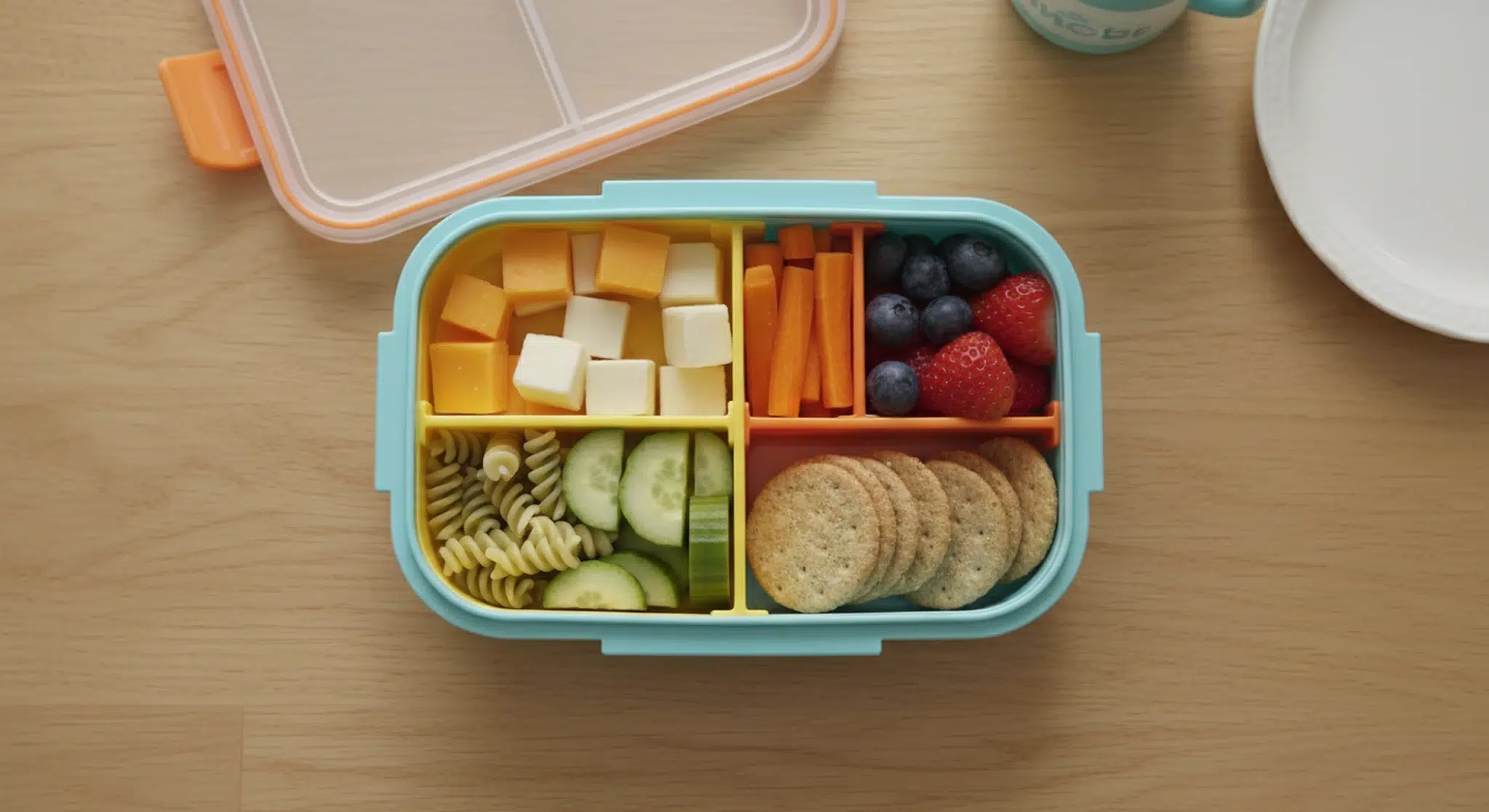
Daycare and on-the-go lunches need to survive a few hours in a bag and be safe at room or cooler temperature. A divided bento box makes this easy: fill each compartment with a finger food and you have instant variety with no recipe.
Reliable no-cook, packable options include cheese cubes, whole-grain crackers, halved grapes and berries, cucumber and soft-steamed carrot sticks, hummus or yogurt dips, hard-boiled eggs, rolled deli turkey, cold pasta, edamame, and soft muffins. Add an ice pack for anything dairy or protein-based, and send a familiar favorite alongside one new food so there is always something your child will eat.
Under age four, certain shapes are choking hazards no matter how healthy the food is. The rule of thumb is to cut round foods lengthwise and keep pieces smaller than a marble, roughly half an inch. A calm, seated, supervised lunch matters as much as the menu.
Grapes, cherry tomatoes, and berries: quarter them lengthwise, never serve whole.
Hot dogs and sausages: cut lengthwise into strips, then into small pieces, not coins.
Nuts, popcorn, hard raw carrot, and whole seeds: avoid for now; use nut butter thinly spread instead.
Cheese and meat: shred or cut into thin, small strips rather than thick cubes for younger toddlers.
Nut and seed butters: spread a thin layer; a thick glob can be hard to swallow.
Always have your toddler sit down to eat, stay within arm’s reach, and skip eating in the car or stroller where you cannot easily help.
Feeding the Picky Toddler Without a Battle
Toddler pickiness peaks between one and three years as your child asserts independence, and it is a developmental stage, not a sign you are doing anything wrong. The research-backed approach is the division of responsibility: you decide what is offered and when, and your child decides whether and how much to eat.
Keep offering rejected foods without pressure. It can take ten to fifteen exposures before a toddler accepts something new, so a food pushed away today may be eaten next month. Always serve at least one thing you know your child likes alongside the new food, and resist the urge to become a short-order cook, which teaches refusal.
Serve family foods in toddler-safe forms rather than cooking separate meals, involve your child by letting them help assemble their plate, and keep mealtimes low-pressure and screen-free. A full, varied plate at lunch also supports steady energy and better naps; hunger and blood-sugar dips are a hidden cause of afternoon meltdowns and rough overtired bedtimes.
A Pediatric Note on Toddler Nutrition
Pediatric nutrition guidance from the American Academy of Pediatrics emphasizes variety over perfection at any single meal. Toddlers naturally eat less than parents expect because their growth slows dramatically after the first year, so a few bites of lunch followed by a bigger snack later is normal, not a problem.
Offer whole milk or water with lunch rather than juice, cap juice at four ounces a day of 100 percent juice if you serve it at all, and trust that a child offered balanced options across the day will meet their needs even when one meal looks light. If your toddler is growing well and has energy, they are almost certainly eating enough, even on the days it does not feel like it.
Frequently Asked Questions
What are the best toddler lunch ideas for picky eaters?
Build a deconstructed plate with foods separated rather than mixed, and always include one food your toddler already likes. Divided plates or muffin tins with small portions of a protein, a carb, a fruit or veg, and a healthy fat give picky eaters choice and control, which reduces refusal. Keep offering new foods without pressure, since it can take ten to fifteen tries before a toddler accepts them.
What should a 1 year old eat for lunch?
A one-year-old can eat soft versions of most family foods: scrambled egg, cooked pasta, shredded chicken, black beans, soft-steamed vegetables, avocado, cheese, and fruit cut into small pieces. Serve about one tablespoon of each food per year of age as a starting portion, offer whole milk or water, and cut all round foods lengthwise to prevent choking.
How much should a toddler eat at lunch?
Toddler portions are small. A useful guide is about one tablespoon of each food per year of age, then let your child ask for more. Appetite varies a lot from day to day, so focus on offering balanced options rather than pushing a set amount. A light lunch is fine as long as your toddler is growing and active.
What are quick no-cook lunches for daycare?
Fill a divided bento box with cheese cubes, whole-grain crackers, halved grapes or berries, cucumber and soft carrot sticks, hummus or yogurt, a hard-boiled egg, and rolled deli turkey. Add an ice pack for anything dairy or protein-based, and always include a familiar favorite alongside one new food.
What foods are choking hazards for toddlers?
Whole grapes and cherry tomatoes, hot dog coins, nuts, popcorn, hard raw vegetables, whole seeds, and thick globs of nut butter are the main hazards under age four. Quarter round foods lengthwise, cut pieces smaller than half an inch, spread nut butter thinly, and keep your toddler seated and supervised while eating.
Full plates, peaceful nights.
Betteroo builds a personalized sleep plan for your child. Take the free two-minute quiz to get started.