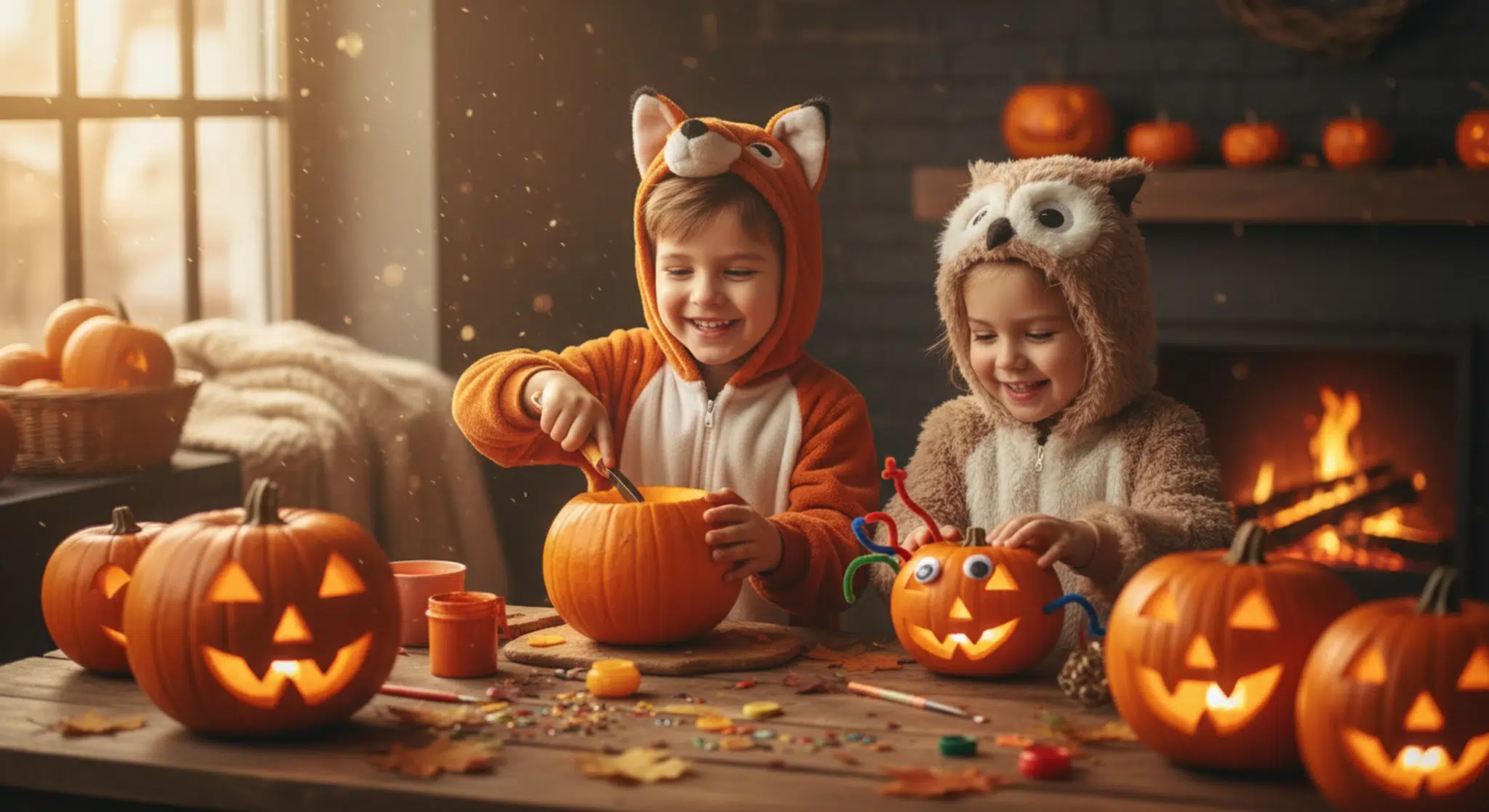
Halloween is far older than costumes and candy, with roots stretching back around two thousand years. Here are fun Halloween facts for kids about the ancient festival of Samhain, jack-o’-lanterns, trick-or-treating, candy corn, and the spooky animals we love, plus quick trivia to test the family.
Every October, kids carve pumpkins, pull on costumes, and fill bags with candy, but few know the surprising history behind these traditions. Halloween is one of the world’s oldest holidays, and the story of how it grew from an ancient bonfire festival into a night of trick-or-treating is packed with fascinating facts.
This kid-friendly guide rounds up the most interesting Halloween facts, from the Celtic festival of Samhain and the legend of the first jack-o’-lantern to candy corn, giant pumpkins, and the truth about spooky animals like bats and black cats. There is even a round of quick trivia to turn the whole thing into a family game.
Key Takeaways
Halloween began around two thousand years ago as the Celtic festival of Samhain.
The first jack-o’-lanterns were carved from turnips, not pumpkins, tied to the legend of Stingy Jack.
Trick-or-treating grew from medieval customs called souling and guising.
Candy corn dates to the 1880s and was first nicknamed chicken feed.
Spooky symbols like bats, black cats, and spiders are harmless and even helpful.
Table of Contents
The Ancient Origins of Halloween
Halloween is far older than costumes and candy. Its roots reach back around two thousand years to the ancient Celtic festival of Samhain, celebrated in what is now Ireland, the United Kingdom, and northern France. The Celts marked their new year on November 1, when the dark, cold half of the year began, and they believed that on the night before, the boundary between the living and the dead grew thin.
On the night of October 31, people lit big bonfires and wore costumes, often made from animal skins, to confuse or ward off any wandering spirits. Centuries later, the Catholic church established All Saints Day on November 1, also called All Hallows. The night before became known as All Hallows Eve, which over time was shortened to Halloween. Many of today’s traditions are echoes of these very old customs.
Why We Carve Jack-o’-Lanterns
The glowing jack-o’-lantern comes from an old Irish legend about a trickster named Stingy Jack, who fooled the devil and was doomed to wander the night with only a burning coal to light his way. He carried it inside a hollowed-out turnip, and people began calling the ghostly figure Jack of the Lantern, later shortened to jack-o’-lantern.
To keep spirits like Jack away, people in Ireland and Scotland carved scary faces into turnips, potatoes, and beets and set them in windows and doorways. When Irish immigrants came to the United States, they discovered that the native pumpkin was much bigger and far easier to carve, and the pumpkin jack-o’-lantern we know today was born.
The Story Behind Trick-or-Treating
Trick-or-treating did not start with candy. In the Middle Ages, a custom called souling saw poor people, and later children, going door to door on All Hallows Eve to offer prayers for the dead in exchange for small cakes. A related tradition called guising involved young people dressing in costume and performing a song, poem, or trick to earn food or coins.
These customs traveled to North America with European immigrants and slowly evolved. By the mid-1900s, going door to door in costume for candy had become a beloved American tradition, and the cheerful phrase trick or treat was here to stay.
Sweet Halloween Candy Facts
Halloween is one of the biggest candy-selling times of the year in the United States
Candy corn was invented in the 1880s and was originally nicknamed chicken feed
Americans buy roughly 20 million pounds of candy corn each year
Chocolate treats are the most popular kind of Halloween candy overall
The tradition of giving candy specifically grew popular in the mid-twentieth century
Older kids keep you busy by day, little ones keep you up at night.
If a younger sibling is still fighting sleep, our free two-minute quiz builds a personalized plan.
Halloween can be a thrilling mix of spooky and silly, but younger children can find some of it genuinely scary. Follow your child’s lead: some love a good fright, while others need the gentler, friendlier side of the holiday. Framing traditions as fun and explaining the harmless truth behind spooky symbols, like helpful bats and ordinary black cats, keeps the excitement from tipping into real fear.
A big night of costumes, sugar, and late-night trick-or-treating can also wreak havoc on sleep. Keep bedtime as close to normal as you can afterward, offer water and a calm wind-down, and expect the next day to run a little slower. If a younger sibling is overtired and overstimulated from all the fun, a steady, soothing routine helps everyone recover. For quieter thrills, our bedtime stories guide offers gentle tales to end the night calmly.
Frequently Asked Questions
What are some fun Halloween facts for kids?
Halloween began about two thousand years ago as the ancient Celtic festival of Samhain, when people lit bonfires and wore costumes to ward off spirits. The first jack-o’-lanterns were carved from turnips rather than pumpkins, candy corn was invented in the 1880s and first called chicken feed, and pumpkins are technically a fruit. Spooky symbols like bats and black cats are actually harmless, which makes them great, not-too-scary facts to share with kids.
Why do we carve pumpkins for Halloween?
The tradition comes from an Irish legend about Stingy Jack, who was said to wander the night carrying a burning coal inside a hollowed-out turnip. To keep spirits away, people in Ireland and Scotland carved scary faces into turnips and other vegetables and lit them. When Irish immigrants arrived in the United States, they found pumpkins were bigger and easier to carve, and the pumpkin jack-o’-lantern we know today was born.
How did trick-or-treating start?
Trick-or-treating grew from medieval European customs. In one called souling, poor people and children went door to door offering prayers for the dead in exchange for small cakes, while a related tradition called guising involved dressing in costume and performing a song or trick for food or coins. These customs traveled to North America with immigrants and, by the mid-1900s, had evolved into going door to door in costume for candy.
What is the origin of Halloween?
Halloween traces back to the ancient Celtic festival of Samhain, celebrated around two thousand years ago in what is now Ireland, the UK, and northern France. The Celts marked their new year on November 1 and believed spirits could cross into the living world the night before. Later, the church placed All Saints Day, or All Hallows, on November 1, so the night before became All Hallows Eve, which was shortened to Halloween.
Are bats and black cats really bad luck?
No, that is just superstition. Bats became linked to Halloween because ancient bonfires attracted insects, which in turn attracted hungry bats, and most bats are gentle creatures that eat insects and help pollinate plants. Black cats were unfairly feared as bad luck in the past, but they are simply cats with dark fur. Sharing these harmless truths is a great way to make Halloween feel exciting rather than genuinely scary for younger kids.
Fun for them, rest for you.
Betteroo helps the whole family sleep better. Take the free two-minute quiz for a plan tailored to your child.