
Home
»
Sleep
»
When Can Babies Self Soothe? What the Research Says by Age

When Can Babies Self Soothe? What the Research Says by Age

Updated

Baby lying on its back in a bare crib gently sucking on its hand
Rachel Rothman, Co-Founder and Chief Parenting Officer at Betteroo

Written By

Rachel Rothman

Chief Parenting Officer

Dr. Meidad Greenberg, Board-Certified Pediatrician and Pediatric Medical Advisor at Betteroo

Medically Reviewed By

Meidad Greenberg, M.D.

Board-Certified Pediatrician

Babies develop the building blocks of self soothing around 4 to 6 months, when sleep cycles mature and they gain enough motor control to suck on their hands, turn their heads, and resettle between sleep cycles. Newborns cannot self soothe, and expecting them to backfires.

Self soothing is one of the most loaded phrases in baby sleep, so let us define it plainly: it is a baby’s ability to calm down and return to sleep without a caregiver’s help. It is not a moral achievement or a parenting test, it is a developmental skill with a fairly predictable timeline and a lot of individual variation.

This guide covers when babies actually become capable of self soothing, what the skill looks like in real life, how to encourage it gently at every age, when structured sleep training makes sense, and the situations where fussing at night is not about soothing at all.

Key Takeaways

  • Newborns under 3 to 4 months cannot truly self soothe; respond promptly and freely.
  • The capacity emerges around 4 to 6 months as sleep cycles and motor skills mature.
  • Self soothing looks like hand sucking, head turning, rocking, and brief fussing before resettling.
  • Drowsy but awake, consistent routines, and a short pause before responding all build the skill.
  • Structured sleep training is an option from about 4 to 6 months, not a requirement.

What Self Soothing Actually Means

Everyone, adults included, wakes briefly between sleep cycles. The difference is that most adults roll over and sink back into sleep without remembering it, while a baby who has always been fed, rocked, or held to sleep often needs that same help to get back down at 2 am. Self soothing simply means bridging those normal wakings independently: a baby stirs at the end of a cycle, grumbles, sucks a hand or shifts position, and drifts back off.

Two separate things have to mature before that is possible: sleep architecture and motor control. Neither is present at birth, which is why the age question matters so much.

Why Newborns Cannot Self Soothe

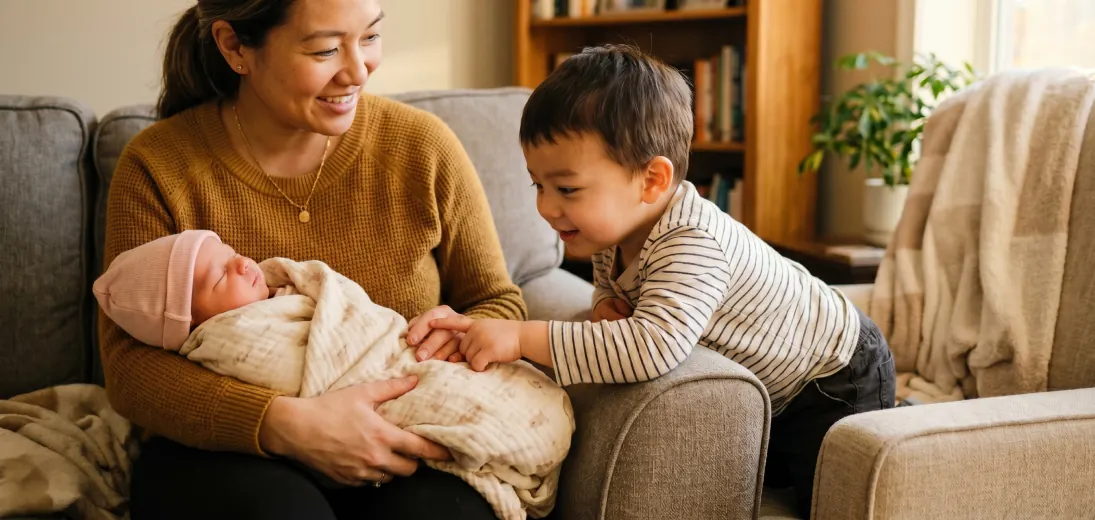
In the first three months, babies sleep in short cycles split roughly evenly between active and quiet sleep, have no circadian rhythm to anchor nights, and lack the motor control to reliably get a hand to their mouth or reposition themselves. Their calming systems are immature and external: sucking, motion, containment, and your presence do the regulating for them. This is why responsive care in the newborn months, feeding, rocking, holding, swaddling, builds regulation rather than ruining it. You cannot spoil a newborn, and a swaddled, promptly comforted newborn is learning what calm feels like. Our swaddling guide and newborn wake windows guide cover the newborn toolkit.

4 to 6 Months: The Window Opens

Around 4 months, sleep architecture reorganizes into more adult-like cycles, which is the real story behind the famous 4 month regression. Circadian rhythm firms up, night sleep consolidates, and by 5 to 6 months most babies can get hands to mouth on purpose, turn their heads freely, and roll, the physical toolkit of self settling. This is why most pediatric sleep guidance identifies roughly 4 to 6 months as the earliest sensible window for expecting, and practicing, independent settling.

The skill does not switch on by itself for every baby. Some babies find their hands and start resettling with no help at all; others, especially babies with strong sleep onset associations like feeding to sleep, need practice and a little structure. Both are normal.

Not sure if your baby is ready?

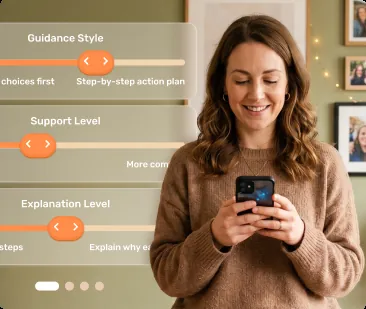
Answer a few questions and get a plan matched to your baby’s age, temperament, and sleep history.

Take the Free Sleep Quiz

What Self Soothing Looks Like

  • Sucking on fingers, hands, or (after it is safely introduced) a pacifier.
  • Turning the head side to side or rubbing the face into the mattress.
  • Gentle body rocking, leg lifting, or repositioning.
  • Quiet humming, babbling, or rhythmic fussing that winds down rather than up.
  • After 12 months, cuddling a lovey or small comfort object.

The key skill for parents is telling resettling noise from escalation. Babies are loud, grumbly sleepers, and a burst of fussing at a cycle transition often resolves on its own within a few minutes if given the chance. Crying that climbs steadily in intensity is a call for help; grumbling that ebbs and flows is often a baby working on the skill. Note that loveys and any soft objects stay out of the crib until 12 months per safe sleep guidance.

How to Encourage Self Soothing, Gently

First, get the foundations right, because no baby can self settle while overtired or undertired: an age appropriate schedule, a dark room, white noise if it helps, and a consistent, calming bedtime routine that ends in the crib. Our sleep schedule by age guide covers realistic timing, and fixing an overtired baby often solves half the problem by itself.

Second, practice drowsy but awake: put your baby down sleepy but conscious, so the last thing they experience before sleep is the crib, not your arms. If that currently causes instant protest, work in steps, soothe almost to sleep, then down, and gradually do less. Third, use the pause: when your baby stirs at night, wait a few minutes before intervening, long enough to give resettling a chance, short enough that you are still responsive. Many babies surprise their parents within a week of consistent pausing.

Fourth, loosen the strongest sleep associations gradually. If every sleep starts with feeding, try moving the feed earlier in the routine so the actual falling asleep happens in the crib. Small consistent changes beat dramatic inconsistent ones every time.

When Structured Sleep Training Makes Sense

If your baby is past 4 to 6 months, healthy, and sleep is not improving with the gentle groundwork, structured sleep training teaches independent settling faster. The evidence base is reassuring: methods from graduated checks to fully gradual approaches improve sleep without demonstrated harm to attachment or development. The Ferber method uses timed check ins, the chair method fades your presence gradually, and gentler no cry approaches trade speed for minimal protest. Our when to start sleep training guide helps you pick your moment and method.

When Night Fussing Is Not About Soothing

Self settling has limits, and expecting it at the wrong moment causes needless frustration. Hunger is real for young babies who still need night feeds, illness and teething legitimately hurt, a soaked diaper or a too cold room will defeat any settling skill, and developmental leaps and sleep regressions temporarily disrupt even solid sleepers. Separation anxiety, peaking in waves from around 8 months, is a real emotional need, not a settling failure. Respond to the need first; the skill returns once the need is met.

When to Talk to Your Pediatrician

  • Loud snoring, gasping, or pauses in breathing during sleep.
  • Night waking with apparent pain, fever, or ear pulling.
  • A baby past 6 months waking every hour despite consistent routines and schedules.
  • Any concerns about weight, feeding, or reflux that complicate night feeds.

A Simple One Week Practice Plan

If your baby is past 5 months and you want a gentle on ramp, try this seven night sequence. Nights one and two: keep everything else identical but move the feed to the start of the bedtime routine, and put your baby down drowsy but awake. Expect protest; stay and soothe in the crib with a hand and your voice. Nights three and four: same routine, but when your baby stirs overnight with grumbling rather than escalating crying, wait five minutes before going in. Track what actually happens rather than what you fear will happen; many parents discover resettling was already occurring.

Nights five to seven: extend the pause slightly and thin out the strongest remaining help, pick up less, pat more, then pat less, shush more. By the end of the week you will know which of three situations you are in: a baby who mostly has the skill and just needed room to use it, a baby making steady progress worth continuing, or a baby for whom the gradual road is producing more frustration than progress, which is exactly the situation structured methods were designed for. All three outcomes are useful information, and none of them is a verdict on your parenting.

Frequently Asked Questions

At what age can a baby self soothe?

The building blocks of self soothing emerge around 4 to 6 months, when sleep cycles mature and babies gain the motor skills to suck on hands, turn their head, and resettle. Newborns under 3 to 4 months cannot truly self soothe and need caregiver comfort. Full, reliable self settling develops gradually and varies widely from baby to baby.

Can a 2 or 3 month old self soothe?

Not really. Under about 3 to 4 months, babies lack the neurological maturity and motor control to calm themselves consistently, and responding promptly to a newborn’s cries builds security rather than bad habits. You may see brief moments of hand sucking, which is a preview, not the finished skill.

What does baby self soothing look like?

Common self soothing behaviors include sucking on fingers or hands, turning the head side to side, rubbing the face into the mattress, body rocking, humming or babbling quietly, and briefly fussing before drifting back to sleep. After 12 months, many babies also use a lovey or comfort object.

How do I teach my baby to self soothe?

Set the stage first: a consistent bedtime routine, an age appropriate schedule, and a dark, boring sleep space. Then practice drowsy but awake, putting your baby down before fully asleep, and give a brief pause before responding to nighttime grumbles so they get a chance to resettle. From around 4 to 6 months, structured sleep training approaches can help if you want faster progress.

Should I let my baby cry to learn self soothing?

That is a family choice, not a requirement. Research shows methods that involve some crying, like graduated checks, are effective and have not shown harm in studies of babies over about 6 months, but gentler approaches also work with more patience. What matters most is consistency and an age appropriate expectation of what your baby can do.

A settling plan that fits your baby

Get a personalized, age appropriate sleep plan built around your baby and your parenting style.

Take the Free Sleep Quiz

4 Sources
  1. American Academy of Pediatrics, HealthyChildren.org. Getting Your Baby to Sleep.
    https://www.healthychildren.org/English/ages-stages/baby/sleep/Pages/getting-your-baby-to-sleep.aspx
  2. Mindell JA, et al. Behavioral treatment of bedtime problems and night wakings in infants and young children. Sleep, 2006.
    https://pubmed.ncbi.nlm.nih.gov/17068979/
  3. Gradisar M, et al. Behavioral Interventions for Infant Sleep Problems: A Randomized Controlled Trial. Pediatrics, 2016.
    https://publications.aap.org/pediatrics/article/137/6/e20151486/81475
  4. Moon RY, et al. Sleep-Related Infant Deaths: Updated 2022 Recommendations for Reducing Infant Deaths in the Sleep Environment. Pediatrics, 2022.
    https://publications.aap.org/pediatrics/article/150/1/e2022057990/188304