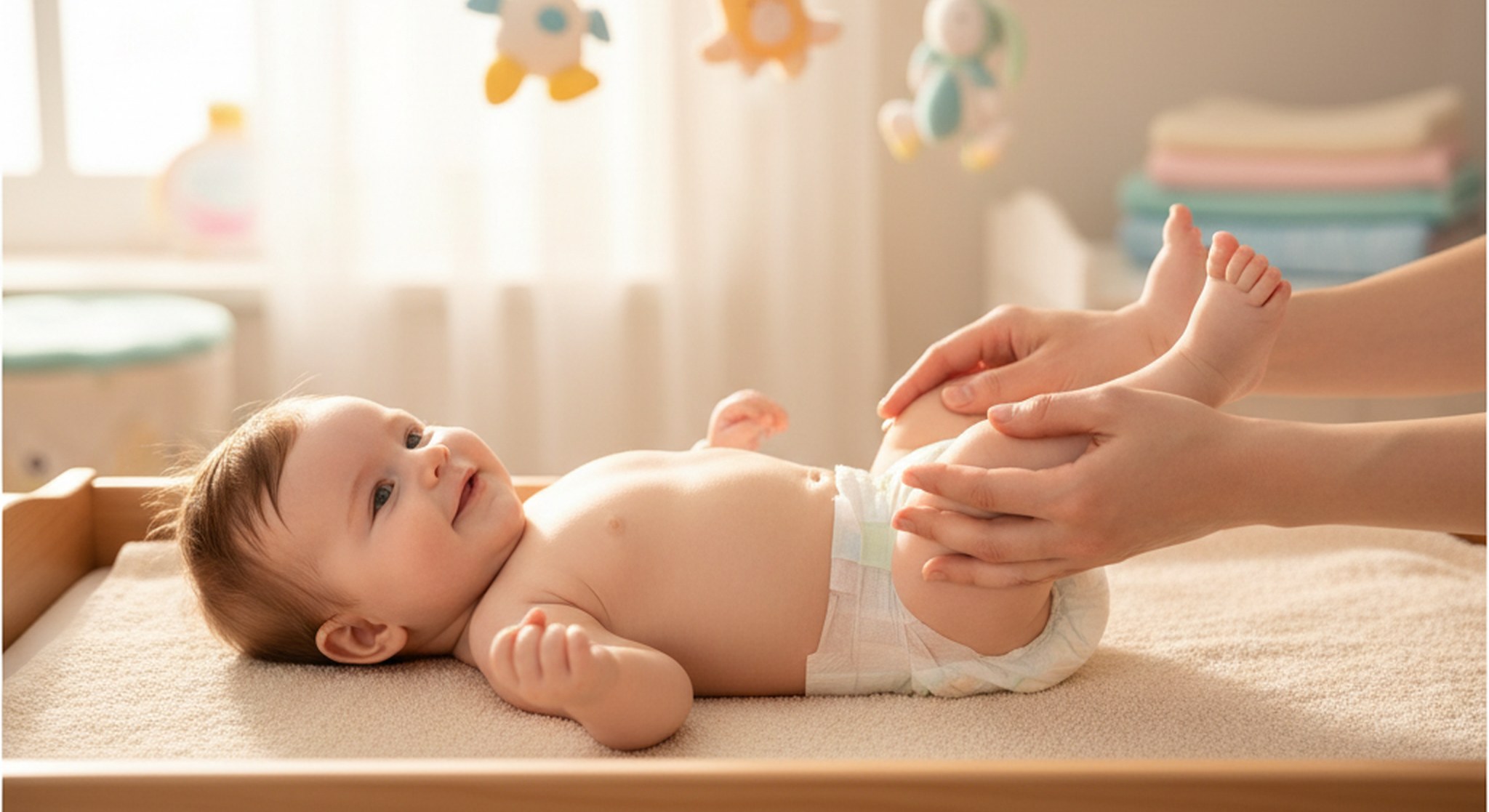
Baby massage can help your little one sleep by lowering stress, easing gas and tension, and signaling that bedtime is near. A short, gentle massage as part of a calm bedtime routine can help many babies settle faster and sleep more soundly.
There is something deeply soothing about slow, loving touch, and babies feel it too. A few quiet minutes of gentle massage before bed can become one of the calmest parts of your day and a reliable cue that sleep is coming.
This guide covers how baby massage supports sleep, when and how to do it safely, a simple step by step routine, and what the research actually shows.
Key Takeaways
Gentle massage can lower stress hormones and help babies relax before sleep.
It works best as a predictable step in a calm, consistent bedtime routine.
Use a light, food based oil, warm hands, and slow, gentle strokes, and always follow your baby’s cues.
Keep sessions short, around 10 minutes, and stop if your baby seems overstimulated or upset.
Massage supports sleep, but safe sleep rules still apply. Always place your baby on their back in a bare crib.
Table of Contents
How Baby Massage Helps With Sleep
Slow, rhythmic touch helps calm a baby’s nervous system. Research on infant massage has found it can lower cortisol, the alert and stress hormone, while supporting the body’s natural wind down toward sleep. In one well known study, babies massaged by their mothers before bed showed a healthier adjustment of their day and night rhythm and produced more melatonin, a key sleep hormone, at night by around 12 weeks of age.
Massage may also ease the physical discomforts that keep babies up, like trapped gas or general fussiness, and it deepens the bond between you and your baby. Just as importantly, a nightly massage becomes a consistent sensory cue. Over time, your baby learns that this calm, loving touch means the day is ending and sleep is near, which is exactly what a good bedtime routine is meant to do.
When to Massage Your Baby for Sleep
The sweet spot is when your baby is calm and alert but not overtired, and not right after a feed. Good timing tips:
Fit massage into your bedtime routine, often after a bath and before the last feed or a quiet story.
Wait about 30 to 45 minutes after a full feed so you are not pressing on a full tummy.
Choose a moment when your baby is content, not hungry, and not already crying or overtired.
Keep the room warm, softly lit, and quiet to support the sleepy mood you are building.
You can begin gentle massage in the early weeks, keeping strokes very light for a newborn. If your baby was premature or has any medical concerns, check with your pediatrician first.
Struggling with your baby’s sleep?
A personalized plan meets your baby where they are, at every age and stage.
Undress your baby to a diaper, lay them on a soft towel on their back, warm a little baby safe oil between your palms, and let them know you are starting. Use slow, gentle strokes and watch their face the whole time. A calm baby will relax into it, while a fussy or squirmy baby is telling you to stop or slow down.
Legs and feet: gently stroke down from thigh to ankle, then softly circle the soles of the feet. This is a relaxing place to begin.
Tummy: using flat, soft fingers, make slow clockwise circles around the belly button, which can help move trapped gas.
Chest: rest your hands at the center of the chest and stroke outward toward the shoulders in a smoothing motion.
Arms and hands: stroke gently from shoulder to wrist, then open and softly rub each little palm.
Back: with your baby lying on their tummy while awake and supervised, stroke slowly from the shoulders down to the bottom.
Keep the whole session short, around 10 minutes, and end while your baby is still calm and content. Then move straight into the rest of your wind down and into the crib.
Safety and Simple Tips
A few small things keep massage safe and enjoyable for both of you:
Use a light, food based oil such as a plain vegetable or coconut oil, and patch test a small area first. Avoid nut oils if there is any family allergy history.
Warm your hands and the oil, and keep your touch light. Massage should never be firm enough to cause discomfort.
Avoid massaging over the spine directly, and steer clear of any rashes, broken skin, or a recent vaccination site.
Stop any time your baby turns away, arches, or fusses. Overstimulation before bed can backfire.
Remember that massage is a lovely wind down tool, not a substitute for safe sleep. Once your baby is relaxed, always place them down on their back on a firm, flat mattress in a crib that is bare of pillows, blankets, bumpers, and toys.
To weave massage into a fuller wind down, see our baby sleep schedule by age guide, and if an overtired baby is fighting sleep, our overtired baby guide can help you catch that window sooner.
Frequently Asked Questions
Does baby massage really help with sleep?
Yes, for many babies. Gentle massage can lower stress hormones, ease gas and tension, and act as a calming cue that bedtime is near. Research has linked bedtime massage to more settled sleep and higher nighttime melatonin by around 12 weeks of age.
When should I massage my baby for sleep?
Massage works best when your baby is calm but not overtired, ideally as part of your bedtime routine after a bath. Wait about 30 to 45 minutes after a full feed, and keep the room warm, dim, and quiet.
How long should a baby massage be?
Around 10 minutes is plenty. Keep it short and gentle, and end while your baby is still calm and content. Stop sooner if your baby seems overstimulated, fussy, or turns away.
What oil is safe for baby massage?
Use a light, food based oil such as plain vegetable or coconut oil, and patch test a small area first. Avoid nut based oils if there is any family history of allergies, and skip heavily fragranced products.
Can I massage a newborn?
Yes, you can start gentle massage in the early weeks, keeping your strokes very light. If your baby was premature or has any medical concerns, check with your pediatrician before you begin.
Build a wind down that works
Get a personalized plan built around your baby’s age, temperament, and bedtime routine.
Paruthi S, et al. Recommended Amount of Sleep for Pediatric Populations: A Consensus Statement of the American Academy of Sleep Medicine. Journal of Clinical Sleep Medicine, 2016. https://jcsm.aasm.org/doi/10.5664/jcsm.5866