Walking · Months 9 to 18
Baby first shoes: one pair at a time, and bare feet indoors.
Babies’ feet do best unconfined, so a first shoe is for walking outside, not a milestone purchase. The AAP’s advice is plain: a comfortable shoe with a nonskid sole, checked for fit every month, and not too much money.
- 3 picks, 3 skips
- Recall-checked Oct 2026
- Includes the $0 option
Independent picks. If you buy through our Amazon links we may earn a commission; as an Amazon Associate, Betteroo earns from qualifying purchases. It never decides what makes the list. How we choose
The short answer
Buy one pair once your child walks outdoors, and keep them barefoot or in socks inside. For first steps outside, the See Kai Run Stevie Mini, with a rubber sole. For wide feet, the Stride Rite Taye 2.0, whose insole comes out. The Robeez Soft Soles are optional, for cold floors and visits.
The AAP says babies’ feet develop best when they’re not confined in shoes, that socks are all they need early on, and that once children walk outdoors they need shoes for protection. On October 5, 2026 we checked every pick’s maker page, live US listing, price band and the CPSC recall database.
At a glance
Three first shoes
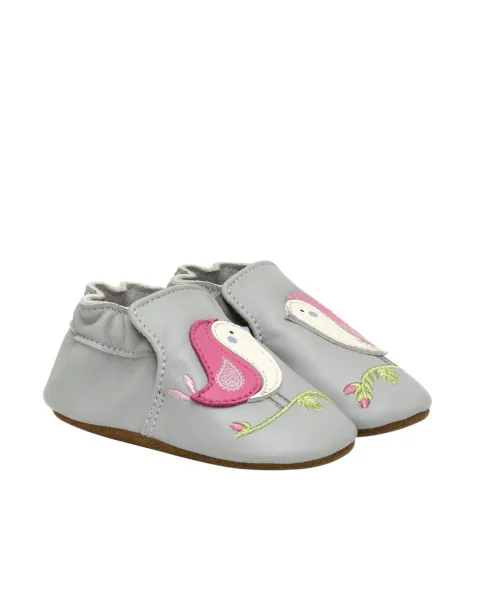
Robeez Soft Soles, Bird Buddies Grey
A soft leather slipper with a suede sole and an elastic ankle that stays on.
Price band: Mid-range Check price Why it made the list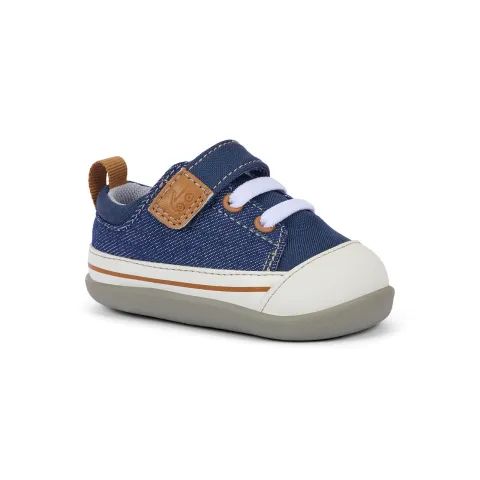
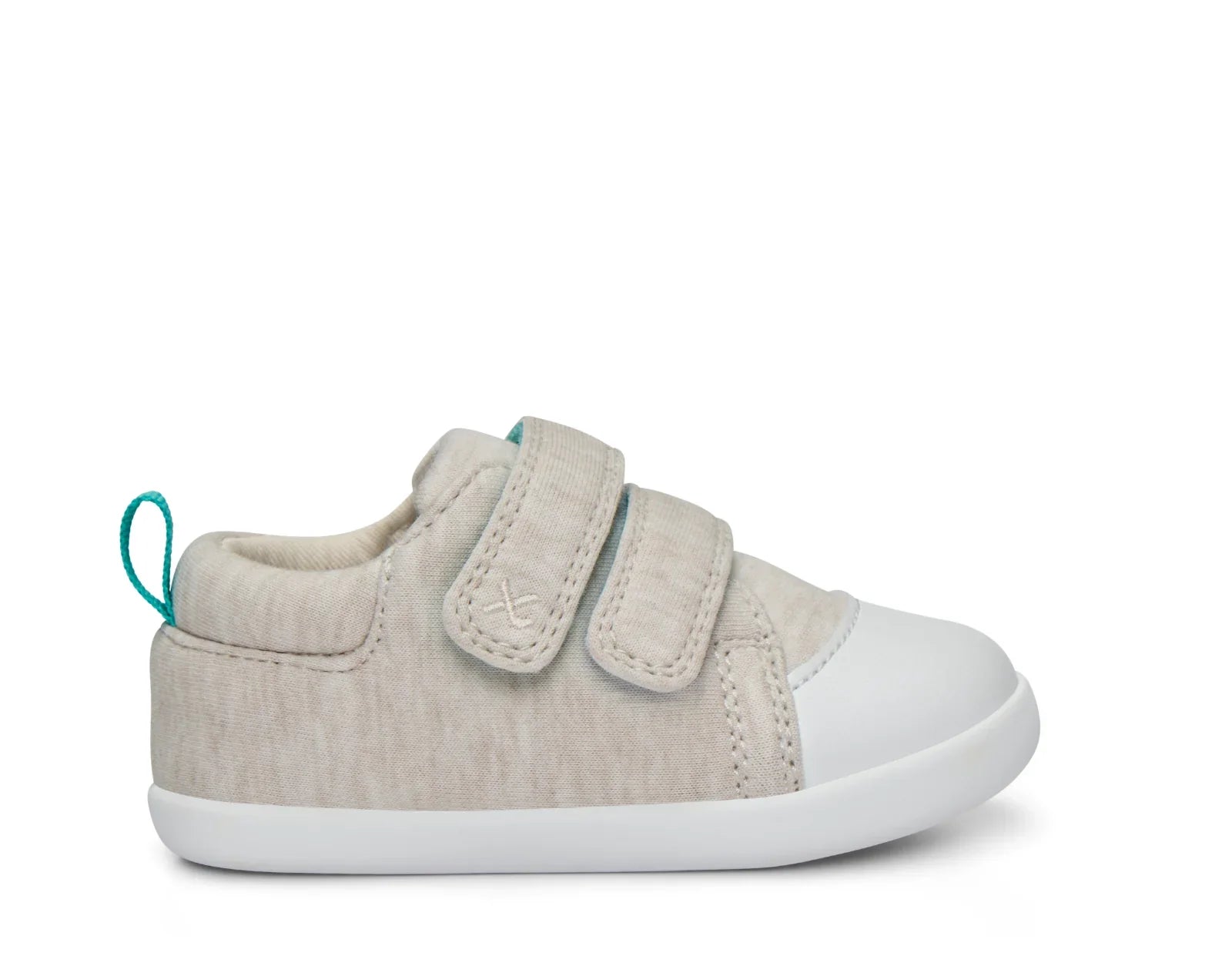
See Kai Run Stevie Mini, Navy Denim
A light, flexible first walker with a rubber sole and a toe cap.
Price band: Mid-range Check price Why it made the list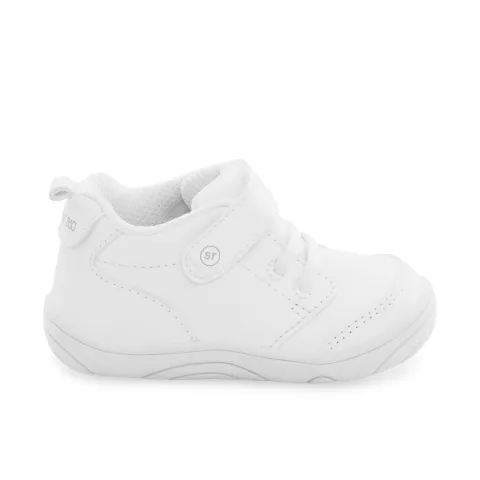
Stride Rite Taye 2.0, White
A first sneaker with an insole that comes out for a wider fit, and it goes in the washing machine.
Price band: Mid-range Check price Why it made the listBefore you buy
What a first shoe has to do
A common mistake is spending a lot on the first pair. The AAP says to buy well-made shoes but not to spend a lot of money, because at this stage the first pair won’t last more than 2 or 3 months.
We assess every pick on the same things: the sole, the upper, how it fastens, how it cleans, and whether the maker states the American Podiatric Medical Association’s seal. All three are in our Mid-range band, which is why we’d buy one pair at a time.
A nonskid sole
Comfortable, with a nonskid sole, as the AAP advises for steady steps.
Room to grow
About a finger’s width between the big toe and the end of the shoe (AAP).
One pair at a time
They’re outgrown in 2 or 3 months, so we’d never buy two sizes ahead.
The picks
Why each one made the list
Robeez Soft Soles, Bird Buddies Grey
A soft leather slipper with a suede sole and an elastic ankle that stays on.
A leather upper on a soft suede sole that flexes and bends with every step, with an elasticized ankle that makes it easy on and off and keeps it in place. Robeez says it’s best suited to indoor and light outdoor use, and that it’s approved by the American Podiatric Medical Association (Robeez). It’s for cold floors and visits, not the pavement.
Why it’s worth it
- Flexible suede sole
- Elastic ankle stays on
- APMA approved (maker)
Key specs
- Linked size
- 12 to 18 months
- Sole
- Soft suede
- Upper
- Leather
- Closure
- Elastic ankle, slip-on
- Cleaning
- Spot clean
- APMA
- Approved (maker)
From Robeez’s product page, then the amazon.com listing (size), checked October 5, 2026.
Safety check
- No recalls found in the CPSC recall database (searched by product name, Oct 5, 2026).
See Kai Run Stevie Mini, Navy Denim
A light, flexible first walker with a rubber sole and a toe cap.
A cotton denim upper with a stitched natural rubber toe cap, a strap and faux elastic laces for an easy-on fit, and a full rubber outsole for flexibility and traction in early steps. It carries the American Podiatric Medical Association’s Seal of Acceptance (See Kai Run). A rubber sole is what the AAP’s advice points to once a child walks outdoors: comfortable, with a nonskid sole (AAP).
Why it’s worth it
- Full rubber outsole
- Strap and elastic laces, easy on
- APMA Seal of Acceptance (maker)
Key specs
- Linked size
- 5 Infant
- Sole
- Rubber outsole
- Upper
- Cotton denim
- Closure
- Strap and faux elastic laces
- Cleaning
- Spot clean
- APMA
- Seal of Acceptance (maker)
From See Kai Run’s Stevie Mini page, then the amazon.com listing (color, size), checked October 5, 2026.
Safety check
- No recalls found in the CPSC recall database (searched by product name, Oct 5, 2026). See Kai Run’s only CPSC recall, in 2006, covered its Ellis boots, not this shoe.
Stride Rite Taye 2.0, White
A first sneaker with an insole that comes out for a wider fit, and it goes in the washing machine.
A hook-and-loop sneaker with a memory foam footbed and a removable insole: take it out for a wider width and more depth. Stride Rite says it’s flexible, machine washable and APMA certified (Stride Rite). The upper is faux leather (listing).
Why it’s worth it
- Insole comes out for wide feet
- Machine washable (maker)
- APMA certified (maker)
Key specs
- Linked size
- 5 Toddler
- Sole
- Synthetic outsole
- Upper
- Faux leather
- Closure
- Hook and loop
- Cleaning
- Machine washable
- APMA
- Certified (maker)
From Stride Rite’s product page, then the amazon.com listing (upper, sole, size), checked October 5, 2026.
Safety check
- No recalls found in the CPSC recall database (searched by product name, Oct 5, 2026). Stride Rite’s CPSC recalls, in 2001 and 2013, covered girls’ shoes and sandals with metal buckles and flowers, not this sneaker.
Side by side
Three picks side by side
| | | |
|---|---|---|---|
| Job | Indoors, cold floors | First steps outside | Wide feet |
| Price band | Price band: Mid-range | Price band: Mid-range | Price band: Mid-range |
| Sole | Soft suede | Rubber outsole | Synthetic outsole |
| Upper | Leather | Cotton denim | Faux leather |
| Closure | Elastic ankle | Strap and elastic laces | Hook and loop |
| Cleaning | Spot clean | Spot clean | Machine washable |
| APMA (maker) | Approved | Seal of Acceptance | Certified |
Which one is yours
Start with your situation
Not walking yetNo shoes needed. Socks keep feet warm.
Cold floors or visitingThe Robeez, if you want something.
Walking outsideThe Stevie Mini.
Wide or high feetThe Taye 2.0, with the insole out.
Want to spend the leastOne pair only, when they walk outside.
The $0 version
Bare feet or socks indoors. The AAP says babies’ feet develop best when they’re not confined in shoes, and that socks are all they need to keep warm. You only need to buy once they walk outdoors.
Bare feet or socks, until they walk outdoors.
What we would skip
Three things we’d leave on the shelf
They’re sold as first-shoe essentials. Here’s why we’d pass.
Shoes for a baby who isn't walking
The AAP says babies’ feet develop best when they’re not confined in shoes, and socks are all they need early on.
Buying the next size up to save money
The AAP’s fit rule is about a finger’s width at the big toe, checked once a month, and it says no shoes at all is better than shoes that are too tight. A shoe that’s too big doesn’t meet the finger-width rule either. Buy for the foot you have.
Light-up and character shoes at a premium
You pay extra for the lights and the licence. The AAP‘s advice is a comfortable shoe with a nonskid sole, and not a lot of money, since the pair will be outgrown in 2 or 3 months.
What we passed on
- Hstyle Baby Walking Sock Shoes. The top seller in Amazon’s search for baby first walking shoes on October 5, 2026, at about $10. We found no maker website, only the Amazon store, so there was nothing to check its specs against.
- Ten Little First Walker. A foot-shaped first walker with the APMA seal and removable insoles (listing), about $42. We picked the Taye 2.0 for wide feet because it’s a little cheaper and machine washable.
- See Kai Run Stevie II. The same idea in toddler sizes. It’s the next pair, once the Stevie Mini is outgrown, not the first.
Questions parents ask
FAQ
When does a baby need shoes?
Once they walk outdoors. The AAP says babies’ feet develop best when they’re not confined in shoes, and that socks are all they need to keep warm early on.
How do I check the fit?
About once a month: the top of your child’s big toe should be about a finger’s width from the inside edge of the shoe. The AAP says it’s better to have no shoes at all than shoes that are too tight.
How long will first shoes last?
Not long. The AAP says that at this stage a child’s feet grow so fast that the first pair won’t last more than 2 or 3 months.
What does the APMA seal mean?
It’s a seal from the American Podiatric Medical Association. We list it only where the maker states it, as all three of our picks do.
Why trust Worth It
How we choose
We don’t run a product lab, and we won’t pretend we do. Worth It picks are researched from makers’ instructions, retailer listings and official safety guidance, not lab-tested. Each is chosen for a specific age and a specific job, the way a friend a couple of years ahead of you would choose: a few products, each with a reason, and an honest note on what could go wrong.
We check every listing on amazon.com for a live US offer and sort it into a price band: Budget (under $30), Mid-range ($30 to $100) or Premium (over $100). We don’t print exact prices because they change daily. If you buy through our links we may earn a commission. That pays for this, and it never decides what makes the list.
For safety, we search the CPSC recall database by product name, and we note the US safety standard the maker says a product meets. Where the maker doesn’t say, we tell you what the law requires for that kind of product. The JPMA’s certification list (now run by the Baby Safety Alliance) isn’t publicly searchable, so we only mention certification when the maker states it. Specs come from the maker first, and the Amazon listing second.
Sources for this page
- AAP: Shoes for active toddlers
- Robeez: Bird Buddies Soft Soles Grey
- See Kai Run: Stevie Mini
- Stride Rite: Taye 2.0 Sneaker
- CPSC recall database, searched by product name on October 5, 2026
- Product listings on amazon.com, checked October 5, 2026
This page, every week, for your baby’s exact age.
Worth It is a weekly email matched to your baby’s age. Around the first steps it covers shoes, then the next size, and every week in between, something you’ll actually need.
- Two or three picks for what changes that week, from month 4 to month 24
- The free version and the skip list, every time
- Free, one email a week, unsubscribe in one click
Expecting? Add your due date, and Worth It starts when your baby turns four months. It runs until month 24.
By signing up you agree to get Worth It emails from Betteroo. Privacy policy.
Keep going