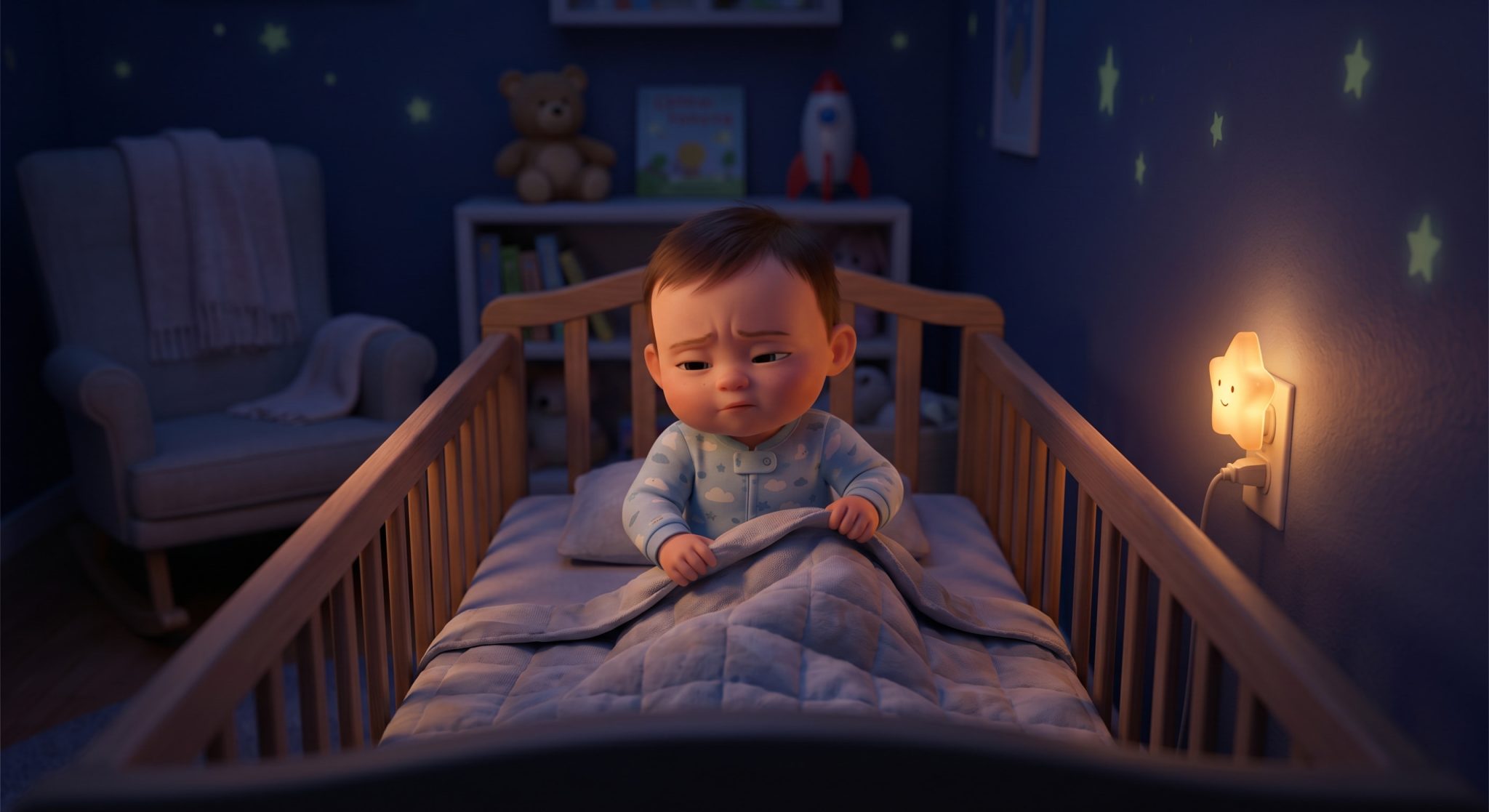


Your baby cries out in the dark, suddenly and sharply, and your first thought as you hurry down the hall is: did they have a bad dream? It is one of the most human questions in parenting, because it asks something deeper: what is actually going on inside that small sleeping head?
The honest answer: true nightmares are very unlikely in babies. Nightmares require story-shaped dreams, and story-shaped dreams require language, memory, and imagination that develop later in toddlerhood. What looks like a baby nightmare is almost always something else: a sleep cycle transition, a startle, brief night crying, or in some toddlers, a night terror, which is a different event entirely.
Here is what science can and cannot say about baby dreams, how to tell crying-in-sleep from night terrors from real nightmares, and what to do for each, at every age.
Table of Contents
Do Babies Dream at All?
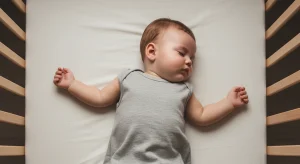
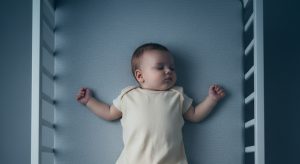
Babies spend an enormous share of sleep in REM (active) sleep, the stage adults dream in: roughly half of sleep in the newborn months, far more than at any later age 1. Their brains are intensely busy in that stage, consolidating an avalanche of new experience.
But busy REM sleep is not the same as narrative dreaming. Dream researchers generally find that vivid, reportable dreams develop alongside language and imagination in the toddler and preschool years, and even young children report dreams less often and less vividly than adults. Whatever babies experience in REM sleep, a plot with something scary chasing them is almost certainly not it. Nightmares in the true sense typically begin around ages 2 to 4, once imagination is rich enough to generate fears, and peak in the preschool years 2.
So Why Does My Baby Cry Out at Night?
- Sleep cycle transitions. Babies surface briefly between cycles every 45 to 60 minutes. Some pass through silently; others cry for a moment and resettle. Research across the first year shows night waking is universal; the difference is whether babies signal or self-settle 3.
- Active sleep noise. Whimpers, cries, and even short wails can happen during REM sleep without the baby being awake or distressed.
- Discomfort. Gas, teething, temperature, or a wet diaper produce real waking with real crying, no dream required.
- Separation feelings (6+ months). Once object permanence develops, waking alone can itself be upsetting. This is about waking to a real situation, not dreaming a scary one.
We cover this pattern in depth in why babies cry in their sleep.
From Betteroo’s State of Baby Sleep
Night waking with crying is the rule, not the exception: across 12,519 families with 4 to 6 month olds, 65.6% of babies wake three or more times a night, with the peak at 7 to 9 months (67.3%). A baby crying out at 2 a.m. is rarely a nightmare. It is usually just night waking, the most ordinary thing in baby sleep. Explore the full data →
Nightmares vs. Night Terrors: The Crucial Difference
In the second year, two distinct events can be confused, and they call for opposite responses 2:
| Nightmare | Night Terror | |
|---|---|---|
| When | Second half of night (REM) | First 1–3 hours (deep sleep) |
| Child is | Awake, scared, seeks comfort | Asleep, eyes may be open, inconsolable |
| Remembers it | Often (in verbal children) | No memory at all |
| What to do | Comfort and reassure | Stay close, keep safe, do not wake |
Night terrors look terrifying (screaming, thrashing, a child who seems to look right through you) but the child is deeply asleep, not suffering the way it appears, and will remember nothing. They are more common in toddlers and preschoolers than babies; our night terrors in toddlers guide covers them fully.
What to Do When Your Baby Cries Out
- Pause briefly. Many cries are between-cycle noise; a minute of waiting often ends with resettling. Rushing in can wake a baby who was still asleep.
- Respond calm and low-key. If crying builds, go in, keep lights off and voice soft. Comfort without turning 2 a.m. into a social event.
- Check the basics. Diaper, temperature, teething, illness. Real discomfort needs real fixes.
- Protect overall sleep. Overtired children have more fragmented nights, and in toddlers, overtiredness is the single biggest night terror trigger 2. A consistent bedtime routine reduces night waking on its own 4; an age-appropriate schedule does the rest. Start with our baby sleep schedule by age guide.
- For verbal toddlers with true nightmares. Comfort first, keep the conversation short at night, and talk it through in daylight. Limit scary content, wind down gently, and keep bedtime predictable.
When to Talk to a Pediatrician
Check in if night episodes involve stiffening, rhythmic jerking, or unusual movements (to rule out other causes), if screaming episodes happen most nights for weeks, if your child seems frightened of sleep itself, or if anything about the pattern does not sit right with you. Parental instinct is data.
Can Babies Have Nightmares FAQ
At what age do nightmares start?
True nightmares typically begin around ages 2 to 4, when imagination and language are developed enough to create and remember scary dream content. They peak in the preschool years. Before age 2, crying at night almost always has a different explanation.
Can a 6 month old have a bad dream?
Very unlikely in any meaningful sense. Six month olds spend lots of time in REM sleep and may whimper or cry during it, but they lack the cognitive machinery for story-like scary dreams. Crying at this age is usually a sleep cycle transition, discomfort, or separation feelings.
How do I know if it was a night terror?
Night terrors happen in the first 1 to 3 hours of the night: your child screams and thrashes but is actually asleep, may not recognize you, cannot be consoled, settles abruptly, and remembers nothing. A nightmare wakes the child fully, later in the night, and they want comfort.
Should I wake my baby if they seem to be having a bad dream?
No. Crying or twitching during sleep is usually active sleep, and waking interrupts the rest they need. Wait a minute or two; respond if your baby fully wakes and keeps crying. During a night terror, stay close and keep them safe, but do not try to wake them.
Do bad dreams mean my child is anxious or something is wrong?
Occasional nightmares in toddlers are a normal part of imagination development. Frequent distressing nightmares, fear of going to sleep, or daytime anxiety are worth raising with your pediatrician.
Night waking is the hardest part. We can help.
Get a personalized sleep plan built around your baby’s age, temperament, and your family’s needs.
Take the 3-Min Quiz →A Grounding Takeaway
Your baby is almost certainly not having nightmares. They are doing the loud, busy, occasionally dramatic work of infant sleep: cycling, processing, and sometimes crying out on the way through. Respond with calm, check the basics, protect the schedule, and save the monster-under-the-bed conversations for a few years from now, when they will come with words attached.
4 Sources
- Grigg-Damberger, M.M. (2016). The Visual Scoring of Sleep in Infants 0 to 2 Months of Age. Journal of Clinical Sleep Medicine, 12(3), 429–445. https://pmc.ncbi.nlm.nih.gov/articles/PMC4773621/
- American Academy of Pediatrics, HealthyChildren.org. Nightmares and Night Terrors in Preschoolers. https://www.healthychildren.org/English/ages-stages/preschool/Pages/Nightmares-and-Night-Terrors.aspx
- Burnham, M.M., Goodlin-Jones, B.L., Gaylor, E.E., & Anders, T.F. (2002). Nighttime sleep-wake patterns and self-soothing from birth to one year of age. Journal of Child Psychology and Psychiatry, 43(6), 713–725. https://pubmed.ncbi.nlm.nih.gov/12236608/
- Mindell, J.A., Telofski, L.S., Wiegand, B., & Kurtz, E.S. (2009). A Nightly Bedtime Routine: Impact on Sleep in Young Children and Maternal Mood. Sleep, 32(5), 599–606. https://pubmed.ncbi.nlm.nih.gov/19480226/
For a calming way to close the night with a fearful little one, see our bedtime prayers for kids, sorted by age.