
Home
»
Sleep
»
Personalized Baby Sleep Plan Apps: How to Find One That Fits

Personalized Baby Sleep Plan Apps: How to Find One That Fits

By Betteroo Team ·

Updated

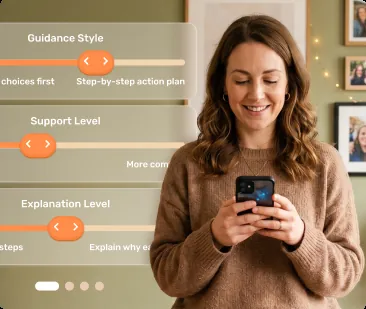
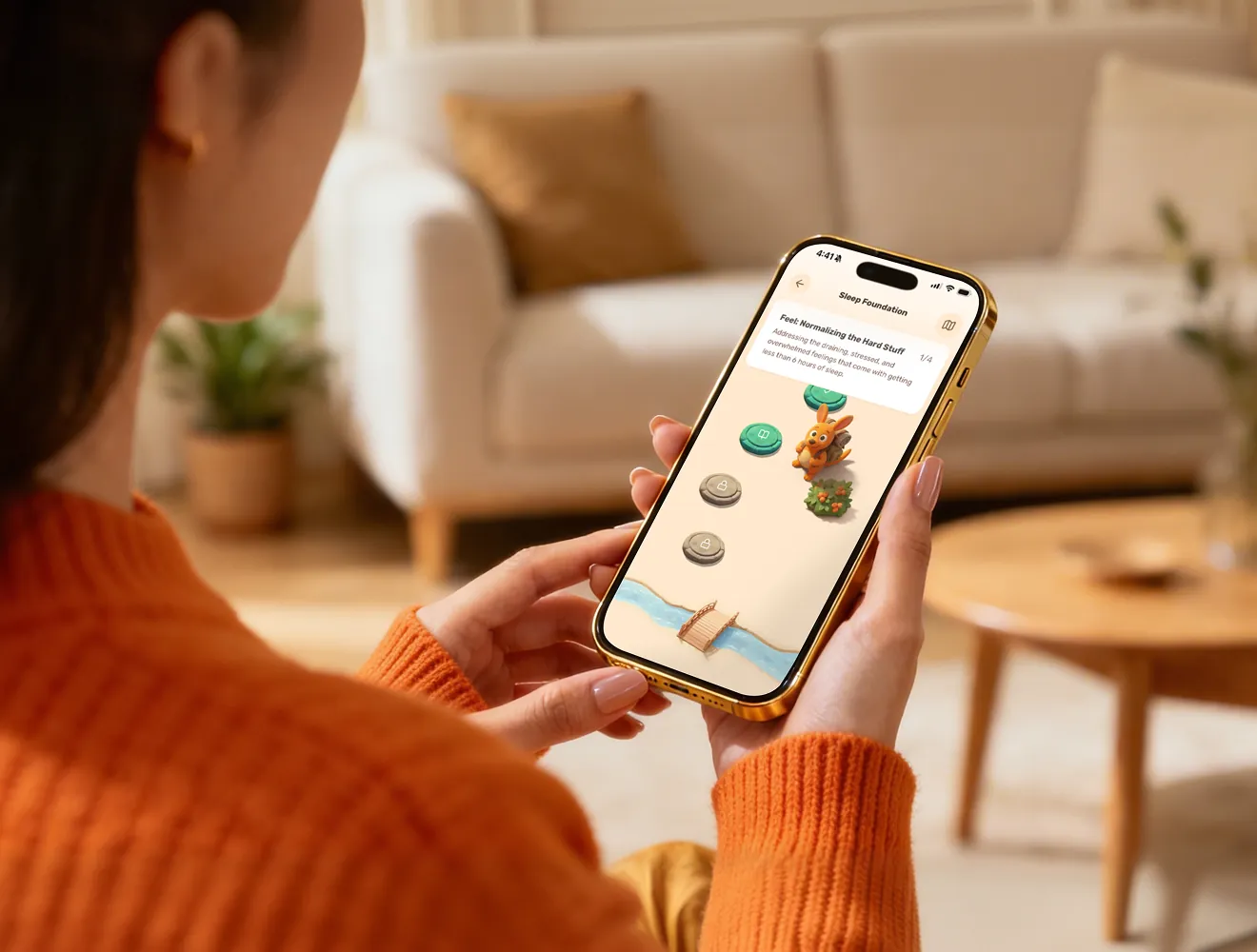
A personalized baby sleep plan app showing a plan built around one baby's specific age, temperament, and needs
Betteroo Team

Written By

Betteroo Team

Sleep & Parenting Editorial Team

If you are looking for a personalized baby sleep plan app, it helps to know that “personalized” is the most overused and least verified word in this category. Almost every app claims it. Very few actually do it.

There is a real difference between an app that builds a plan from your baby’s specific situation and yours, and one that inserts your baby’s name into a template every other family also receives. This guide explains what genuine personalization looks like, how to test for it, and how to avoid paying for the fake version. We build Betteroo, so we are not neutral, but the test below works on any app.

Quick Answer

A truly personalized baby sleep plan app builds the plan from your baby’s specific situation and your family’s reality, age, temperament, feeding method, your capacity, your values, and then keeps adjusting it as things change. Many apps that call themselves “personalized” just insert your baby’s name into a generic template. The test: if the plan would read the same for another baby with the name swapped, it is not personalized. Betteroo builds and adapts a genuinely personalized plan, with a free 3-minute quiz to start.

Real Personalization vs a Name in a Template

The cheapest form of “personalization” is cosmetic: an app collects your baby’s name and birth date, then shows you the same advice every other family sees, with the name dropped in. It feels personal. It is not. The underlying plan never changed.

Genuine personalization changes the substance of the plan. Two babies the same age can need very different approaches, one is breastfed and bedshares, the other is formula-fed and in a crib; one is an easy temperament, the other intense; one family wants gradual methods, the other is open to faster ones. A real personalized plan looks different for each of them. A template with a name does not.

What a Genuinely Personalized Plan Accounts For

When you evaluate an app, check whether it actually asks about, and adjusts for, the factors that genuinely change a sleep plan.

Your baby’s age and developmental stage

Sleep needs, wake windows, and nap counts shift constantly in the first years. A personalized plan reflects exactly where your baby is, not a broad age band. Our baby sleep schedule by age guide shows how much changes month to month.

Temperament and feeding method

An intense, alert baby and a laid-back one do not respond to the same approach, and a breastfed baby’s night feeds differ from a formula-fed baby’s. A personalized plan asks about these and changes accordingly, rather than assuming an average baby.

Your values and method comfort

Real personalization includes you. A plan that fits should reflect whether you want gradual, responsive methods or are open to faster ones. An app that picks the method for you is not personalizing, it is prescribing.

Your capacity and real schedule

A plan you cannot execute is not personalized to your life. Genuine personalization accounts for how depleted you are, how much time you actually have, and what your household looks like, and keeps the daily steps realistic.

See a plan that is actually built for your baby
Betteroo’s free 3-minute quiz builds a plan from your baby’s age, temperament, feeding method, and your values, then keeps adapting it.
Take the 3-Min Quiz →

Personalization Has to Last: The Plan Must Keep Changing

Here is the part most apps miss. Even an app that builds a genuinely tailored plan on day one has only personalized it to a single moment. Babies do not hold still. The plan that fit at 4 months will not fit at 8 months, and a regression can make it wrong overnight.

True personalization is not a one-time event, it is ongoing. The plan has to keep adjusting as your baby grows, hits the 4-month regression, drops a nap, travels, or gets sick. An app that personalizes once and then hands you a fixed PDF has given you a plan that is personalized to a baby who no longer exists.

How to Test an App for Real Personalization

Before you subscribe, run these quick checks.

  • The name-swap test. Would the plan read the same for a different baby with the name changed? If yes, it is a template.
  • The intake test. Does the app ask about temperament, feeding method, your values, and your capacity, or just age and name? Shallow intake means shallow personalization.
  • The change test. When your baby hits a regression, does the plan update on its own, or are you handed the same document? Personalization that does not last is not really personalization.
  • The method test. Does the app let you choose your approach, or assign one? A plan that ignores your values is prescribing, not personalizing.

How Betteroo Builds and Adapts a Personalized Plan

Full transparency: Betteroo is our product, so run the tests above on it rather than taking our word. Betteroo starts with a free 3-minute quiz that asks about your baby’s age, temperament, feeding method, and sleep challenges, and about your values and how you are doing, then builds a plan from those answers. Two different families genuinely get two different plans.

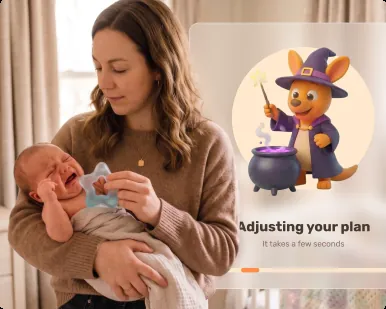
It also keeps the personalization current. The plan adapts from the newborn stage through age 6 as regressions, nap transitions, travel, and illness arrive, and in response to what you log, so it stays matched to the baby you actually have this week. It was built with pediatric sleep specialists and developmental psychologists, and it is the ongoing adaptation, not just a tailored starting point, that it is designed for.

When a Personalized App Is Not Enough

Even genuine personalization has limits worth naming.

  • Your baby has medical sleep needs. For reflux, prematurity, or other medical situations, follow your pediatrician’s guidance first. An app should work alongside that, not replace it.
  • You want a human relationship. If you specifically want a named consultant who knows your case, that is a personal connection an app does not replicate.
  • Your situation is genuinely complex. For unusually complicated cases, a human consultant working with your pediatrician may be the better fit.
  • You only want timing predictions. If your baby sleeps fine and you just want nap-window forecasts, a simpler tracker is enough, and cheaper.

Frequently Asked Questions

What makes a baby sleep app truly personalized?+

A truly personalized app builds the plan from your baby’s specific situation, age, temperament, feeding method, and your family’s reality, your values and capacity, then keeps adjusting it as things change. The test: if the plan would read the same for another baby with the name swapped, it is a template, not real personalization.

Are most “personalized” sleep apps actually personalized?+

Often not. “Personalized” is the most overused word in the category. Many apps collect a name and birth date, then show the same advice to everyone with the name dropped in. Genuine personalization changes the substance of the plan based on temperament, feeding method, your values, and your capacity, not just the label.

How can I tell if a sleep plan is a template?+

Run the name-swap test: would the plan read identically for a different baby with the name changed? Also check the intake, does the app ask about temperament, feeding, your values, and your capacity, or only age and name? Shallow questions produce template plans.

Does a personalized plan need to change over time?+

Yes. This is the part most apps miss. A plan personalized once is matched to a single moment, and babies change constantly. The plan that fit at 4 months will not fit at 8 months. Real personalization is ongoing: the plan must keep adapting through regressions, nap transitions, and growth.

What does Betteroo personalize a plan around?+

Betteroo’s 3-minute quiz asks about your baby’s age, temperament, feeding method, and sleep challenges, and about your parenting values and how you are doing. It builds the plan from those answers, so different families get different plans, and then keeps adapting it from newborn through age 6 as your baby changes.

Is a personalized app better than a generic sleep program?+

For most families, yes, because a generic program assumes an average baby and an average parent, neither of which exists. A genuinely personalized app fits the plan to your specific baby and your capacity. The caveat is that personalization must be real, a generic program with a name inserted offers no advantage.

Can a personalized sleep app replace a sleep consultant?+

For many families it can, because it delivers a tailored plan that adapts continuously, which is much of what a consultant provides. What it does not replicate is a human relationship with a named expert. If personal contact is what you want, a consultant fits; if you want an adaptive personalized plan that is always on, an app fits.

Final Take: Personalized Should Mean the Plan Actually Changes

When you search for a personalized baby sleep plan app, you are asking for a plan that fits your baby, not an average one. The catch is that “personalized” is easy to claim and hard to verify, and a name in a template will not help you. Use the tests in this guide: the name-swap test, the depth of the intake, and whether the plan keeps changing as your baby does.

Genuine personalization is not a one-time setup, it is a plan that is built from your baby’s real situation and stays matched to it over time. Betteroo was built for exactly that, a plan tailored at the start and adapted continuously through age 6, and the free 3-minute quiz is the simplest way to see what a genuinely personalized plan looks like for your baby.

Get a sleep plan that is genuinely yours, and stays that way
Betteroo’s free 3-minute quiz builds a personalized plan from your baby’s real situation and adapts it through age 6, with a 30-day money-back guarantee.
Take the 3-Min Quiz →
3 Sources
  1. Mindell, J.A., et al. (2016). Development of Infant and Toddler Sleep Patterns: Real-World Data from a Mobile Application. Journal of Sleep Research, 25(5), 508-516. https://pubmed.ncbi.nlm.nih.gov/27070844/
  2. Mindell, J.A., et al. (2006). Behavioral Treatment of Bedtime Problems and Night Wakings in Infants and Young Children. Sleep, 29(10), 1263-1276. https://pubmed.ncbi.nlm.nih.gov/17068979/
  3. Betteroo. State of Parent & Baby Sleep 2026. Survey of 68,366 parents across 108 countries. https://betteroo.ai/state-of-baby-sleep/
Table of Contents