
If you are searching for a gentle sleep training app that adapts, you are really asking for two things at once: an app that will not push you toward cry-it-out against your instincts, and one whose plan actually changes as your baby changes. Those are two separate qualities, and most baby sleep apps deliver one, the other, or neither.
This guide explains what “gentle” and “adaptive” should each mean in a sleep app, why so few apps manage both, and how to tell the difference before you subscribe. We build Betteroo, so we are not neutral, but the criteria below apply to any app you are weighing, and we have tried to keep them fair.
Quick Answer
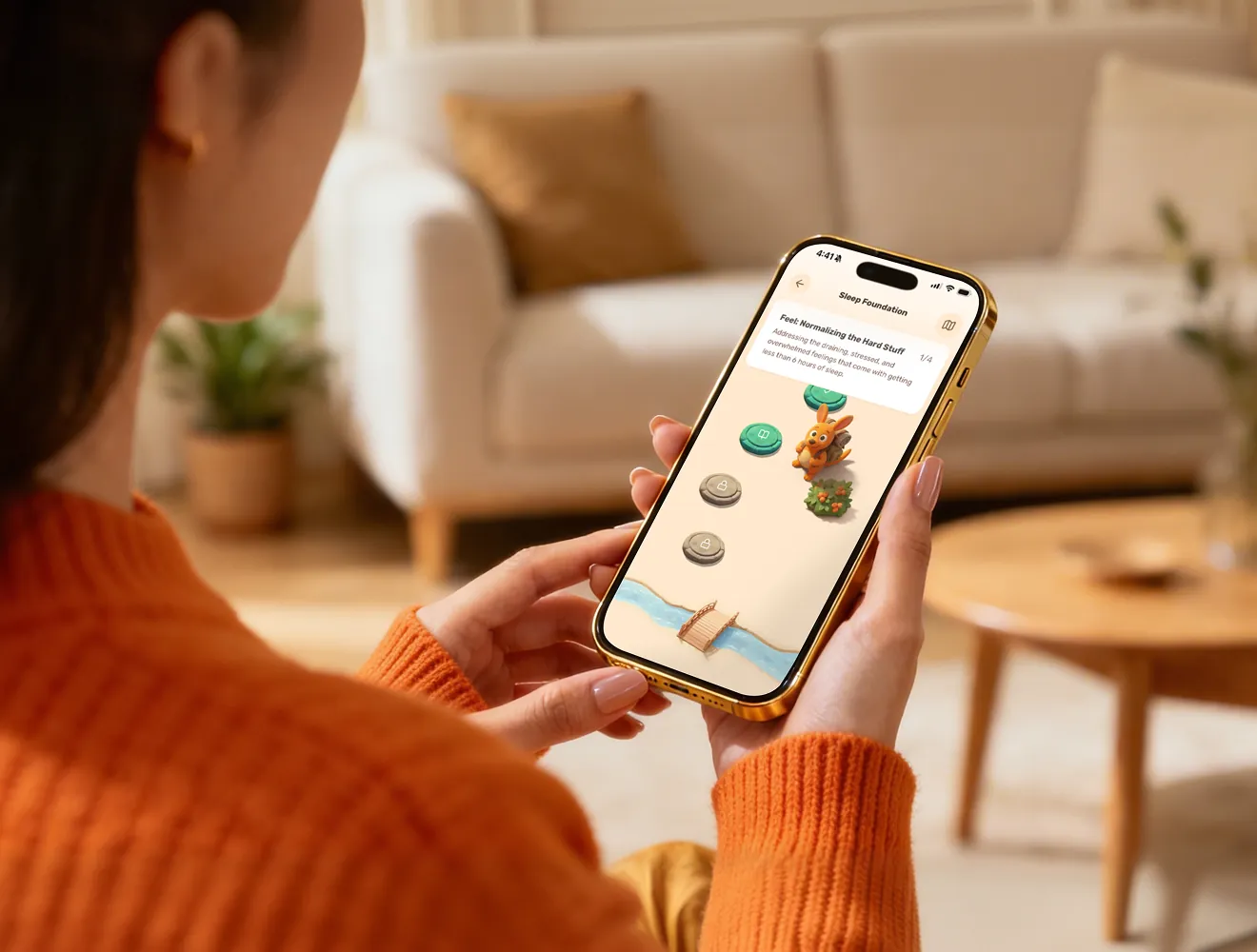
A gentle, adaptive sleep training app is one that (1) never forces cry-it-out and lets you choose the method that fits your values, and (2) updates the plan in real time as your baby grows and hits regressions, rather than handing you a fixed schedule. Most apps do one or neither: trackers predict timing but never change the plan, and course-based products lock you into a single method. Betteroo is built to do both, with a free 3-minute quiz to start.
Table of Contents
“Gentle” and “Adaptive” Are Two Different Things
It is easy to assume a “gentle” app and an “adaptive” app are the same, but they solve different problems. Gentle is about method: how a baby is supported toward sleep, and how much crying the approach involves. Adaptive is about change: whether the plan keeps up with a baby who is constantly developing.
A sleep app can be gentle but rigid, offering one soft method with no flexibility when it stops working. It can also be adaptive but not gentle, adjusting timing constantly while still defaulting to full extinction. What most exhausted parents actually want is the combination: a kind approach and a plan that moves with their baby.
What “Gentle” Should Mean in a Sleep App
Gentle is a word every sleep product uses, so it is worth being specific about what it should actually involve.
You choose the method, not the app
A genuinely gentle app offers a range of approaches, gradual methods, responsive settling, pick-up/put-down, fading, and lets you pick the one that aligns with your parenting values. It never assumes cry-it-out is the only or default path. Our guide to common sleep training methods walks through the full range.
It respects your instincts
Gentle is not just about the method label. It is about whether the app pushes you to do something that feels wrong. A gentle app gives you an off-ramp: if an approach is not working for your family, it helps you change course rather than telling you to “stay consistent” through your own discomfort.
It is grounded in evidence, not pressure
Behavioral sleep approaches have a solid research base, and a gentle app should lean on that evidence rather than fear or guilt. The tone matters: gentle guidance treats night wakings as normal development to work with, not a failure to fix.
What “Adaptive” Should Mean in a Sleep App
Adaptive is the quality most often claimed and least often delivered. Here is what real adaptivity looks like.
The plan changes when your baby changes
Babies do not sleep on a fixed schedule, and a plan written at 4 months will not fit at 8 months. A truly adaptive app updates its guidance through regressions, nap transitions, teething, travel, and illness, automatically, without you having to start over. Our guides to the 4-month sleep regression and baby sleep schedule by age show how much shifts in the first year alone.
It responds to what you log, not just the calendar
A predictive tracker shifts its schedule as your baby ages, but that is age-based, not situation-based. A genuinely adaptive app responds to your data: a run of rough nights, a method that is not landing, a new early-waking pattern, and adjusts the plan accordingly.
It is not a PDF with your baby’s name on it
The clearest test: if the “plan” would read the same for a different baby with the name swapped, it is not adaptive. Real adaptivity means the guidance you see this week is different from what a family one regression behind you sees.
Why Most Sleep Apps Are Neither
Once you separate gentle from adaptive, the gaps in the market become obvious. Tracker-style apps like Huckleberry and Napper are good at predicting sleep windows, but they forecast timing rather than adapt a plan, and they do not coach a method at all. Course-based products like Taking Cara Babies are fixed: you buy a set curriculum, and it does not change after purchase.
Smart-hardware ecosystems built around a bassinet, a monitor, or a sock are centered on a device, not a plan, and most stop being useful within the first 6 to 18 months. Very few products are designed from the start to be both method-flexible and continuously adaptive, because doing both is harder than doing either alone.
How Betteroo Approaches Gentle and Adaptive
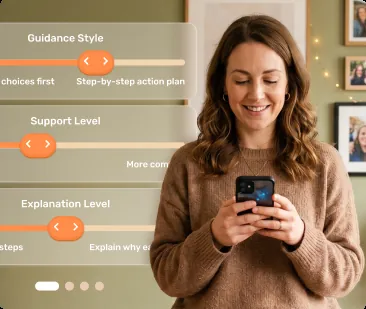
Full transparency: Betteroo is our product, so weigh this alongside the criteria above rather than taking it on faith. Betteroo was built specifically around the gentle-and-adaptive combination. On the gentle side, it supports multiple methods, gradual, responsive, and approaches in between, and asks about your values up front so the plan reflects your comfort level rather than overriding it.
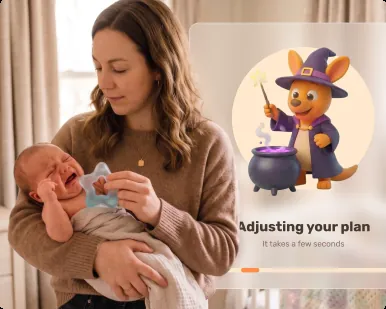
On the adaptive side, it starts with a free 3-minute quiz about your baby and your situation, builds a plan that is yours, and then keeps adjusting it from the newborn stage through age 6 as regressions, transitions, and life changes arrive. It was built with pediatric sleep specialists and developmental psychologists, and the plan reflects that expertise as it adapts. It is the combination, not either quality alone, that it is designed for.
When a Different Approach Makes More Sense
No app is right for everyone, and there are real situations where something else fits better.
- You want a human consultant. If what gives you confidence is a named expert reviewing your case, a sleep consultant may suit you better than any app.
- You only want timing predictions. If your baby’s sleep is basically fine and you just want nap-window forecasts, a lower-cost predictive tracker is enough.
- You want hands-off physical soothing. If your real need is automatic soothing in the newborn weeks, that is a smart bassinet’s job, not an app’s.
- Your baby has medical sleep needs. For reflux, prematurity, or other medical situations, follow your pediatrician’s guidance first. An app should work alongside that, not replace it.
Frequently Asked Questions
What makes a sleep training app “gentle”?
A gentle sleep training app does not force cry-it-out. It offers a range of methods, gradual, responsive, pick-up/put-down, and lets you choose the one that fits your values, then supports you in changing course if an approach is not working. Gentle is about respecting your instincts, not pushing you through discomfort.
What does it mean for a sleep app to be “adaptive”?
An adaptive sleep app updates its plan as your baby changes, through regressions, nap transitions, teething, travel, and illness, and in response to what you actually log. It is the opposite of a fixed PDF or a one-time course. If the plan would read the same for a different baby, it is not truly adaptive.
Are most baby sleep apps gentle and adaptive?
No. Most apps deliver one quality or neither. Predictive trackers forecast sleep timing but never coach a method or adapt a plan. Course-based products are fixed after purchase. Few apps are built to be both method-flexible and continuously adaptive, because doing both is harder than doing either alone.
Is cry-it-out the only way to sleep train?
No. Cry-it-out (full extinction) is one method among many. Gradual extinction, the chair method, pick-up/put-down, bedtime fading, and responsive settling are all recognized approaches with research support. A gentle app lets you choose, and a good one never treats cry-it-out as the default.
Does Betteroo use cry-it-out?
Betteroo does not force cry-it-out. It supports multiple methods and asks about your values up front, so the plan reflects your comfort level. If you want a gradual or responsive approach, that is what your plan uses. The method is your choice, not the app’s.
Can a gentle approach still fix night wakings?
Yes. Gentle and effective are not opposites. Gradual and responsive methods have a real evidence base and can resolve frequent night wakings when applied consistently. A gentle, adaptive app helps by giving you a clear plan and adjusting it if progress stalls, rather than defaulting to more crying.
How quickly does an adaptive plan adjust?
A genuinely adaptive app adjusts as soon as the situation changes, when you log a run of hard nights, hit a regression, or move through a nap transition, rather than waiting for a scheduled check-in. That is the practical difference between an adaptive plan and a static one.
Final Take: Insist on Both
When you search for a gentle sleep training app that adapts, you are describing a real and reasonable need, and you should not have to give up one quality to get the other. Gentle without adaptive leaves you with a kind plan that goes stale. Adaptive without gentle keeps adjusting an approach that never felt right. The combination is what actually carries a family through the first years of sleep.
Use the criteria in this guide on any app you consider: does it let you choose the method, and does the plan genuinely change as your baby does? If an app cannot clearly answer both, it is not the gentle, adaptive tool you are looking for. Betteroo was built for exactly that combination, and the 3-minute quiz is a free way to see what an adaptive plan looks like for your baby.
3 Sources
- Mindell, J.A., et al. (2006). Behavioral Treatment of Bedtime Problems and Night Wakings in Infants and Young Children. Sleep, 29(10), 1263-1276. https://pubmed.ncbi.nlm.nih.gov/17068979/
- Gradisar, M., et al. (2016). Behavioral Interventions for Infant Sleep Problems: A Randomized Controlled Trial. Pediatrics, 137(6), e20151486. https://pubmed.ncbi.nlm.nih.gov/27221288/
- Betteroo. State of Parent & Baby Sleep 2026. Survey of 68,366 parents across 108 countries. https://betteroo.ai/state-of-baby-sleep/