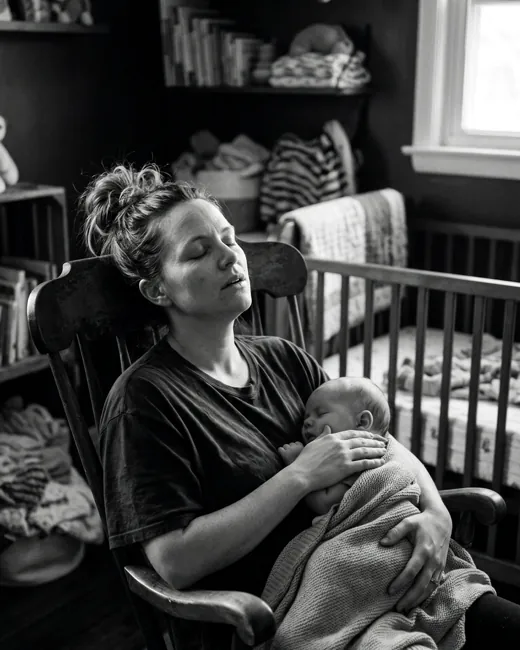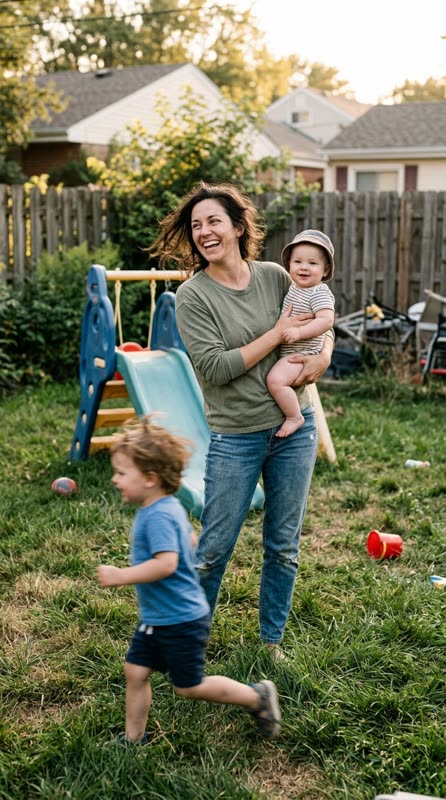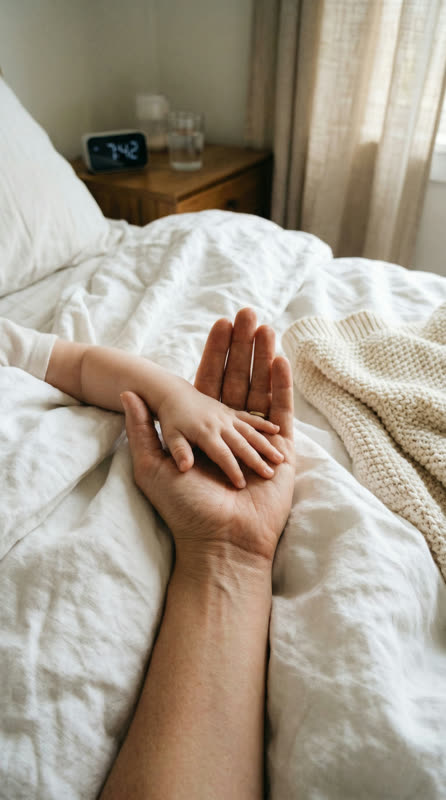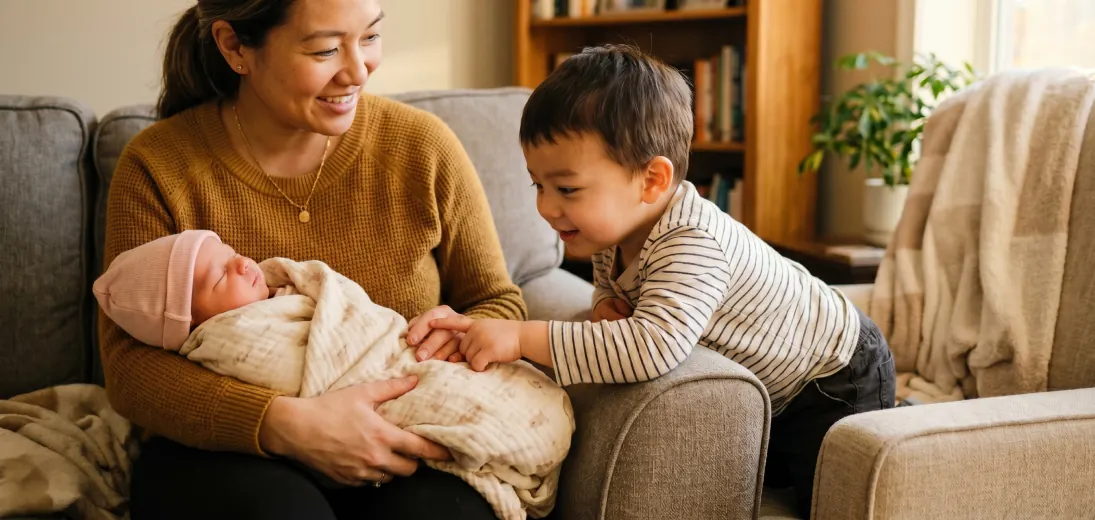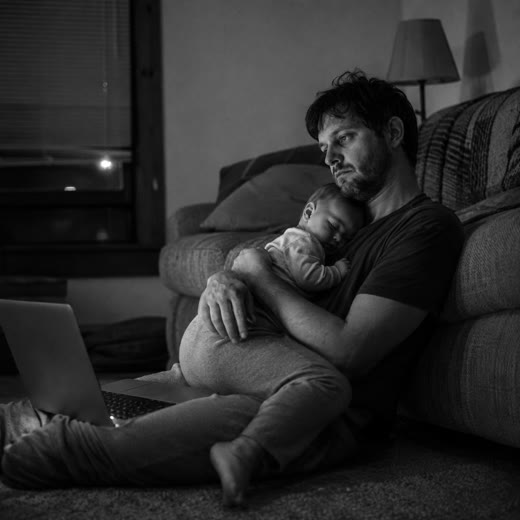

Contact naps, where your baby sleeps on you rather than in a crib or bassinet, are normal, common, and developmentally fine. The safety question is not whether your baby is on you. It is whether you might fall asleep too.
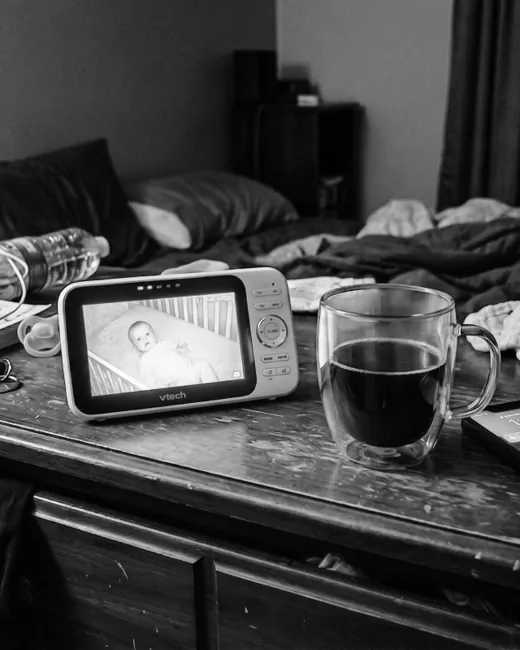
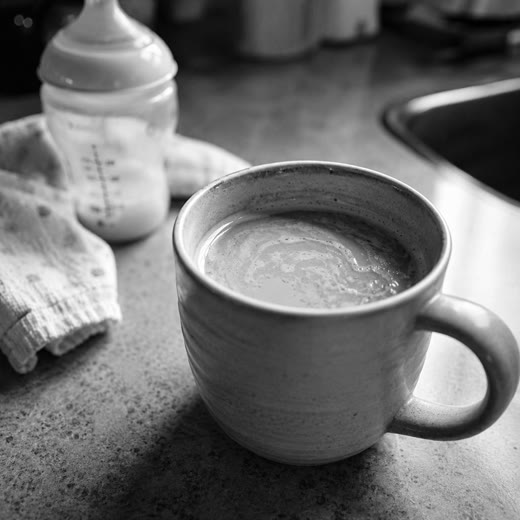
Almost every parent ends up here. The baby will not settle anywhere but your chest, the nap that took forty minutes to start is finally happening, and you are now pinned to the sofa with a cold coffee just out of reach, wondering whether you are quietly ruining everything.
You are not. Contact napping is one of the most misunderstood parts of the first year, treated either as a sacred bonding ritual or as a habit that will wreck sleep forever. The reality is more ordinary than both, with one safety point that genuinely matters and is often left out.
Key Takeaways
- Contact naps are developmentally normal and do not cause long-term sleep problems on their own.
- The real risk is the adult falling asleep, especially on a sofa or armchair.
- Sofas and armchairs carry up to 67 times the risk of a safe sleep surface. Never sleep there with a baby.
- Babies often sleep longer on you because of motion, warmth, sound, and smell, not because they are spoiled.
- Newborns contact nap most in the first 3 to 4 months, when they have the least ability to self-settle.
- You can transition gradually. There is no need to stop abruptly or all at once.
Table of Contents
What Counts as a Contact Nap
A contact nap is any daytime sleep where your baby is in physical contact with a caregiver rather than on a separate flat sleep surface. That includes sleeping on your chest, in your arms, in a carrier or sling, or curled against you on a bed while you stay awake beside them.
It is one of the most common ways babies sleep in the first few months, across essentially every culture. Newborns spent nine months in constant contact and constant motion, so a firm, still, flat mattress is a genuinely unfamiliar environment for them. Preferring you is not a preference problem. It is the expected starting point.
Are Contact Naps Safe? The Rule That Matters
A contact nap where the caregiver is fully awake, upright, and alert is generally safe. The danger appears when the adult falls asleep, and where that happens changes the level of risk dramatically.
Quick Answer
Asleep on a sofa or armchair with your baby: extremely dangerous. The American Academy of Pediatrics identifies this as carrying up to 67 times the risk of a safe sleep surface.
Feeling sleepy: put your baby down on a firm flat surface first, then rest.
The reason sofas and armchairs are so hazardous is mechanical. Cushions, crevices, and armrests create gaps a baby can slide into and soft surfaces that can obstruct the nose and mouth. A baby who slips face-first into a cushion gap cannot reposition themselves.
The AAP is direct on this point: infants should never be placed to sleep on a couch, sofa, or armchair, with or without another person. If you are feeding or comforting your baby in the small hours and there is any chance you will drift off, the safer choice is an adult bed cleared of pillows, duvets, and soft bedding. Bed sharing is still not recommended, but if a parent does fall asleep, it is meaningfully less hazardous than a sofa.
- Stay upright and awake. If you feel yourself getting drowsy, put your baby down.
- Keep your baby’s face visible, with nothing covering the nose or mouth.
- Do not contact nap on a sofa, recliner, or armchair if there is any chance of falling asleep.
- Never contact nap after alcohol, sedating medication, or cannabis, or when severely sleep deprived.
- In a carrier, follow the T.I.C.K.S. positioning guidance so the airway stays open and the chin is off the chest.
The carrier point deserves its own note. A baby worn in a sling or carrier should be high enough to kiss, upright, with their chin off their chest and their face turned to the side and visible. A curled, chin-to-chest position can restrict a young baby’s airway silently.
Why Your Baby Sleeps Longer on You
Parents often notice a stark difference: 25 minutes in the crib, two hours on your chest. That gap is not imagination, and it is not manipulation.
Babies sleep in cycles of roughly 45 minutes in the early months. At the end of each cycle, they surface into a light phase and briefly rouse. On you, the conditions that helped them fall asleep are all still present when they surface, so they slide into the next cycle without fully waking.
- Warmth and pressure: your body temperature and gentle containment mimic the womb.
- Sound and rhythm: your heartbeat and breathing provide steady, predictable input.
- Smell: babies recognize a parent’s scent within days of birth and it is calming.
- Motion: even small movements as you breathe or shift keep the vestibular system gently engaged.
- Nothing changes at the transition: when they surface between cycles, the environment is identical to how they fell asleep.
That last point is the mechanism worth understanding, because it explains both why contact naps work and why crib naps sometimes do not. A baby put down already asleep wakes up somewhere different from where they fell asleep. The environment changed while they were unconscious. Surfacing into an unfamiliar setting is what tends to trigger a full wake.
Naps only working on you?
Betteroo builds a nap plan around your baby’s actual wake windows and temperament, with a realistic path off contact naps. About two minutes to start.
Do Contact Naps Create a Bad Habit?
This is the fear underneath most of the searching, so it is worth answering plainly. Contact napping does not permanently damage a baby’s ability to sleep independently. There is no evidence that babies who contact nap in the newborn months are worse sleepers as toddlers.
What contact naps do create is an association. Your baby learns that sleep happens in a particular set of conditions, and the stronger and more exclusive that association, the more work it takes to change later. That is a real effect, but it is a changeable one, not a permanent one.
The practical question is not whether contact naps are good or bad. It is whether the current arrangement is sustainable for your family right now. If contact naps mean your baby sleeps well and you get a daily hour to sit down, that is a functioning system. If they mean you cannot eat, work, shower, or care for another child, that is a system worth changing, and changing it is entirely reasonable.
It is also worth knowing that many babies transition on their own between 4 and 6 months as they develop more mature sleep architecture and more capacity to resettle. Not all do, but the trajectory is usually toward more independence, not less.
How to Transition Away From Contact Naps
Gradual works better than abrupt, and one nap at a time works better than all of them at once. Choose the nap that is usually easiest, often the first of the day, and leave the others alone while you work on it.
- Start with the first nap. Sleep pressure is highest and the drive to sleep is strongest early in the day.
- Fix wake windows first. A baby who is overtired or undertired will resist any surface. Age-appropriate timing does more than any transfer technique.
- Warm the surface. A cold mattress against a warm baby is a jolt. Rest your hand on the sheet for a minute beforehand.
- Put down drowsy but awake when you can, so falling asleep happens in the place they will wake up.
- Transfer feet first, keeping a hand on the chest for 20 to 30 seconds after your baby is down.
- Use consistent white noise so at least one condition stays the same between your chest and the crib.
- Try a halfway step: a carrier nap where they are not on your chest but still contained, or a nap in the crib with your hand resting on them.
- Expect the first stretch to be short. A 30-minute crib nap is a win in week one. Length usually builds after the surface is accepted.
Give any change about a week before deciding whether it is working. Two bad days in a row is normal and is not evidence of failure. If your baby is genuinely distressed rather than just protesting the change, it is fine to pick them up and try again tomorrow.
Keep in mind that a nap on you is still a nap. On a day when the crib is not happening, taking the contact nap is better than a baby who does not sleep at all and hits bedtime overtired.
When Contact Naps Are the Right Call Anyway
There are stretches where fighting for crib naps is the wrong use of your energy.
- During illness, teething, or the days around a vaccination, when comfort matters more than location.
- Through a regression or a big developmental leap, when everything is temporarily harder.
- While traveling or anywhere unfamiliar, where the crib association does not exist anyway.
- In the first 8 to 12 weeks, when expecting consolidated independent naps is expecting a lot.
- On any day when you simply need your baby to sleep and you have nothing left in the tank.
Choosing a contact nap deliberately is different from feeling trapped in one. The goal is having options, not eliminating a perfectly reasonable one.
When to Talk to Your Pediatrician
Contact napping itself is rarely a medical issue, but a few related situations are worth raising.
- Your baby will only sleep upright on you and seems uncomfortable or arches when laid flat, which can point to reflux.
- Noisy, congested, or laboured breathing that is noticeably worse when your baby is flat.
- Poor weight gain alongside very short, fragmented sleep.
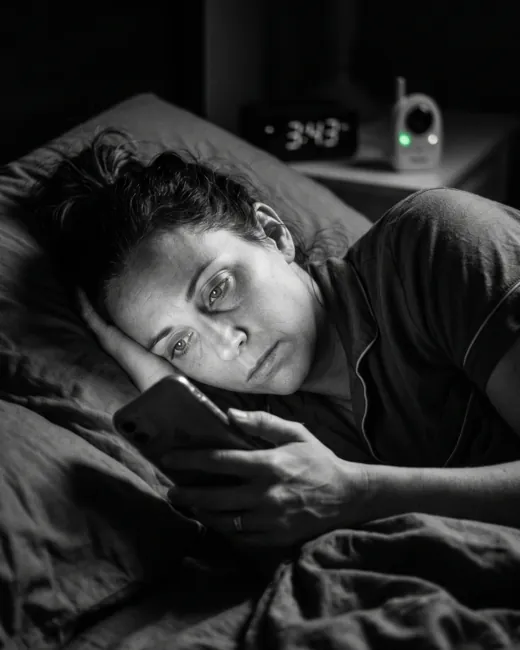
- You are so sleep deprived that you are falling asleep unintentionally while holding your baby. This is a safety issue and deserves real support.
- You are experiencing persistent low mood, anxiety, or intrusive thoughts. Postpartum mood conditions are common and treatable.
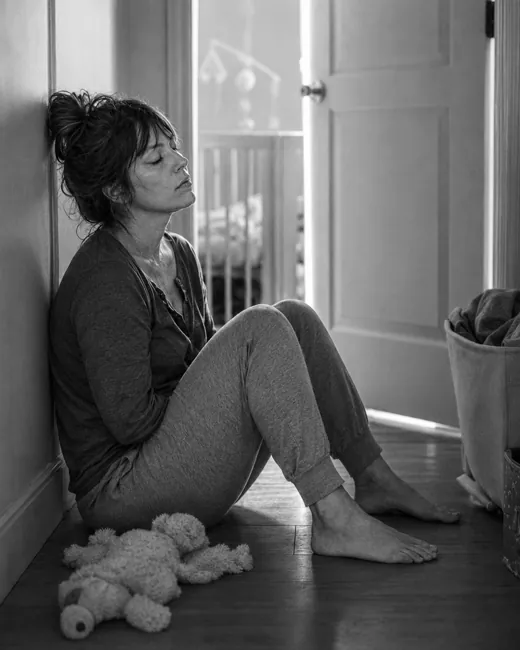
That fourth point is not a minor one. If exhaustion means you cannot reliably stay awake while holding your baby, the answer is not willpower. It is getting another adult to take a shift, and telling your provider how bad the sleep deprivation has become.
Frequently Asked Questions
Are contact naps safe?
Contact naps are safe when the caregiver stays fully awake, upright, and alert, with the baby’s face visible and unobstructed. They become dangerous if the adult falls asleep, particularly on a sofa or armchair, which the AAP identifies as carrying up to 67 times the risk of a safe sleep surface.
Do contact naps create bad sleep habits?
Contact naps do not cause permanent sleep problems. They do create a sleep association, meaning your baby learns to fall asleep in specific conditions, which takes some work to change later. Many babies transition more easily between 4 and 6 months as their sleep matures.
Why does my baby only sleep on me?
Your body provides warmth, containment, your heartbeat, your smell, and gentle motion, all of which mimic the womb. Crucially, when your baby surfaces between sleep cycles roughly every 45 minutes, everything is exactly as it was when they fell asleep, so they resettle instead of fully waking.
At what age do babies stop needing contact naps?
There is no fixed age. Many babies become more flexible between 4 and 6 months as their sleep architecture matures and they gain some ability to resettle. Some transition earlier, some later, and illness or developmental leaps often bring contact napping back temporarily.
How do I move my baby from contact naps to the crib?
Work on one nap at a time, usually the first of the day. Make sure wake windows suit their age, warm the mattress first, aim to put them down drowsy but awake, transfer feet first with a hand on the chest for 20 to 30 seconds, and keep white noise consistent. Allow about a week before judging.
Get your arms back without a fight
Betteroo builds a realistic, gradual plan for moving naps off your chest, based on your baby’s age and temperament. Takes about two minutes.
5 Sources
- American Academy of Pediatrics: Sleep-Related Infant Deaths, Updated 2022 Recommendations
https://publications.aap.org/pediatrics/article/150/1/e2022057990/188304/Sleep-Related-Infant-Deaths-Updated-2022 - American Academy of Pediatrics, HealthyChildren.org: How to Keep Your Sleeping Baby Safe
https://www.healthychildren.org/English/ages-stages/baby/sleep/Pages/a-parents-guide-to-safe-sleep.aspx - Eunice Kennedy Shriver National Institute of Child Health and Human Development: Safe to Sleep, Ways to Reduce Baby’s Risk
https://safetosleep.nichd.nih.gov/reduce-risk/reduce - American Academy of Pediatrics, HealthyChildren.org: Suitable Sleeping Sites
https://www.healthychildren.org/English/ages-stages/baby/sleep/Pages/suitable-sleeping-sites.aspx - American Academy of Pediatrics: Evidence Base for 2022 Updated Safe Sleep Recommendations
https://publications.aap.org/pediatrics/article/150/1/e2022057991/188305/Evidence-Base-for-2022-Updated-Recommendations-for